• F3
  • F1
  • F2
  • F4

Fragment of cloth with a stylised human figure in dark purple wool on an unbleached linen ground. Hand spun and woven (dovetail tapestry, weft-faced). Coptic, mid-first millennium. Dool family donation (TRC 2023.0070).Fragment of cloth with a stylised human figure in dark purple wool on an unbleached linen ground. Hand spun and woven (dovetail tapestry, weft-faced). Coptic, mid-first millennium. Dool family donation (TRC 2023.0070).What is a Coptic textile? A simple question that is fraught with many problems and aspects!

There are so many academic discussions about this subject. Basically, ‘Coptic textile’ is a general term for cloth from Egypt that dates to between the fourth and eighth century. But there are those who would disagree with this and prefer a more specific terminology, and dates. Others would like to the use the term ‘Late Antique’, or even ‘early Islamic’.

Furthermore, must the pattern associated with a ‘Coptic textile’ include one or more Christian symbols, that would undeniably link the piece with the Coptic Orthodox Church, which is based in Egypt and one of the oldest of the Christian community?

Collection of books from Denmark, recently donated to the TRC LibraryCollection of books from Denmark, recently donated to the TRC LibraryIt may be grey, cold and wet outside, but we have a warm feeling because it's raining books here! The last week has seen three different collections of books arriving at the TRC.

The first was a donation of books by the Eva Andersson, director of the Centre for Textile Research, The Saxo Institute, Copenhagen University  from their impressive series of academic books about textiles and garments with ancient and archeological themes, such as Iconic Costumes: Scandinavian Late Iron Age Costume Iconography; Gods and Garments: Textiles in Greek Sanctuaries in the 7th to the 1st Centuries BC;  Textiles and Clothing along the Silk Roads, etc. We would like to thank Eva for organising this gift.

Then we were given three boxes of books by René Lugtigheid, a Dutch textile conservator and lecturer who is retiring and moving to a more peaceful life of gardening and embroidery (I can only approve). This was a mixed group and some of the books we do not have, others will be placed in the TRC Shop, with permission of René. It is her way of supporting the work and activities of the TRC.

Oil painting of Margaret Layton with a detailed display of her garments, by Marcus Gheeraerds, c. 1620. Victoria and Albert Museum, London, T.228-1994. Open domain.Oil painting of Margaret Layton with a detailed display of her garments, by Marcus Gheeraerds, c. 1620. Victoria and Albert Museum, London, T.228-1994. Open domain.Willem and I went to a museum recently with lots and lots of paintings, rather than ‘just’ textiles! But what struck me was how the two of us approach looking at a painting in different ways. I must admit that neither of us are really interested in vague comments about how the light falls upon the subject, or whether the abstract lines suggest a deep fear of something or other.

Willem likes looking at when a painting was made, by whom and what buildings, if any, are depicted. He especially likes looking at Dutch paintings to see if a particular building is still there or not, and can he recognize landscapes and other features. We have been going to various towns and places, for example, associated with the Dutch painter, Vincent van Gogh.

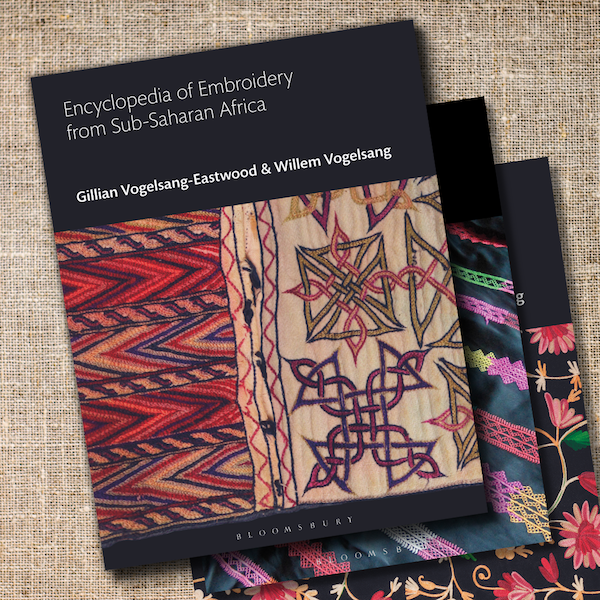
And how do I approach a painting? Well, I have a practical nature and I really like late medieval, Renaissance and various schools of 19th century paintings that show lots of details that I can use in books, articles and exhibitions. I am currently working, for example, on the Bloomsbury World Encyclopedia of Embroidery, more specifically vol. 4, which is about Scandinavian and West European embroidery.

Full length bustled, cotton and silk skirt in white with printed pink and purple floral motifs (TRC 2022.2726a). The inside pocket contained the embroidered handkerchief TRC 2022.2726b. 19th century, Europe.Full length bustled, cotton and silk skirt in white with printed pink and purple floral motifs (TRC 2022.2726a). The inside pocket contained the embroidered handkerchief TRC 2022.2726b. 19th century, Europe.There have recently been some exciting and unusual donations to the TRC, such as that of an Empire-style period dress, but ‘small’ finds occur on a regular basis as well. Two such examples are the discovery of a forgotten handkerchief and the identification of the girl who made a late 19th century school sampler. Both of these ‘textile tales’ are described below by Nelleke Ganzevoort.

A forgotten handkerchief

Recently, I was at the TRC while three volunteers were at work in the depot. One of the ladies, Renske, was examining a late 19th century skirt (TRC 2022.2726a). It was quite an interesting and complex garment, and we were trying to find out how it was constructed and worn. Then we noticed the skirt had an inside pocket and that there was something inside! Renske got it out. It looked like a wad of used tissues, the sort of thing you would throw into the rubbish bin. But of course it wasn’t, it was an embroidered handkerchief, used and then forgotten for over 125 years (TRC 2022.2726b).

Detail of a Carrickmacross lace shawl, Ireland, mid-19th century (TRC 2008.0453).Detail of a Carrickmacross lace shawl, Ireland, mid-19th century (TRC 2008.0453).We are working hard on the 4th volume of the Bloomsbury World Encyclopedia of Embroidery, which is about Scandinavian and West European embroidery (due out in 2024). We have nearly finished the draft text for the chapter on Irish embroidery and embroidered laces, but it is noticeable that there we have very few copyright free / open access illustrations (two to be exact, including a map).

So we are looking for actual examples for inclusion in the TRC Collection or copyright free images of the types listed below. If you can help with any of these please get in contact with us at Dit e-mailadres wordt beveiligd tegen spambots. JavaScript dient ingeschakeld te zijn om het te bekijken.

For more information, see below. Many thanks!

Johanna Elizabeth van NieropJohanna Elizabeth van NieropIn early November 2022 the TRC was approached by Henk van Nierop about a small group of lace samples (TRC 2022.3134TRC 2022.3155) and a lace notebook (TRC 2022.3156) that had been collected by his aunt, Johanna van Nierop.

It turns out his aunt’s lace story was much more complicated and interesting than we initially thought. The following blog is by Henk van Nierop.

****

Johanna Elisabeth van Nierop (nicknamed 'Zus' in the family) was born in Amsterdam on November 16, 1882, the youngest of six children. Her father, Frederik Salomon van Nierop, was a wealthy lawyer and banker ¬– he was the founder (in 1871) and director of the Amsterdamsche Bank – as well as a liberal member of the Amsterdam municipal council, the Provincial States of Noord-Holland, and the Upper House (Eerste Kamer) of the Netherlands' Parliament.

Liturgical garments (including a cope) from the upstairs wardrobe in the Basilica di Santa Maria Maggiore, Rome.Liturgical garments (including a cope) from the upstairs wardrobe in the Basilica di Santa Maria Maggiore, Rome.(Gillian Vogelsang, 29 December) Willem and I have just got back from a few days in Rome, a trip to get away from the cold and rain of the Netherlands, to follow the ‘red thread’ of seeing textiles and dress, and to work on the Bloomsbury Encyclopedia of Embroidery.

We went to Rome mainly with the intention of seeing the embroidered liturgical garments in the Basilica di Santa Maria Maggiore. The various garments we wanted to see are in a locked off area and you need to go with a guide (it is well worth doing the guided tour in order also to see the medieval mosaics on the [former] outside of the front facade).

The embroidered vestments are displayed in two giant wardrobes in a room upstairs in the basilica as well as in the museum in the crypt area. Most of the pieces are 18th century and later in date, but present a variety of silk and metal thread techniques that I found really interesting to see.

Zoek in TRC website

Contact

Boerhaavelaan 6
2334 EN Leiden.
Tel. +31 (0)71 5134144 (kantooruren)  
office@trcleiden.org

Het TRC is elke dag geopend tussen 10.00 en 15.00 uur.

facebook 2015 logo detail


instagram vernieuwt uiterlijk en logo


Bankrekening

NL39 INGB 0002 9823 59, t.a.v. Stichting Textile Research Centre.

Financiële giften

Het TRC is afhankelijk van project-financiering en privé-donaties. Al ons werk wordt verricht door vrijwilligers. Ter ondersteuning van de vele activiteiten van het TRC vragen wij U daarom om financiële steun:

Giften kunt U overmaken op bankrekeningnummer (IBAN) NL39 INGB 000 298 2359, t.n.v. Stichting Textile Research Centre. BIC code is: INGBNL2A

U kunt ook, heel simpel, indien u een iDEAL app heeft, de iDEAL-knop hieronder gebruiken en door een bepaald bedrag in te vullen: 


Omdat het TRC officieel is erkend als een Algemeen Nut Beogende Instelling (ANBI), en daarbij ook nog als een Culturele Instelling, zijn particuliere giften voor 125% aftrekbaar van de belasting, en voor bedrijven zelfs voor 150%. Voor meer informatie, klik hier