


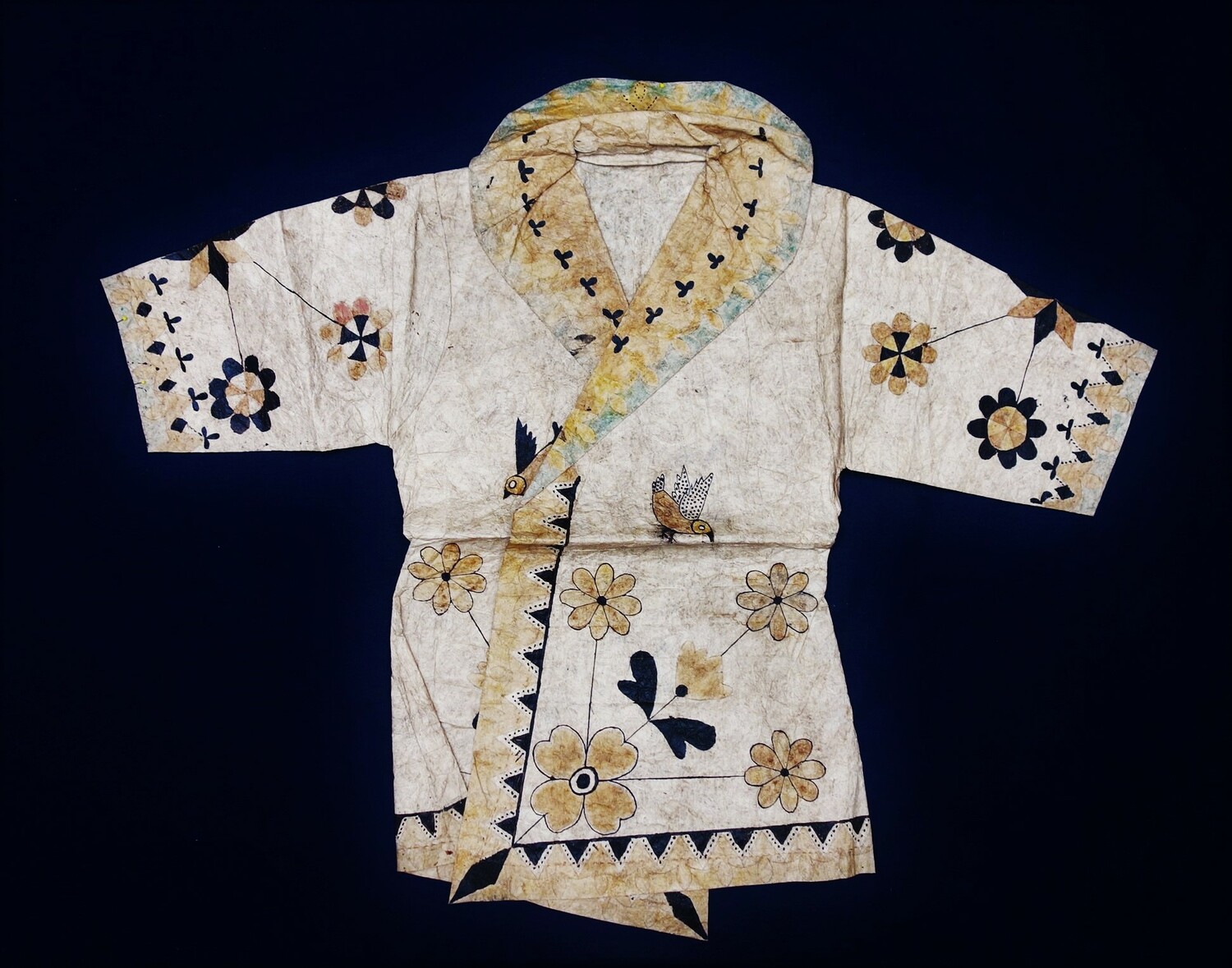
 Kebaya from East Sulawesi, Indonesia, c. 1946, made from bark bast cloth (TRC 2018.0042).At the end of 2022 Brunei, Indonesia, Malaysia, Singapore and Thailand, together nominated the kebaya, a woman’s blouse worn in many parts of Southeast Asia, for the UNESCO intangible cultural heritage list. The results should be heard shortly.
At first glance, you may wonder why should an object you touch be classed as intangible cultural heritage? Such a designation usually applies to music or folk stories, rather than a physical item. However, the nomination is more about the history behind the garment and how it has grown in importance in various diverse countries, rather than about an individual object.
For this blog I thought it might be interesting to add two more stories to the kebaya mix.
The first concerns a kebaya (TRC 2018.0042) from Indonesia that dates to 1946 and was brought back, together with a sarong and two other items, from what were then still the Dutch East Indies by C.P. van Strien, a Dutch colonial official in Kolonodale, East Sulawesi. The interesting detail about these pieces is that they are made from bark cloth (Sago Palm tree). They were then painted to look as if they had a batik-style (a form or resist dyeing) pattern. Various groups in Indonesia produce bark cloth, but these were made as a direct response to the shortage of cotton and silk following the end of the Second World War (1939-1945).
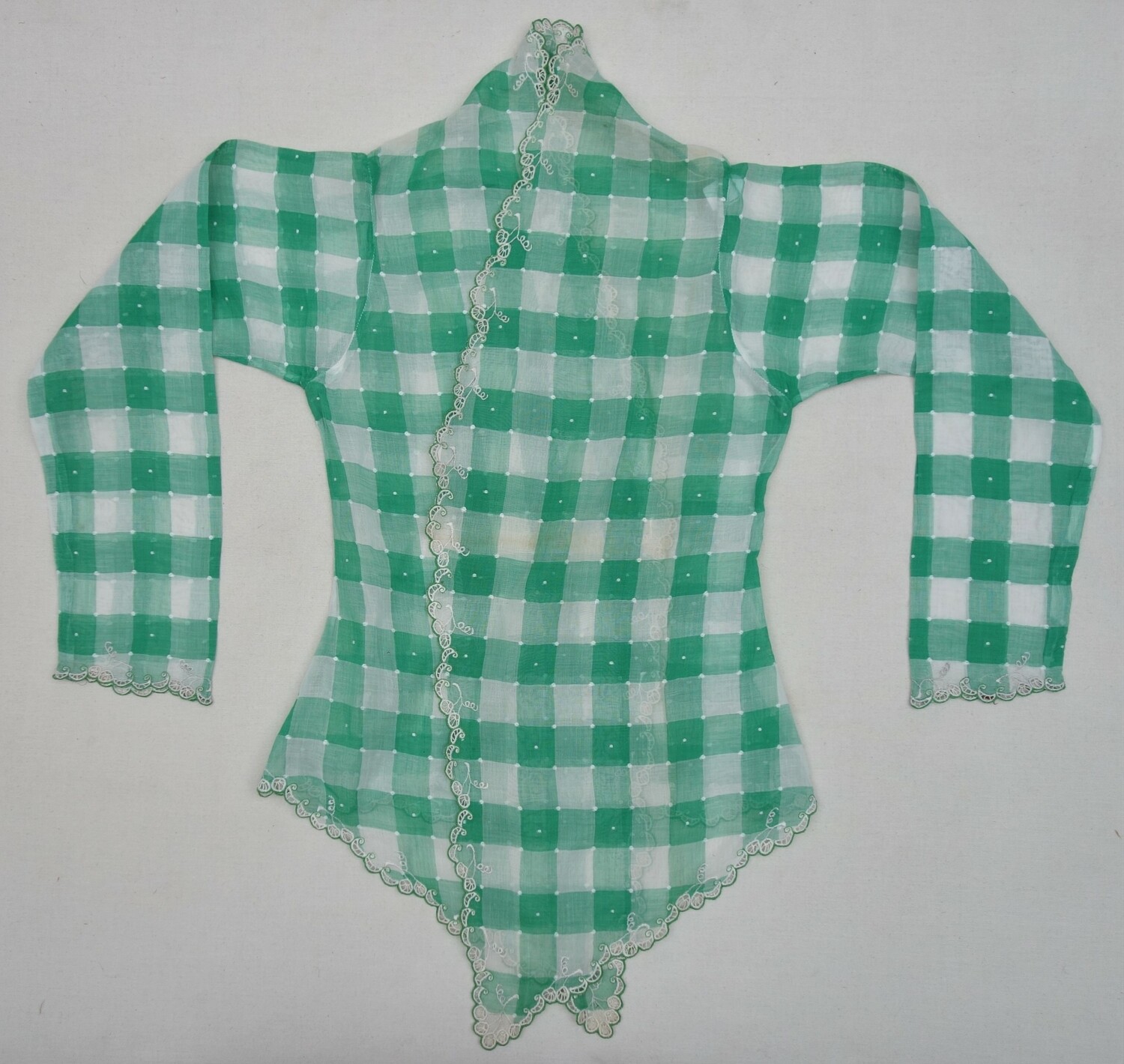 Cotton kebaya-style blouse from the Dutch Antilles, early 20th century (TRC 2023.0077).The second kebaya story has an older history. The TRC has recently been given a collection of textiles and garments that were owned by Diane Joubert (1939-2021), who belonged to a large merchant family living in Curaçao and Venezuela. Several of these pieces have been highlighted in previous TRC blogs, in particular one about an example of Hebron embroidery from c. 1900. The donation included two kebaya blouses (TRC 2023.0077 and TRC 2023.0078).
My first reaction when I saw the blouses was that they were Indonesian, probably from Java, but Laurie Dool, the daughter of Diane Joubert, said no, highly unlikely, and they are from the Antilles.
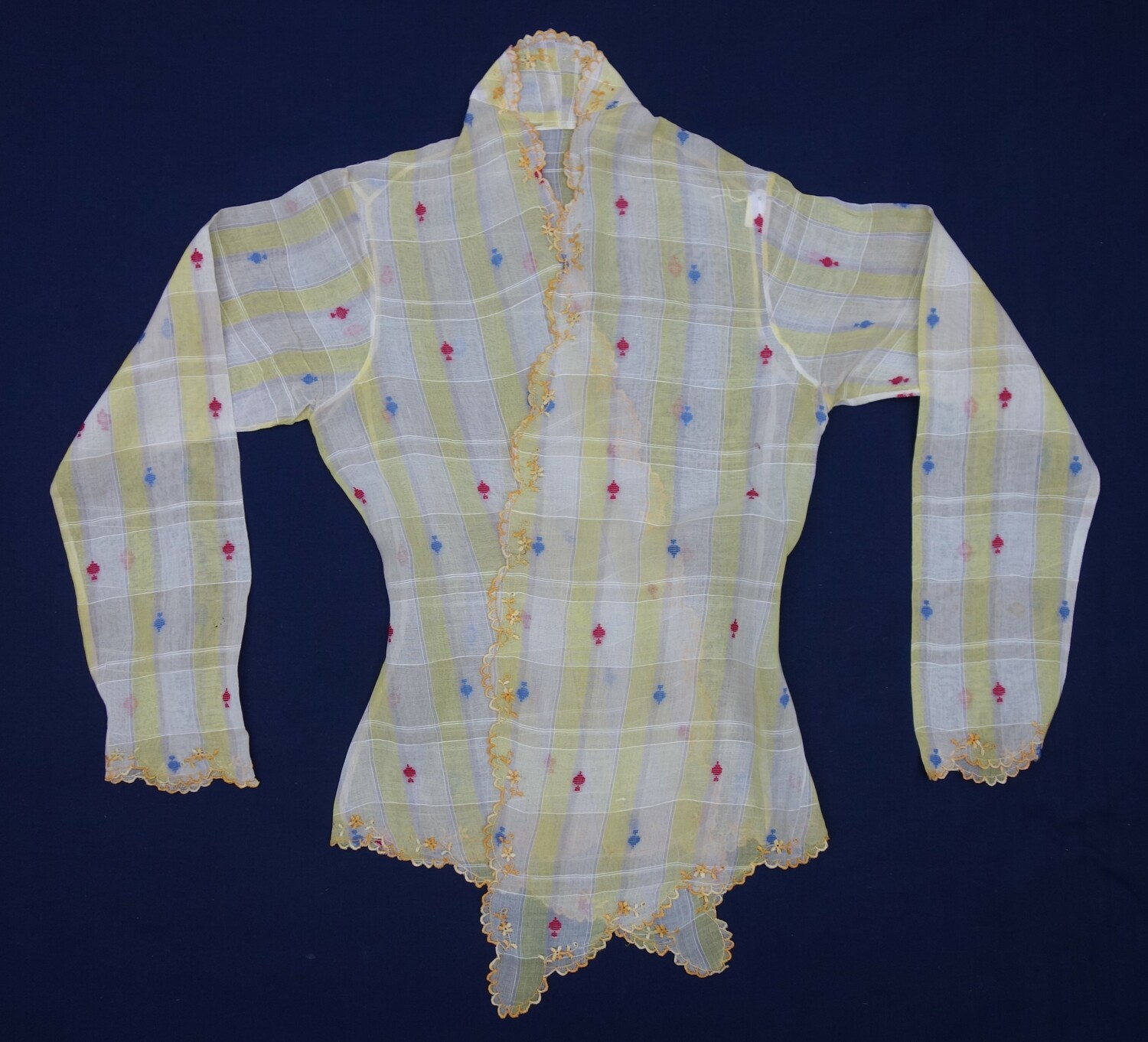 Cotton, kebaya-style blouse from the Dutch Antilles, early 20th century (TRC 2023.0078).In fact it is possible that both of us were correct and these two garments reflect an even bigger story. More specifically it is about Javanese indented labourers who from the 1890s were brought to Surinam and the Dutch Antilles by the then Dutch colonial authorities. When the contracts of many of these labourers expired it was expected that the vast majority would return to Indonesia. However, it would appear that most of the people chose to remain in the Antilles and Surinam in exchange for some land and financial help.
Javanese culture (the term Javanese later became used in the Antilles for anyone from Indonesia) was reflected in the music, dance, theatre and cuisine, as well as the garments they wore. These two blouse reflect an adoption of Indonesian/Javanese dress by specific groups living in the Antilles.
Gillian Vogelsang, 4 March 2023


