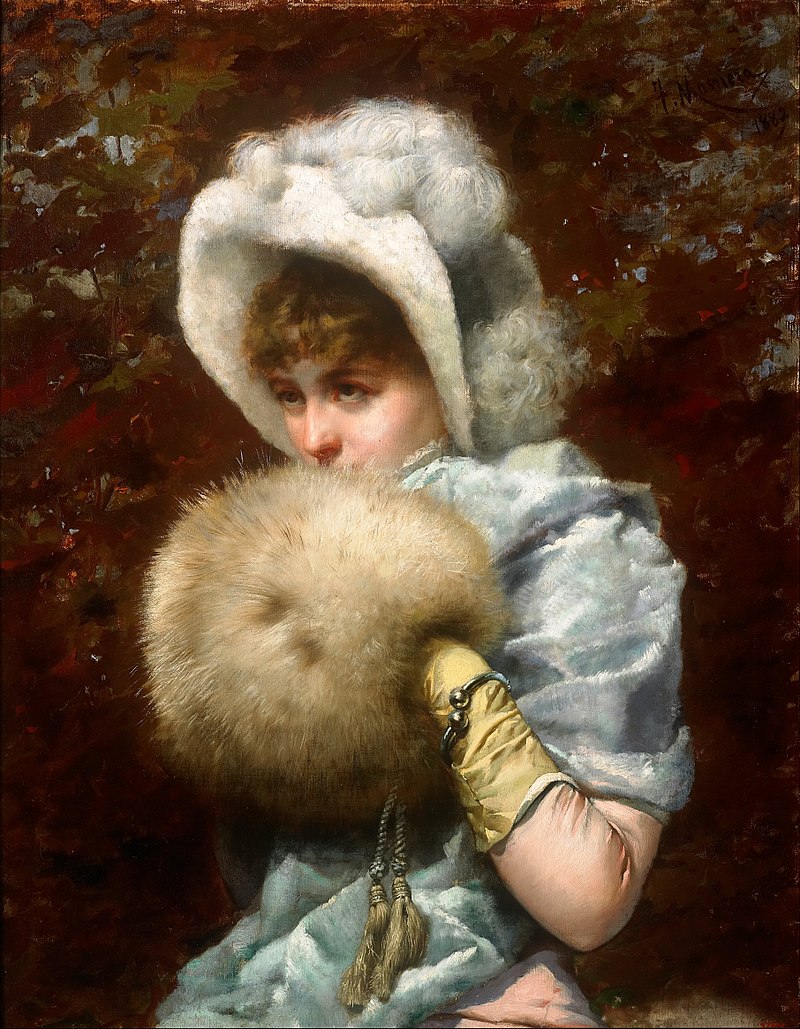
 Francesc Masriera, 'Winter 1882'. Museu Nacional d'Art de Catalunya. Public domain.Just by coincidence, we received on the same day two donations of muffs, one (TRC 2023.0627a) made of muskrat and originating from Canada and the other (TRC 2023.0630) is made of astrakhan and was acquired here in Leiden.
Muffs used to be very common, but it is unusual to see them nowadays. Perhaps they are due for a revival as a part of sustainability and decreasing energy resources?
A muff, also known as a hand warmer, consists of a cylinder that is open at both ends. It is often hung around the neck on a long cord or metal chain.
There may also be a purse attached to one side or set into the top of the muff (the muskrat example mentioned above had a strip of hooks and eyes inside the purse that date to the Second World War, TRC 2023.0627b).
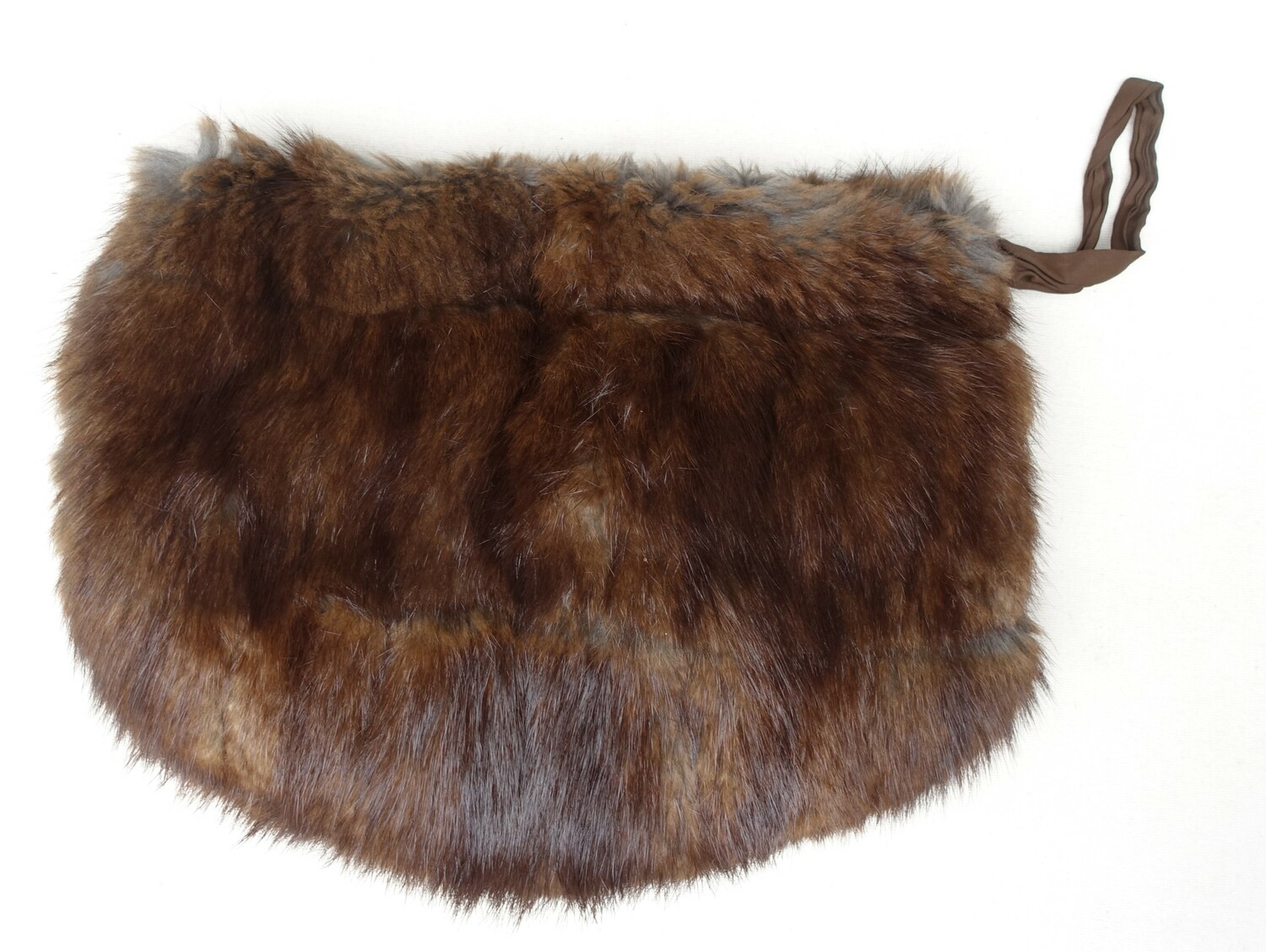 Brown muff made from muskrat and lined with pale brown silk. Canada, mid-20th century (TRC 2023.0627a).The word muff derives from Old French mouffle for a thick glove or mitten, a term itself probably linked to an Old Germanic word, compare Dutch vel, for 'hide' or 'skin'. There appears to be no link with Dutch mof, a derogatory term for someone with the German nationality.
Muffs were usually worn in cold weather and as a result they were often made from furs such as astrakhan, ermine, beaver, fox, mink, muskrat, raccoon, sable, feathers (such as goose, peacock, swans), as well as from felt, velvet or another thick, warm material.
More fashionable forms, however, may be made of silks, satins and moiré cloth.
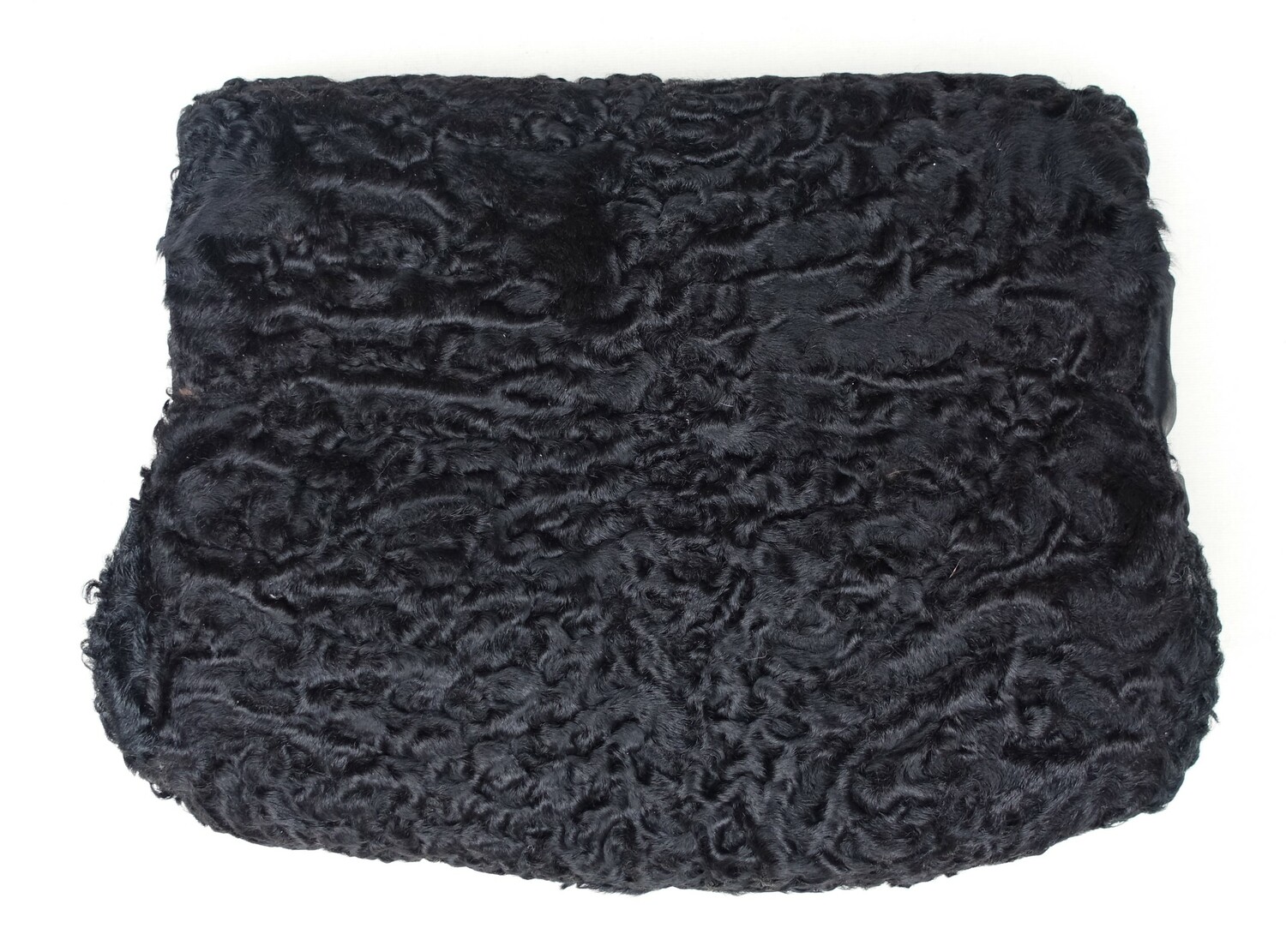 Muff made from black astrakhan and lined with black cloth. The Netherlands, mid-20th century (TRC 2023.0630).More expensive versions were decorated with lace (both bobbin and needle forms). Cheaper versions were sometimes made of rolls of cloth that were padded with sheep’s fleece. Sometimes mini-heaters in the form of metal cylinders containing heated charcoal were placed inside muffs to help keep the hands really warm. There are currently battery-operated examples available!
The wearing and use of muffs became popular in Europe in the 16th century and quickly developed into fashion statements. The earlier muffs tended to be small, but as time went on fashionable forms became larger and decorated with feathers, embroidery, expensive materials, etc.
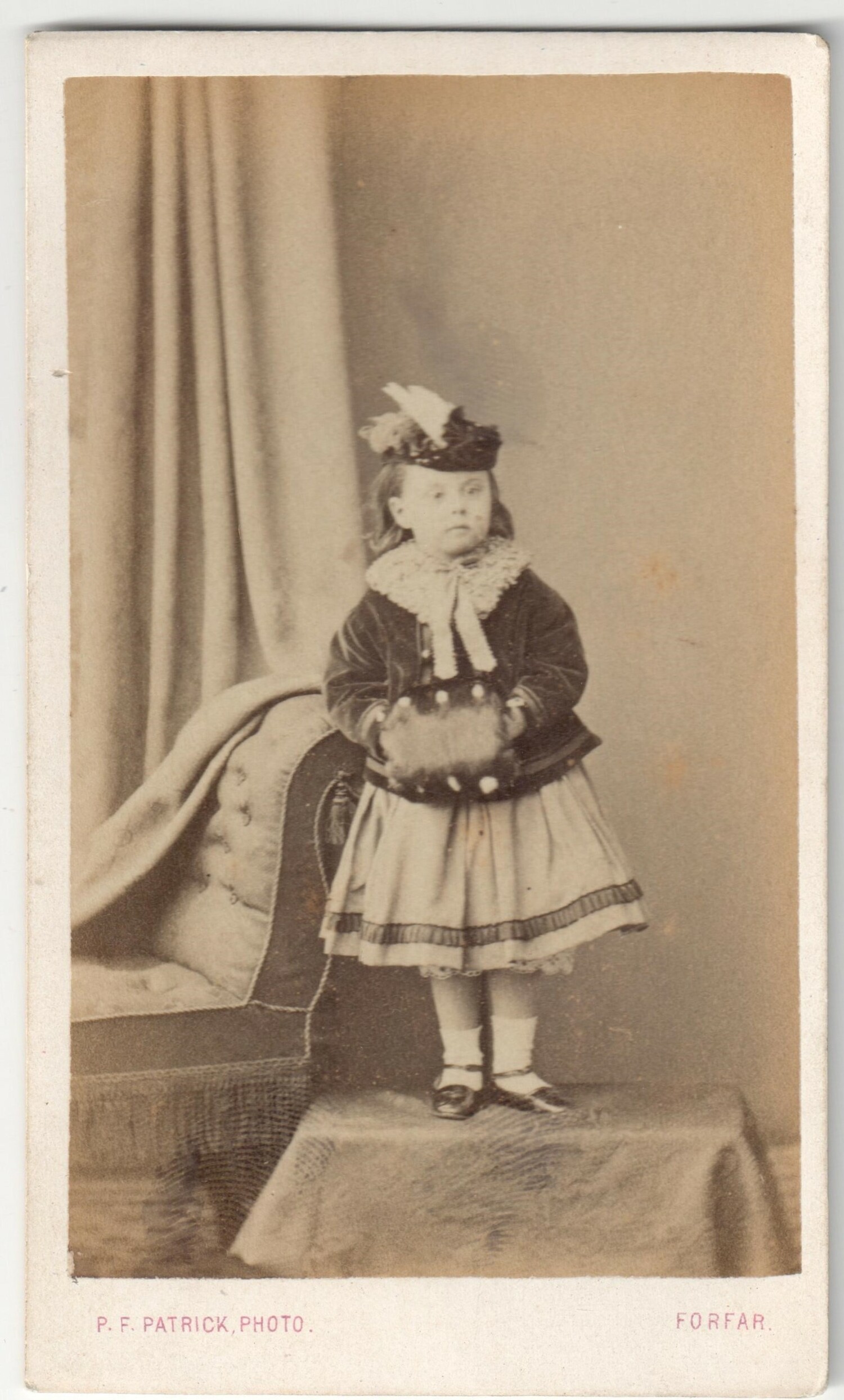 Late 19th century photograph showing a young girl from Scotland with her hands tucked into a muff (TRC 2019.0002).It is clear from depictions in prints, paintings, as well as from small figurines, especially in the 18th century, that both men (including soldiers) and women wore a wide variety of muffs. But by the early 19th century it would appear that muffs had become primarily associated with women.
The use of muffs died out in the latter half of the 20th century, partly due to increased use and availability of gloves, as well as a general move against the wearing of furs.
The TRC is planning a mini-exhibition on the theme of muffs and we are looking for actual examples (especially those with a known history), prints, photographs, etc. Should you be willing to donate relevant items to the TRC, please contact us (Dit e-mailadres wordt beveiligd tegen spambots. JavaScript dient ingeschakeld te zijn om het te bekijken.).
Gillian Vogelsang-Eastwood, 8 May 2023


 Camouflage netting for Ukraine in the making: University of Tartu, Estonia. 11 May 2023. Photograph by Willem Vogelsang.