


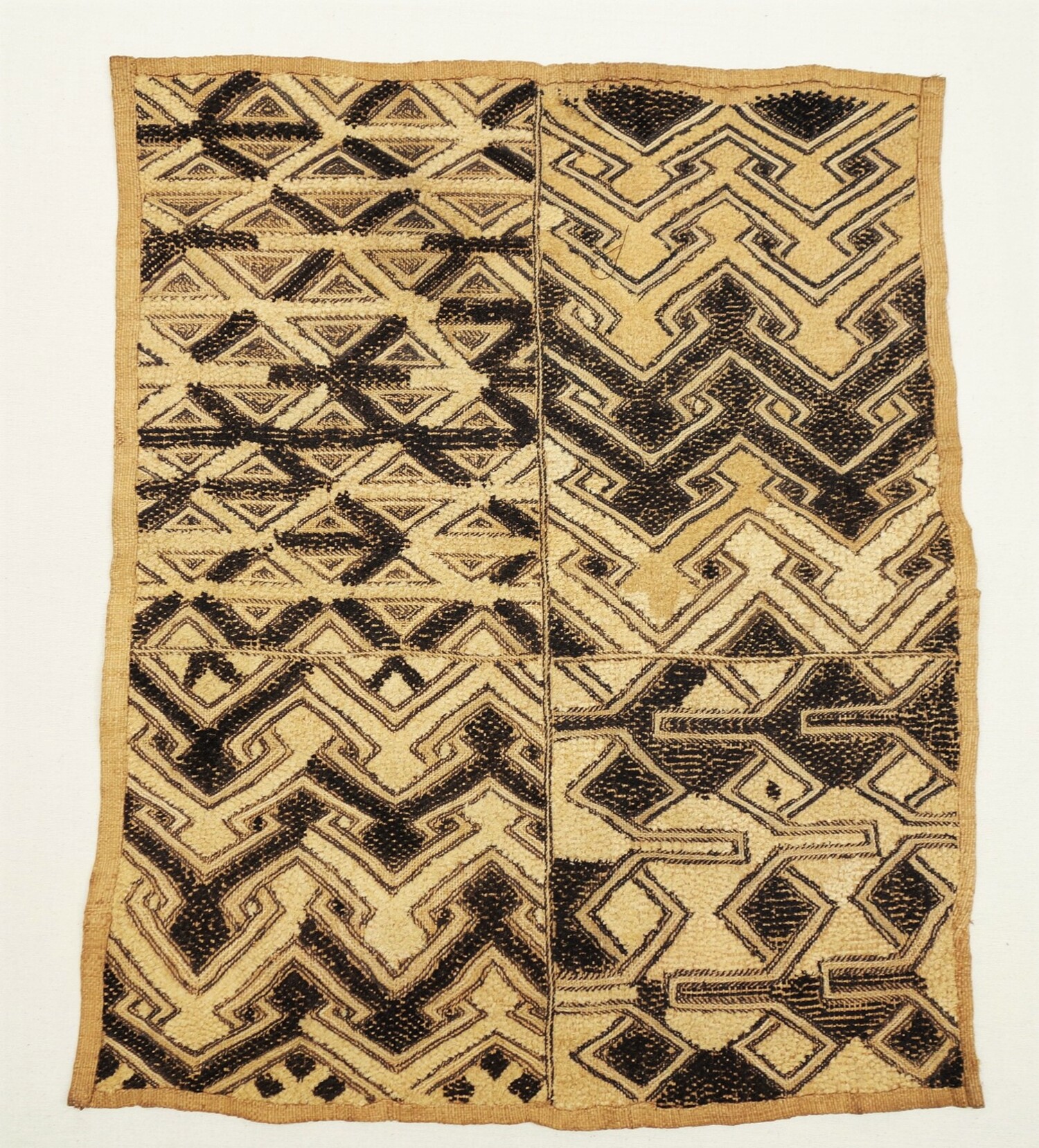
 Hand embroidered raffia panel from DR Congo, late 20th century (TRC 2021.2201).We recently published a TRC blog about some Philippine textiles that were made from fibres of the Abaca plant, a member of the banana family. In this blog I would like to draw attention to another interesting type of fibre namely raffia (raphia), which comes from the raffia palm (especially Raphia ruffia and Raphia taedigera) in Africa.
Apart from those two, there are more species of raffia palm that are all native to sub-Saharan Africa, especially West and Central Africa, as well as Madagascar. They grow in marshy or swampy areas, especially in tropical forests or other places with a plentiful supply of water.
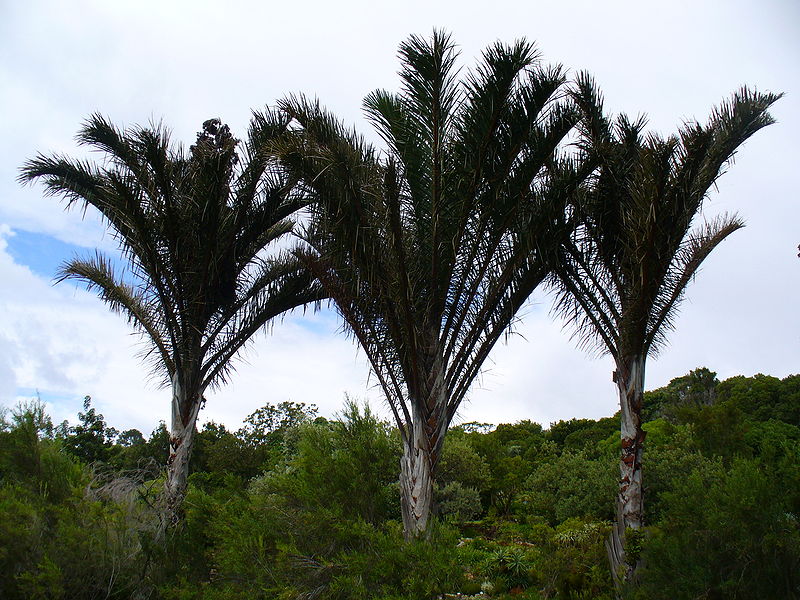 Raphia australis tree. Kirstenbosch Gardens, Cape Town. Photograph by Andrew Massyn.The Raffia palm has long, curving pinnate leaves that can grow up to about 16 m (Rapphia regalis leaves can grow up to 25 m length and 3 m in width), but the best raffia is said to come from the younger leaves of about 1 m in length. The fibre itself is made from the upper epidermis of the leaves, which is removed in the form of long, thin fibres that are bundled together and then allowed to dry slowly.
In most parts of Africa the fibres are used in single lengths, rather than being spun or spliced like other fibres such as flax. This means that the length of the fibres defines the size of the finished product. Most finished products are therefore max. 2 m in size. The main exception is Madagascar where the fibres are spliced and twisted together.
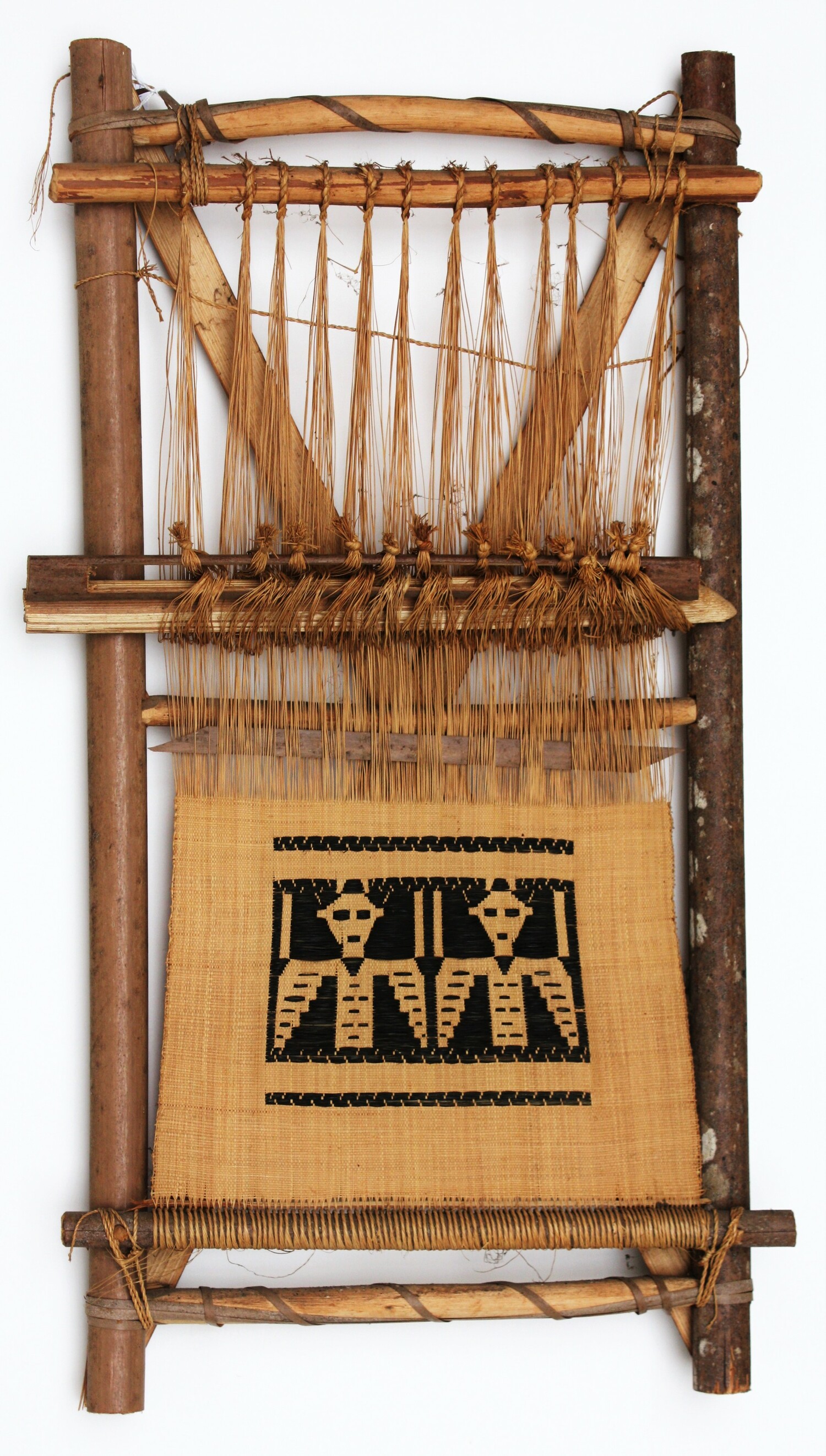 Single heddle loom from Cameroon for making raffia bags (TRC 2011.0132).In most areas of raffia production the fibres are plaited in various manners, and some people weave raffia using a loom of varying types. Others use their hands or feet to create the required tension when weaving a cloth. Raphia is used for making a range of items including ropes, nets, baskets, mats, bags, but also garments of various types, as well as hats and shoes. Below are four different forms and uses of raffia from sub-saharan Africa.
Cameroon (West Africa)
In the TRC Collection there is a small version of a single-heddle frame loom (TRC 2011.0132) used for weaving (tabby, plain weave) raffia cloth with a supplementary weft thread to create the desired pattern in a contrasting coloured raffia yarn. This type of loom is particularly used to weave cloth for traditional bags of varying sizes associated with Bamessing in western Cameroon (Gillow 2003:184-185).
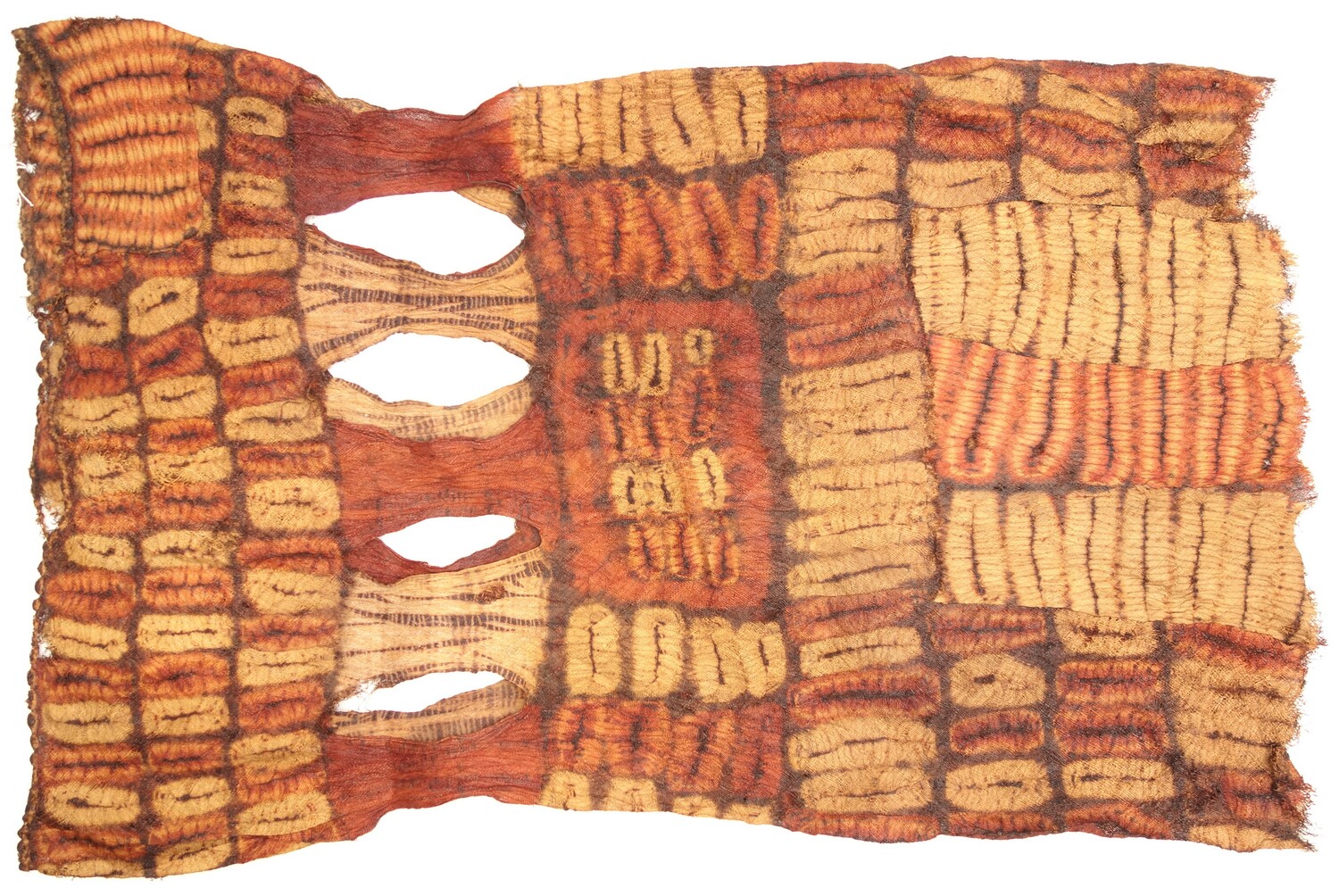 Tubular skirt for a woman from among the Dida, Ivory Coast, mid-20th century, made from raffia (TRC 2023.0407).Ivory Coast (West Africa)
The Dida people of Ivory Coast in West Africa are associated with a form of plaiting (oblique interlacing) to produce various ceremonial garments, such as tubular skirts or dresses (for women: TRC 2023.0407) and flat items such as loin cloths and cloaks for men. These garments were normally dyed black, red and yellow using locally available natural dyes. These garments are characterised by having dots, circles and ovals in various combinations.
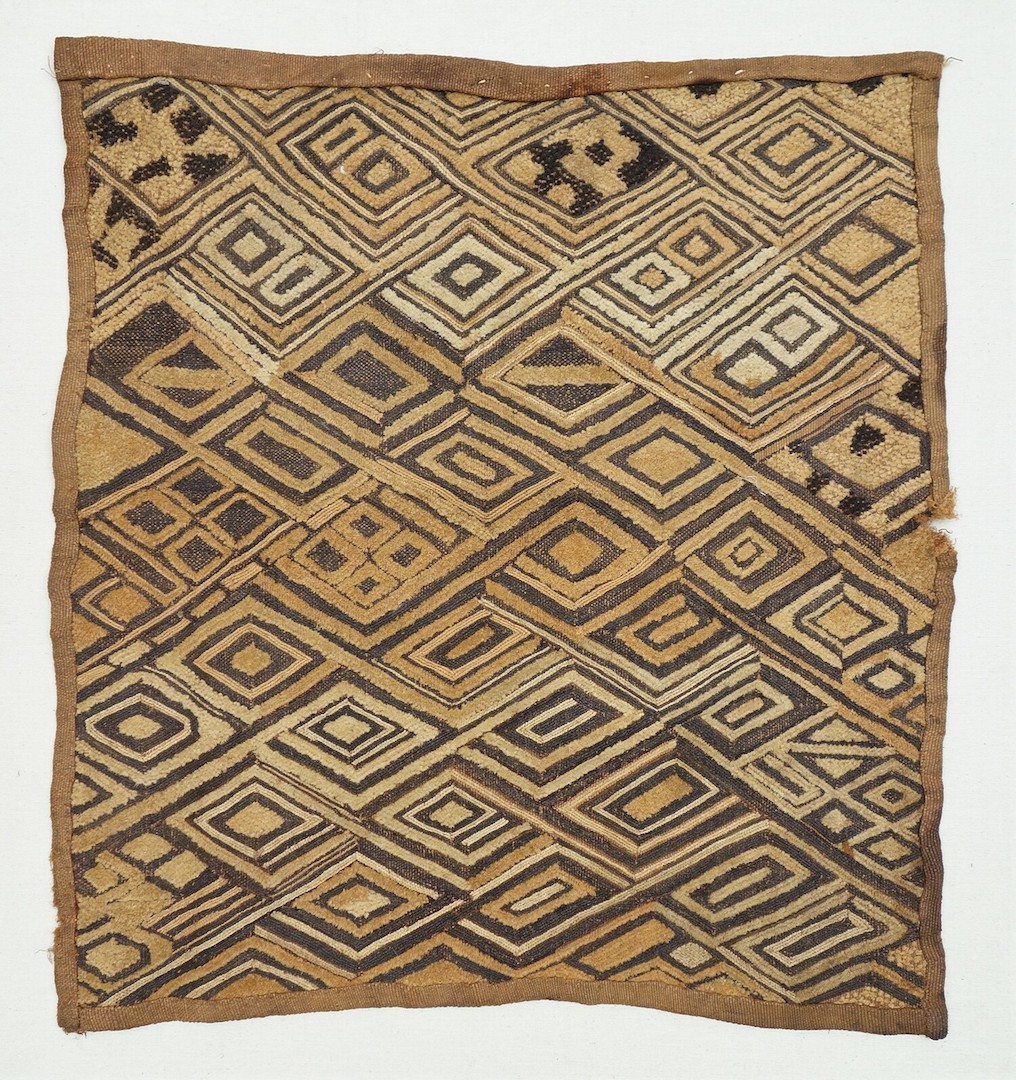 Hand embroidered raffia panel, DR Congo, late-20th cenury (TRC 2021.2197).Democratic Republic of the Congo (Central Africa)
The Kuba people live along the Kasai river in the DR of the Congo are well-known for the production of various types of raffia textiles, which are woven by the men and decorated by the women. The cloth is woven on a single-heddle overhead loom set about 45 degrees to the ground. The weaver sits on the ground and works above himself (Gillow 2003:190).
The cloth produced usually has a maximum size of about 1 x 1 m. It is then decorated using appliqué, embroidery, patchwork, woven cut-pile or resist dyeing techniques. In the TRC Collection there are examples of a raffia bag (TRC 2020.5077), embroidery (TRC 2020.3881), patchwork (also TRC 2020.3881), as well as various examples of kuba pile cut (‘velvet’, such as TRC 2021.2197).
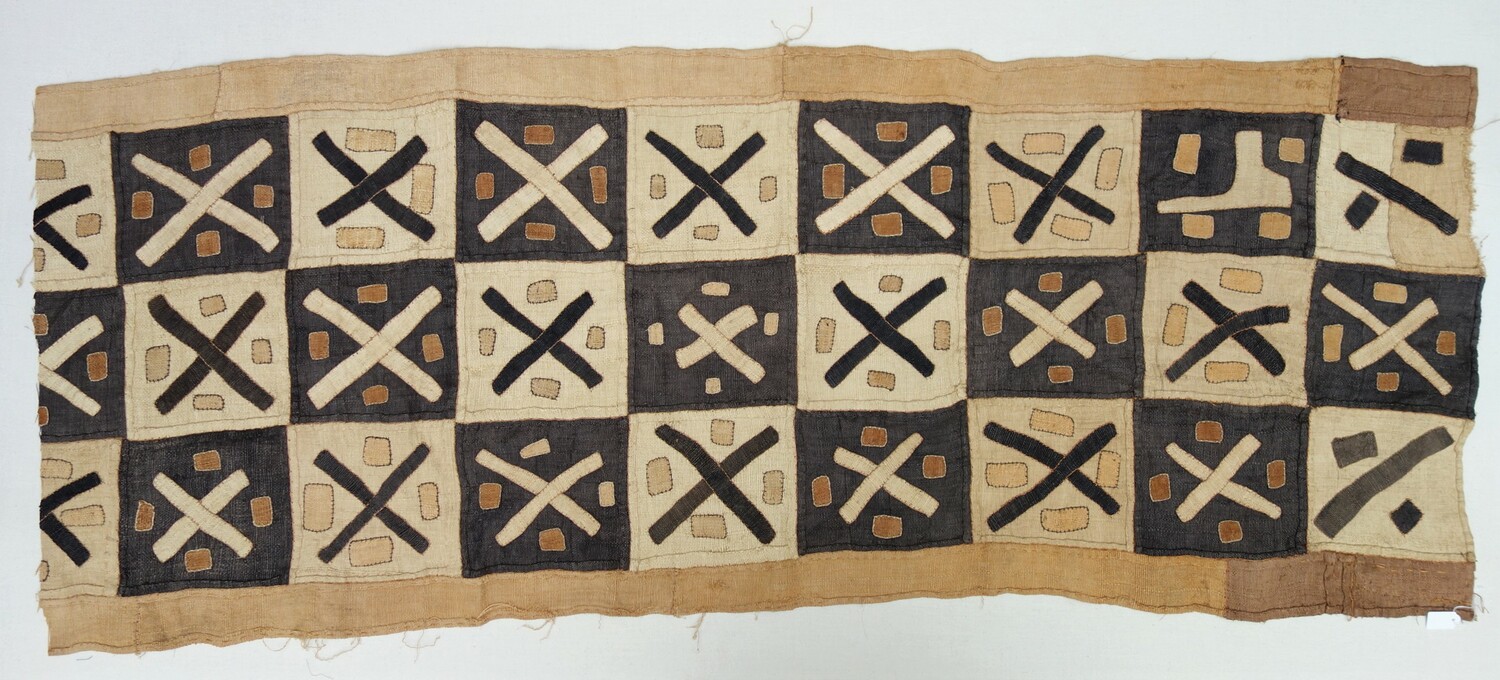 Length of raffia cloth from among the Bushongo (Kuba), with appliqué, embroidery and patchwork decoration. Acquired in 2006, DR Congo (TRC 2020.3881).
Madagascar (southern Africa)
Madagascar is known for the production of raphia cloth using fibres from the Raphia farnifera palm. In general the production of raffia cloth is concentrated in the eastern part of the island. There are also groups, in the Sakalava highlands, who produce a form of ikat raffia cloth. There are two examples of modern (c. 2018) Malagasy raffia textiles with coloured stripes in the TRC Collection, namely, a length of cloth (TRC 2018.2145) and a bag (TRC 2018.2147).
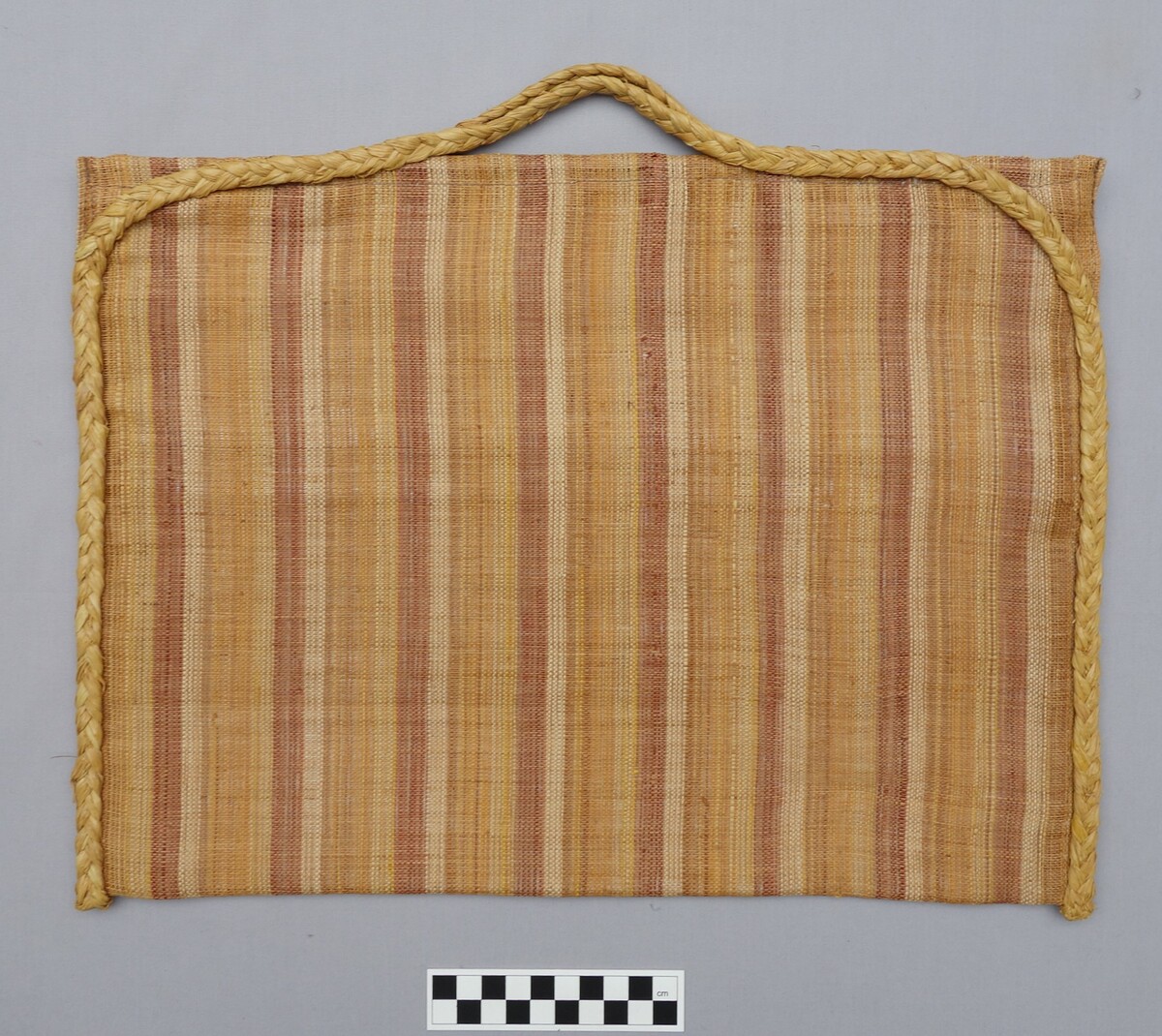 Raffia bag from Madagascar, c. 2018 (TRC 2018.2147).
Sustainability
Over the last two centuries the use of raffia in Africa has declined due to the widespread availability of cotton and then later artificial and synthetic cloth from a variety of sources. As with other traditional fibres, there is a growing interest in raffia as a source of sustainable textile fibres.
World Encyclopedia of Embroidery, Volume 3 on sub-Saharan embroidery due on 20 April !
Volume 3 of Bloomsbury's World Encyclopedia of Embroidery, compiled and edited by the TRC, will be released on 20 April, with much more information on raffia textiles. We are also planning an online exhibition on the subject, and a mini-exhibition.
For more details about these and other, decorative African textiles, see John Gillow (2003), African Textiles:Colour and Creativity across a Continent, London: Thames and Hudson.
Gillian Vogelsang-Eastwood, director TRC Leiden, 5 April 2023
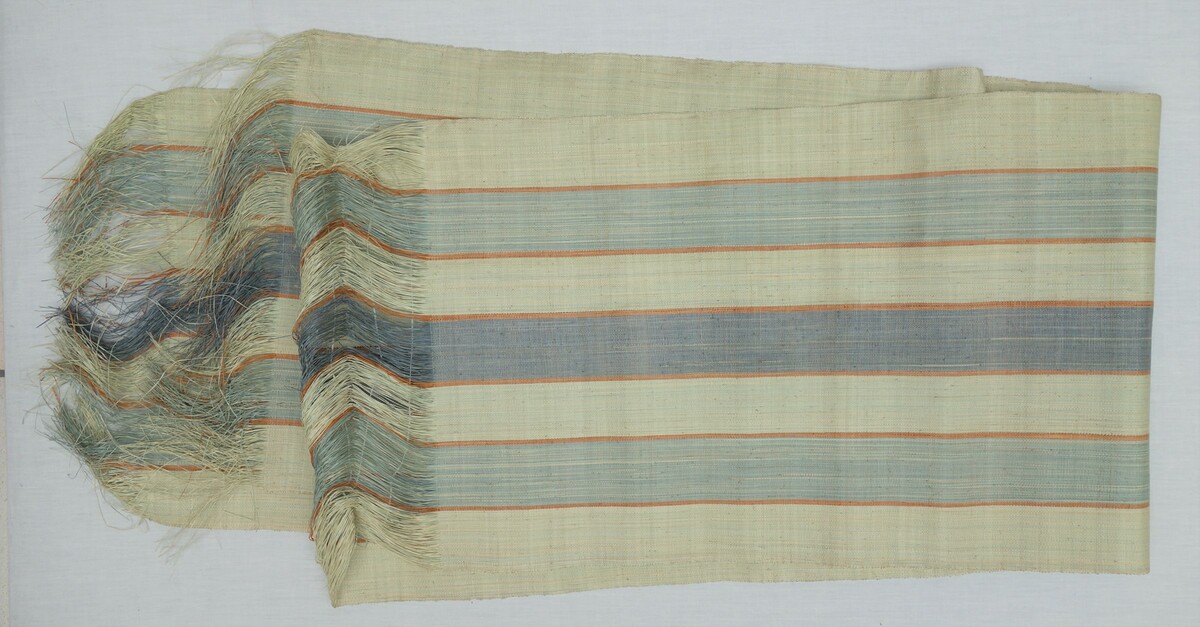 Raffia cloth from Madagascar, c. 2018 (TRC 2018.2145).


