• F1
  • F3
  • F4
  • F2

 'A journey through ASEAN textiles', Malaysian Residence, Wassenaar, 3 May 2023.'A journey through ASEAN textiles', Malaysian Residence, Wassenaar, 3 May 2023.

It's been quite an international week at the TRC in Leiden, and more is expected next week!

Knitting sampler from Hungary, 1791 (TRC 2016.2261).Knitting sampler from Hungary, 1791 (TRC 2016.2261).We have been adopted by Robert Spiegelman from the US, who for a long time has been coming to Leiden every year for six weeks. Robert has been introducing family and friends to the TRC and they are now actively looking for help for the TRC in the US. It's good to know how the TRC can appeal to a wide range of people and backgrounds.

Then Jane Malcolm-Davies Jane (Copenhagen University, Denmark), a specialist in historic textile techniques, came on Monday (1st May 2023) to discuss the history of hand knitting and to look at items relating to the TRC’s 17th century silk stocking project that was led by Chrystel Brandenburg, Leiden City archaeologist. 

The TRC was also involved in the related, British Knitting Forum conference held in Leiden in November 2019. One of the suggestions made by Jane was that the TRC should become an international centre for knitting history!

We are already working on a knitting reference collection, but the idea of the TRC expanding its activities into an international centre for the study of this form of textiles was an interesting and intriguing concept for me to think about!

Small dark blue T-shirt for the 2023 Coronation, with a printed image of a King Charles spaniel and a Jack Russell terrier, both of which are wearing party hats, flags, etc. (TRC 2023.0679a).Small dark blue T-shirt for the 2023 Coronation, with a printed image of a King Charles spaniel and a Jack Russell terrier, both of which are wearing party hats, flags, etc. (TRC 2023.0679a).

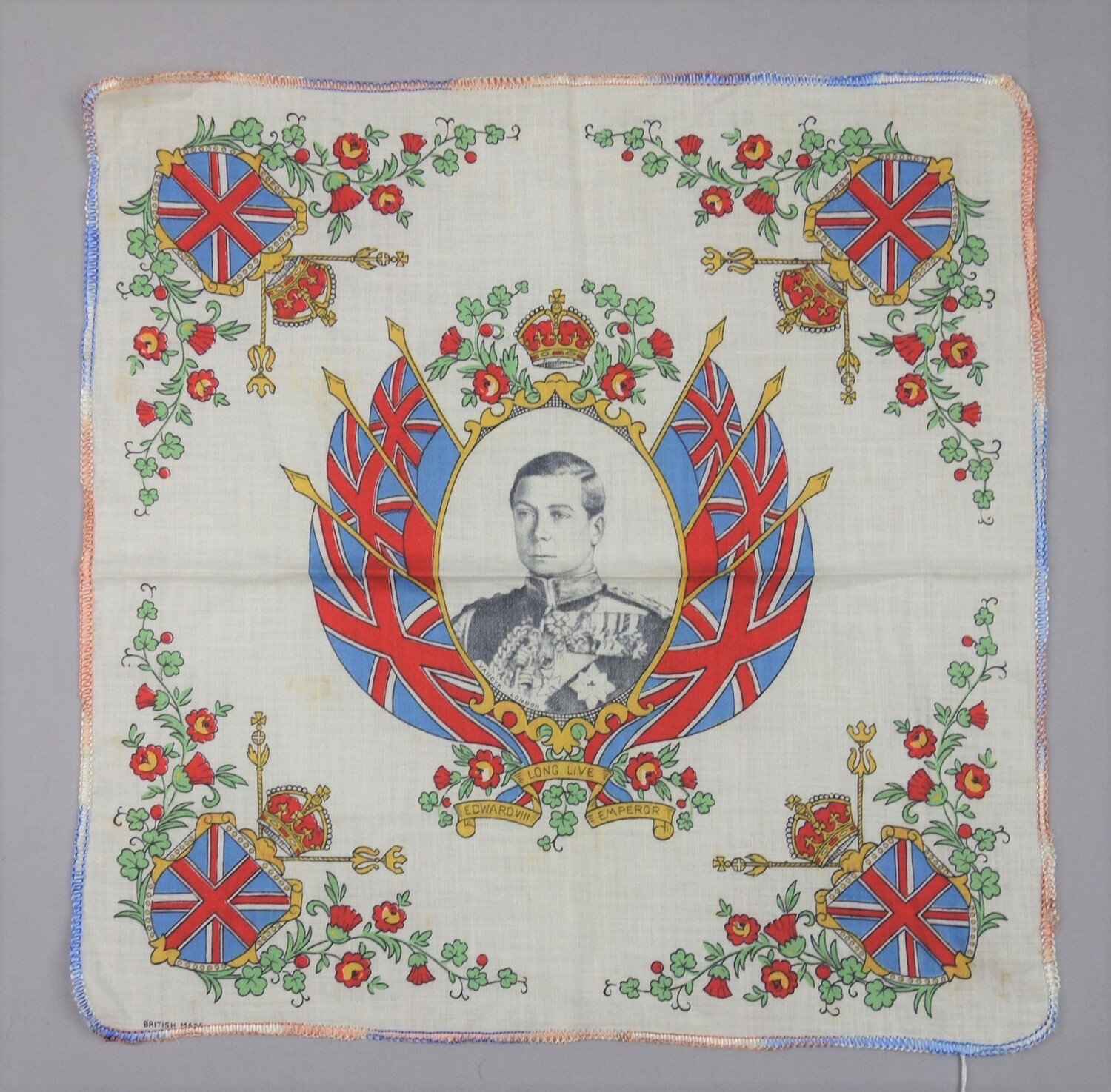
Handkerchief for the coronation of King Edward VIII, 1937. The coronation however never took place (TRC 2015.0405).Handkerchief for the coronation of King Edward VIII, 1937. The coronation however never took place (TRC 2015.0405).In the run up to the coronation of Charles III, tomorrow, on the 6th May 2023 in London, I thought I would have a quick look at the TRC Collection to see what we have that was relevant, and yes, we have several items! Oh, how I love the TRC having a broad based encyclopaedic textile collection rather than a ‘specialist’ one! There are several related items in particular I would like to highlight.

The first is a cotton handkerchief (TRC 2015.040) printed to commemorate the coronation of Edward VIII in 1937, after the death of his father George V (reign 1910-1936). Yet, the coronation never took place because Edward decided to abdicate from the British throne in December 1936 in order to marry Mrs Wallis Simpson, an American divorcee.

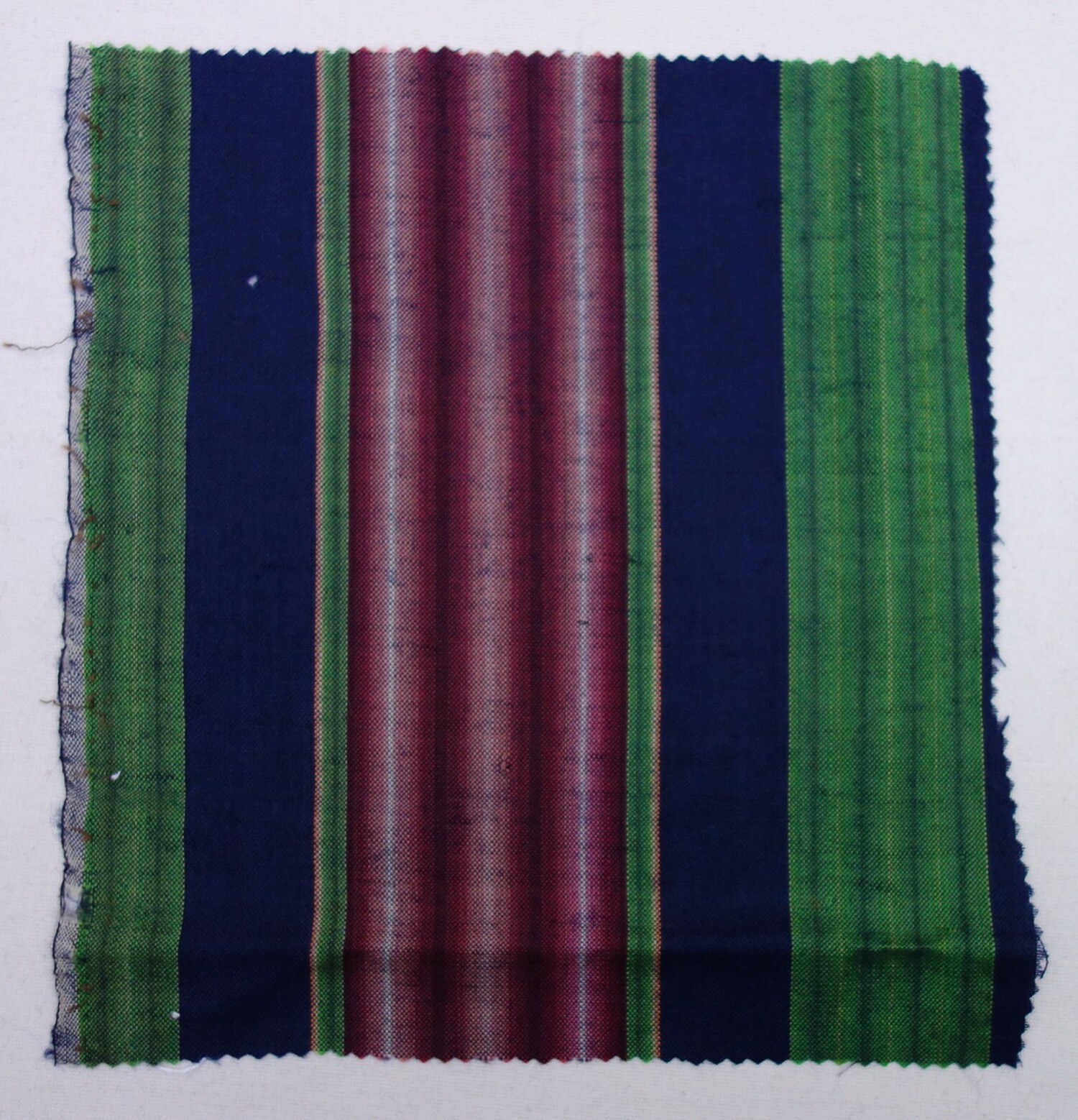
Hand resist dyed (batik), cotton cloth. Indonesia, 20th century (TRC 2023.0573).Hand resist dyed (batik), cotton cloth. Indonesia, 20th century (TRC 2023.0573).In December 2022 we announced the sad news of the death in Leiden of the well-known, Dutch textile curator and historian, Rens Heringa (1932-2022).

As noted, Rens grew up in Twente among textile producers, and from the early 1950s lived for many years in Indonesia. She has long been a grande dame in the field of Indonesian textiles and Indonesian batiks in particular.

Over the years Rens has helped the TRC with textiles, advice and suggestions with respect to its Indonesian textile collection, and although Rens is no longer around, her connections with the TRC continue.

To our surprise it turned out that Rens had included the TRC in her will. Last week we picked up 55 Asian textiles and garments, including Bangladesh, Indian, Indonesian, Thai and Philippine examples, as well as one West African piece (TRC 2023.0553 - TRC 2023.0606).

Looped horsehair veil from Uzbekistan, 20th century (TRC 2005.0261).Looped horsehair veil from Uzbekistan, 20th century (TRC 2005.0261).The TRC has a fascinating collection of face veils from different countries. One that has always interested me is a handmade veil from Uzbekistan, dated to the mid-20th century, which is machine embroidered around the edges (TRC 2005.0261). This veil intrigued me because of the material, which was new to me: it is made from horse hair, a stiff and very durable material.

Imagine my delight when I recently saw many other Uzbek face veils made from the same material. They are in an art installation now on display at the EYE Film Museum in Amsterdam. The exhibition, called “18,000 Worlds”, is by award-winning Uzbek artist Saodat Ismailova (b. 1981, Tashkent). While she is best known for her films, this exhibition contained many textiles.

The first piece that drew my eye was a long strand of hanging horse hair that almost obscured a neon light that read, in Arabic script, “What was My Name?” (2020). In this piece Ismailova explores the multi-faceted Uzbek identity, combining Arabic, Mongol, Persian, Russian and Uzbek aspects. The language is Uzbek, the script is Arabic, and the horse hair, traditionally used in Uzbek face veils, may have originated in the Mongolian belief that horse hair protects against the evil eye (see also a TRC blog about horse hair veils that used to be worn in Afghanistan, and the TRC online exhibition 'Dressing the Stans').

There was an intriguing article recently on the BBC News (online)) about scientific discoveries presented to the Royal Society, London:  Four incredible objects that made science history.

The article refers to some 250,000 documents that can now be viewed online, and that include letters sent by the public to the Society in the 17th, 18th and 19th century about scientific observations and other matters of interest to the Society.

One letter from 1779 was sent by someone called Jean Antoine André, a cloth-maker, from Offenbach am Main, Hesse, Germany. Included was an introductory letter and a piece of silk that Mr André said demonstrated he had discovered how to make the "pinkest ever pink dye".

Following our initial question whether there was someone who knew about the cloth maker and  which dye was being referred to, we received a reply from Monika Preuss in Germany:

The family André were French Huguenots who emigrated to German lands in 1699. Marc André (1705-1751) married Marie Juliane Pfaltz, daughter of a cloth-maker from Mannheim, and started his business of silk weaving in Offenbach. His eldest son Johann André (1741-1799) established a shop dealing with music (Musikalienhandlung André in Offenbach, still existing today). Johann or another son continued the silk factory or the eldest was engaged in both. For more information about the family, click the Wikipedia entry.

26 April 2023

Bunschoten-Spakenburg mannequin between two quilts with Dutch-inspired designs. Nantes, April 2023Bunschoten-Spakenburg mannequin between two quilts with Dutch-inspired designs. Nantes, April 2023We would like to let you know about some developments and events during the last few days: Firstly, Beverley Bennett, our shop manager and quilt guru, has been participating in an international quilt festival in Nantes (France) between 19-22 April 2023.

The festival is called Pour l’Amour du Fil (‘For the love of thread’) with the theme ‘The Netherlands from every angle’. Beverley had three quilts on display, while the TRC lent three mannequins dressed in Bunschoten-Spakenburg, Marken and Volendam regional dress.

At the same time a group from the TRC went to the Rijksmuseum in Amsterdam for an international conference called 'Under the Microscope' (20-21 April). It was a stimulating and thought provoking event! A report about the conference can be found here.

The Textile Research Centre (TRC) in Leiden is proud to announce the publication, on 20 April 2023, of volume three of the Bloomsbury World Encyclopedia of Embroidery, which covers sub-Saharan Africa. The work was completed under the aegis of the TRC and edited by Dr Gillian Vogelsang-Eastwood, director of the TRC and also chief author, together with her husband, Dr Willem Vogelsang. For the official Bloomsbury announcement of the book, click here

Encyclopedia of Embroidery from Sub-Saharan Africa, Gillian Vogelsang-Eastwood and Willem VogelsangEncyclopedia of Embroidery from Sub-Saharan Africa, Gillian Vogelsang-Eastwood and Willem Vogelsang

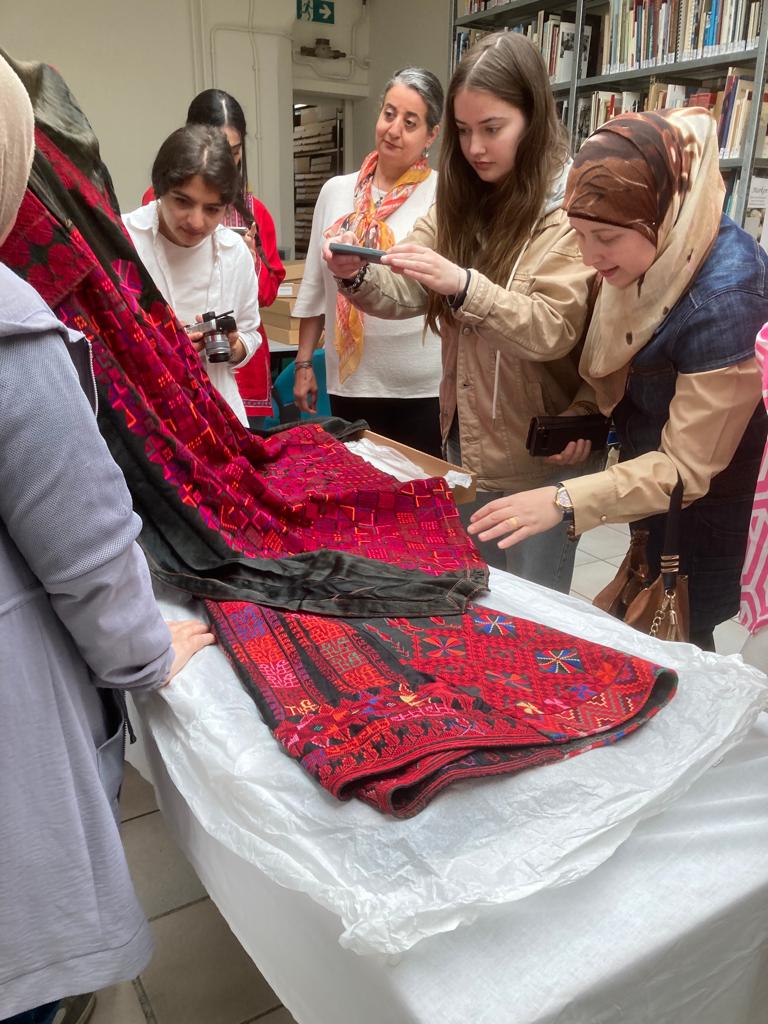
Last year we were given a number of Romanian blouses by Monique Amsel from Paris. At the time we wrote a blog about this donation. In order to gain more information about these embroidered garments a special meeting was held last year that was organised by members of the Romanian community living here in the Netherlands.

Romanian Blouse Day, 8 April 2023. Photograph Maria Linkogle.Romanian Blouse Day, 8 April 2023. Photograph Maria Linkogle.

Zoek in TRC website

Contact

Boerhaavelaan 6
2334 EN Leiden.
Tel. +31 (0)71 5134144 (kantooruren)  
office@trcleiden.org

Het TRC is elke dag geopend tussen 10.00 en 15.00 uur.

facebook 2015 logo detail


instagram vernieuwt uiterlijk en logo


Bankrekening

NL39 INGB 0002 9823 59, t.a.v. Stichting Textile Research Centre.

Financiële giften

Het TRC is afhankelijk van project-financiering en privé-donaties. Al ons werk wordt verricht door vrijwilligers. Ter ondersteuning van de vele activiteiten van het TRC vragen wij U daarom om financiële steun:

Giften kunt U overmaken op bankrekeningnummer (IBAN) NL39 INGB 000 298 2359, t.n.v. Stichting Textile Research Centre. BIC code is: INGBNL2A

U kunt ook, heel simpel, indien u een iDEAL app heeft, de iDEAL-knop hieronder gebruiken en door een bepaald bedrag in te vullen: 


Omdat het TRC officieel is erkend als een Algemeen Nut Beogende Instelling (ANBI), en daarbij ook nog als een Culturele Instelling, zijn particuliere giften voor 125% aftrekbaar van de belasting, en voor bedrijven zelfs voor 150%. Voor meer informatie, klik hier