Visible and invisible patching: some musings on school needlework
by Dr Gillian Vogelsang-Eastwood, Director TRC, 18 June 2024
We are currently working on another of the many (and often intriguing) boxes of items from the former Naaldkunst Museum, Winschoten, which were donated to the TRC in October 2023. In this particular box there were a number of school samples in the form of semi-formal work pieces, rather than the more formal samplers with alphabets, numbers, names, dates, etc.
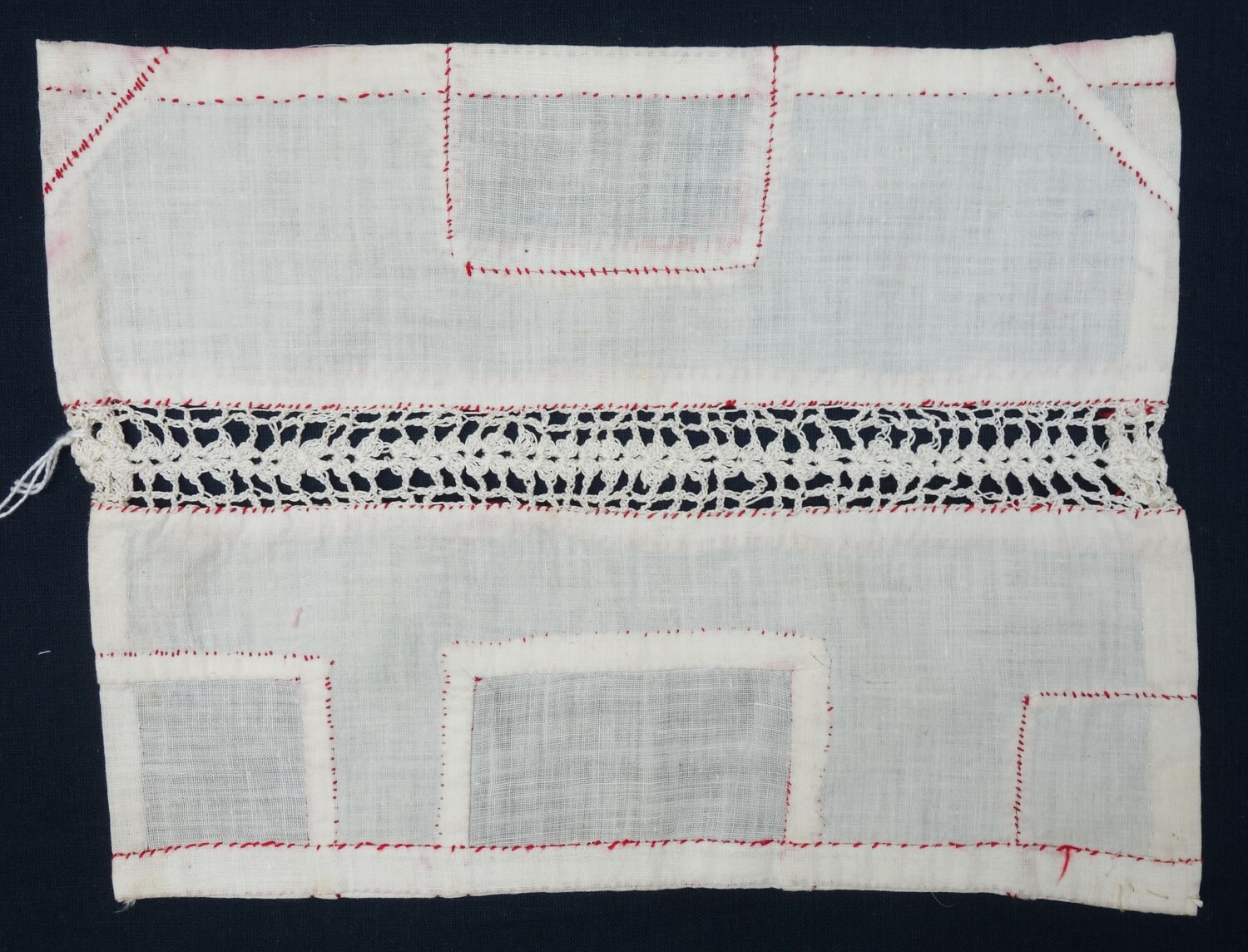 Fig. 1: School sample, worked by a young girl, with six types of patching, stitched with red yarn, and with a crochet inset (insertion) down the middle of the cloth. The Netherlands, early 20th century (TRC 2024.1633).
All of the school samples date to the first quarter of the 20th century and show a diversity of skill levels. They were made by young girls between the age of 6 and about 12, who were learning about textiles and needlework and how to sew cloth for later domestic and professional use. The techniques include the making of basic seams, hems, buttonholes and eyelets, as well as the sewing on of items such as buttons, hooks and eyes, loops and ties.
 By Shelley Anderson, TRC volunteer, 8 June 2024