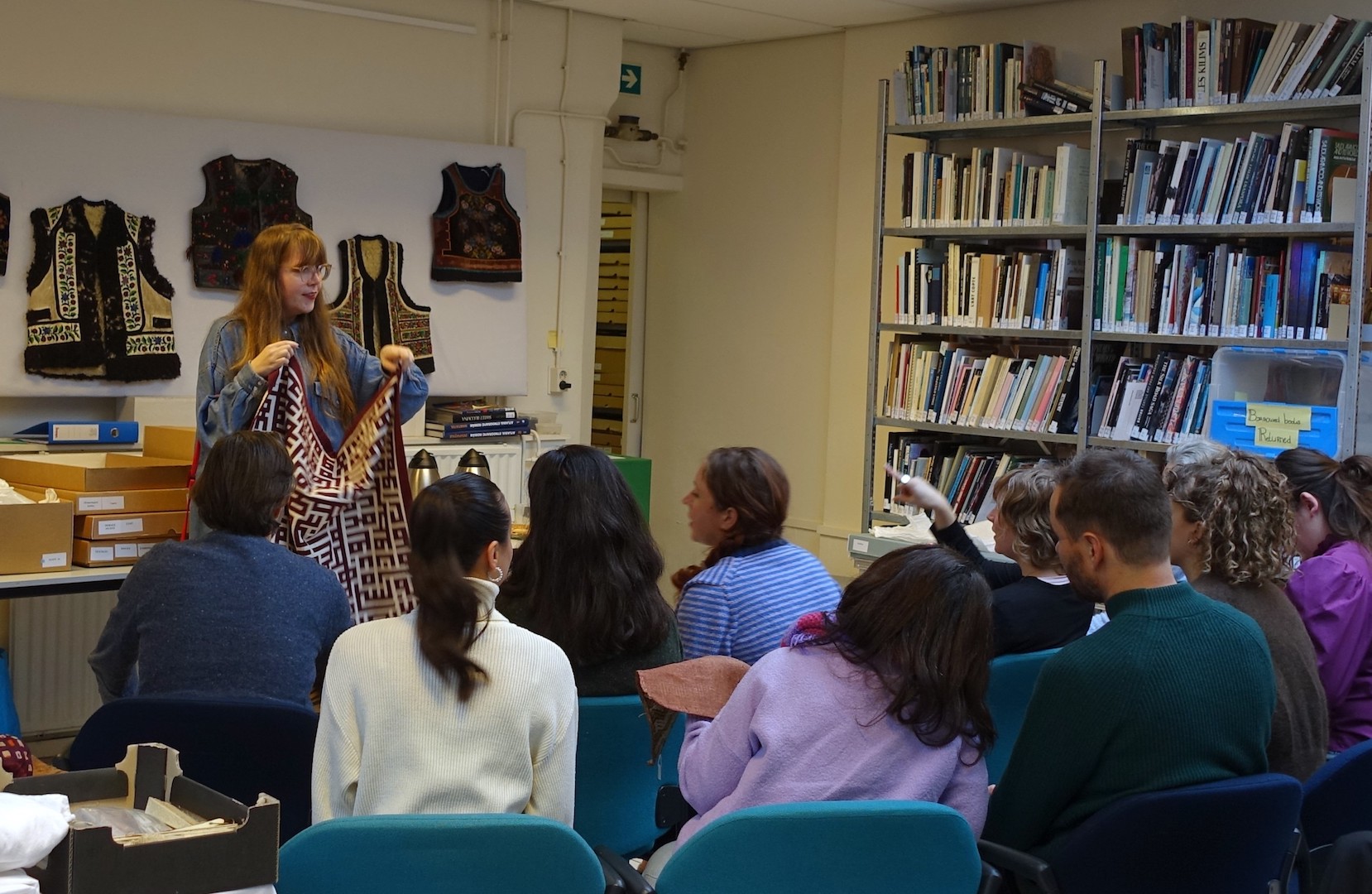
Reclaiming Power: Stitch Witch. An exhibition by Dutch artist Lara Schnitger.
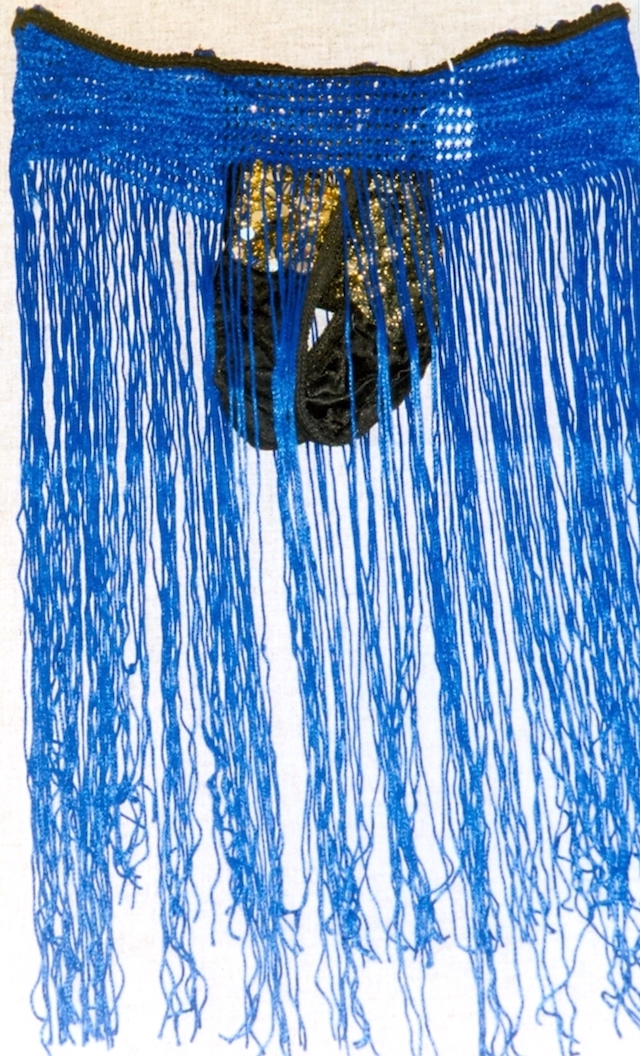 Pair of underwear with a long, blue fringe and gold-coloured material with sequins. Cairo, Egypt, 1995 (TRC 1997.0119b).The TRC has a large collection of underwear from many countries, from Egypt to Sweden, from the Netherlands to Tanzania. I do like the 1995 Egyptian pants with a long, blue fringe and gold-coloured material with sequins (TRC 1997.0119b), although the dark red pair of panties with a decoration of pink flowers from Tanzania (TRC 2004.0164) might be easier to wear.
The TRC collection includes bras, slips, knickers, stocking belts, long johns, chemises, pantaloons, drawers and bloomers.
My favourites are, however, seven lingerie pouches from Japan in the 1920s-1930s, exported to the Western market to store delicate silk lingerie and scarves (TRC 2016.2172—TRC 2016.2177). The floral patterns and the more abstract Art Deco designs that decorate the pouches are lovely.
Lingerie is very present in the work of Dutch artist Lara Schnitger, who was born in Haarlem in 1969. Schnitger is a Dutch textile artist who now lives and works in Los Angeles (US).
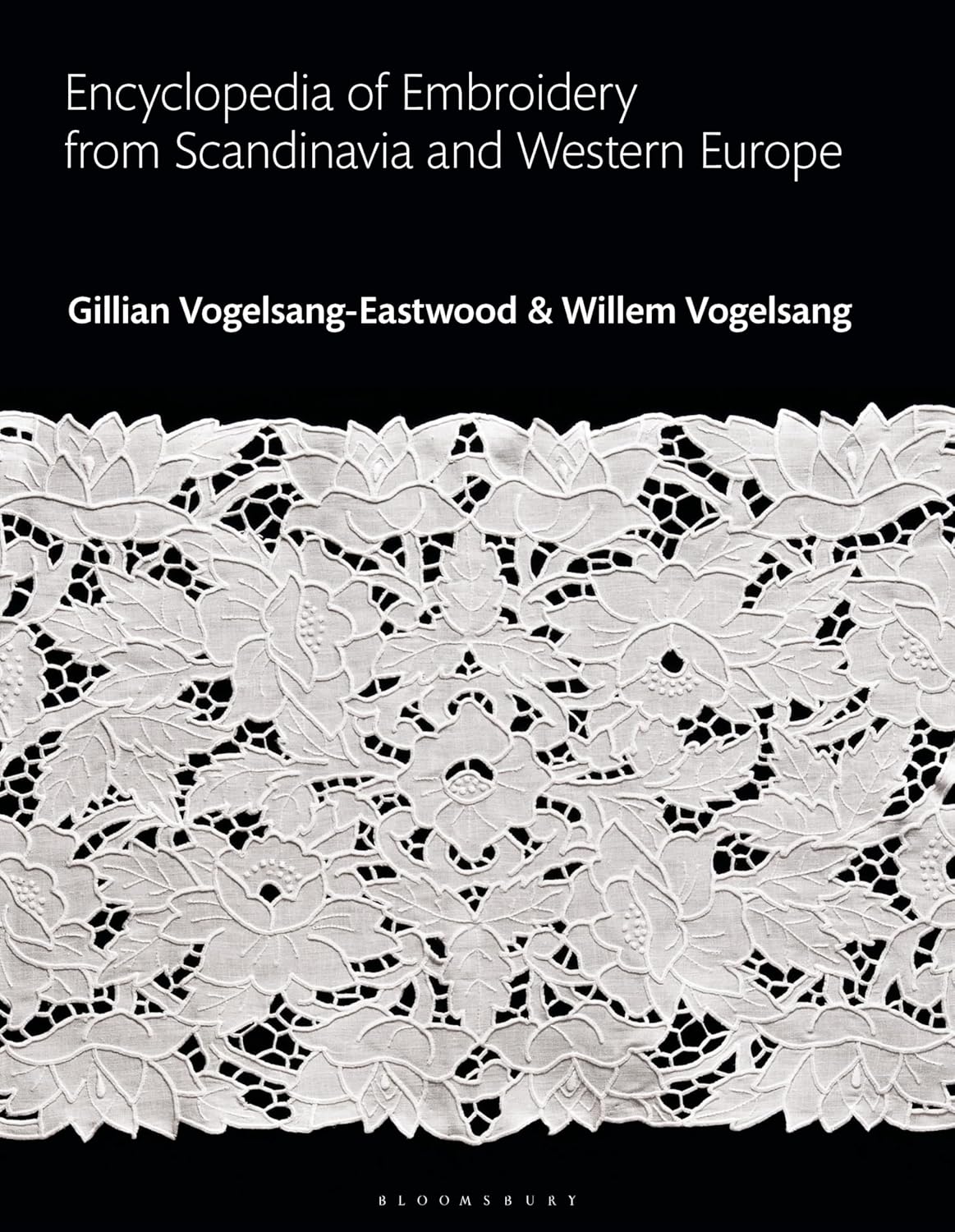 The TRC is very proud to announce the publication of the fourth volume of Bloomsbury's World Encyclopedia of Embroidery: Embroidery from Scandinavia and Western Europe, composed under the aegis of the Textile Research Centre (TRC), Leiden, The Netherlands. Authors: Gillian Vogelsang-Eastwood and Willem Vogelsang.