


On Wednesday, 22 April 2020, TRC volunteer Heidi Stanionyte from Estonia wrote:
Muhu is an island in the Baltic Sea and the third largest island of Estonia. The island is well known for its distinctive regional costume and special handicrafts. Distinctive Muhu slippers or shoes (pätid in Estonian) have been made and used for hundreds of years and are considered an important part of dress. Nowadays, the shoes are worn together with the rest of regional costume, but also together with work and everyday activities. The shoes can be worn by men and women.
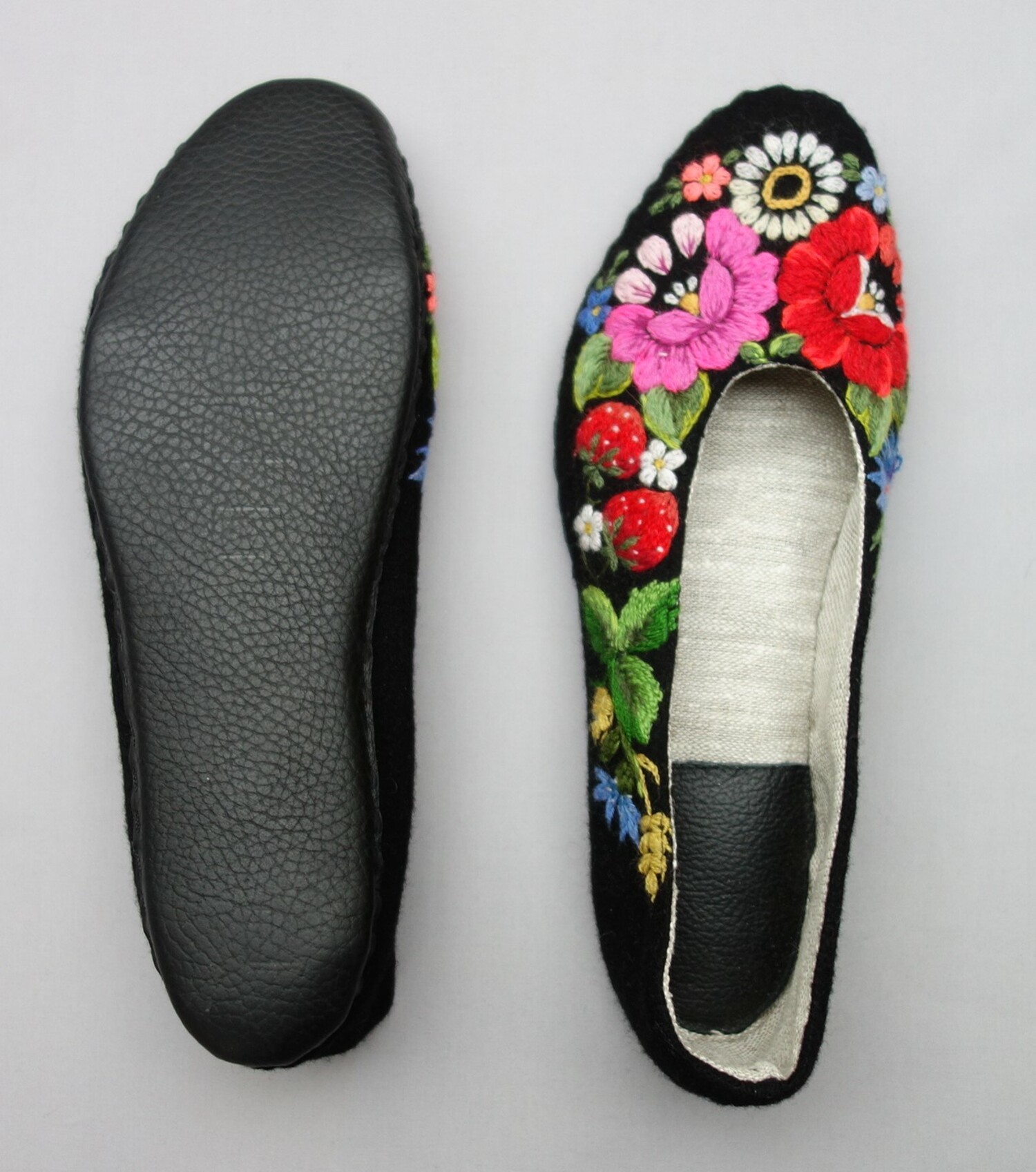 Pair of Muhu Pätid shoes, Estonia, early 21st century (TRC 2020.0011a-b).
The Muhu shoes in the TRC Collection (TRC 2020.0011a-b) were made by Triinu Traumann, who is from Muhu island and currently lives there as well. She emphasizes the importance of Muhu shoes for local culture. The shoes are embroidered, and Traumann learned to work Muhu embroidery, not only at a local handicraft club, but also from her grandmother and from school lessons. She told that actually living on the island provides much inspiration. Especially learning from the local masters and continuously practicing help to improve her skills.
The process and materials have changed throughout time. For example, in the past people used tar, sand and ash to make Muhu shoes. The process of making Muhu shoes is mostly done by hand, but the lining is made with a machine. The first step is adjusting the lining to the main, embroidered fabric. After doing so, then the lining is sewn to the fabric. Lastly the sole is added and the embroidered fabric will be covered with a special glue to make it more durable.
The shoes are decorated with special Muhu embroidery. At first the embroidery was fairly simple. After World War I changes occurred, and more geometric designs were used. In Soviet times, the embroidery became more elaborate and much inspiration was derived from Russian post cards. Flowers and plants such as poppies, grain plants, cornflowers were commonly used.
Triinu Traumann described the development of the embroidery patterns as a combination of the old and the new. She uses different patterns and various stitches to make the slippers more interesting. According to her, every maker can have their own signature patterns or colour combinations. Furthermore, the shoes and their decoration can be adapted to the specific requirements and wishes of the customer.
Triinu Traumann believes that the tradition of Muhu shoes will remain an important part of Muhu culture. However, she expects the shoes and their decoration to become more and more personal. Traumann adds however that there are people that continue using the more traditionally decorated shoes. Therefore, the combination of old and new will lead the way.


