


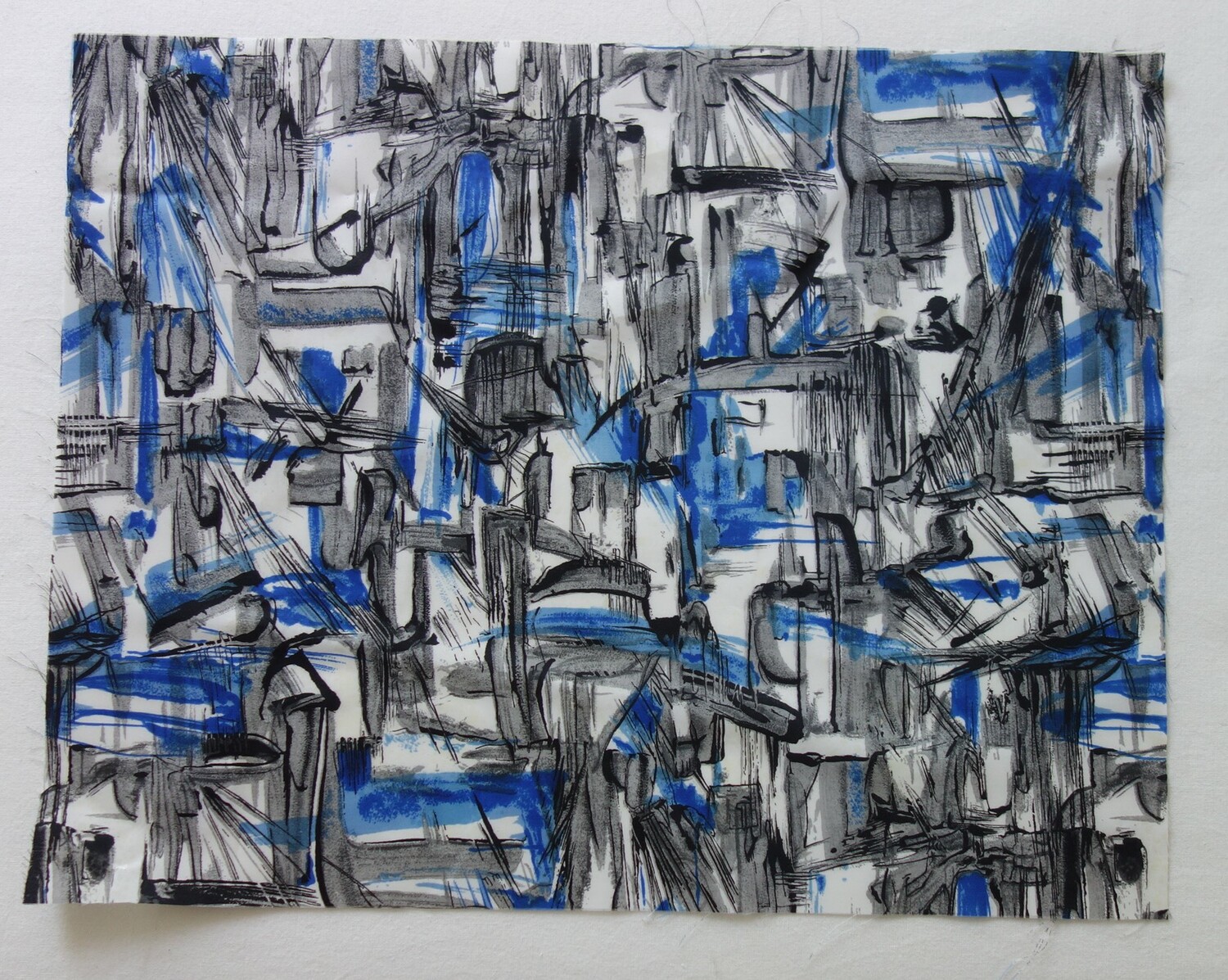
 Sample from the TRC Pepin-Cuvelier collection, 1950's, Tachism movement (TRC 2020.1157).On Wednesday, 22 April 2020, Gillian Vogelsang, director of the TRC in Leiden, wrote the following blog about the Pepin-Cuvelier collection at the TRC:
In a previous blog I described how the TRC recently acquired a large part of the Yves Cuvelier textile collection. In this blog I want to announce that the TRC is preparing an online exhibition about a highly intriguing part of Yves and Geneviève Cuvelier's work. We will set up this exhibition with the help of the Cuvelier family, notably with one of their sons, Antoine Cuvelier (Paris).
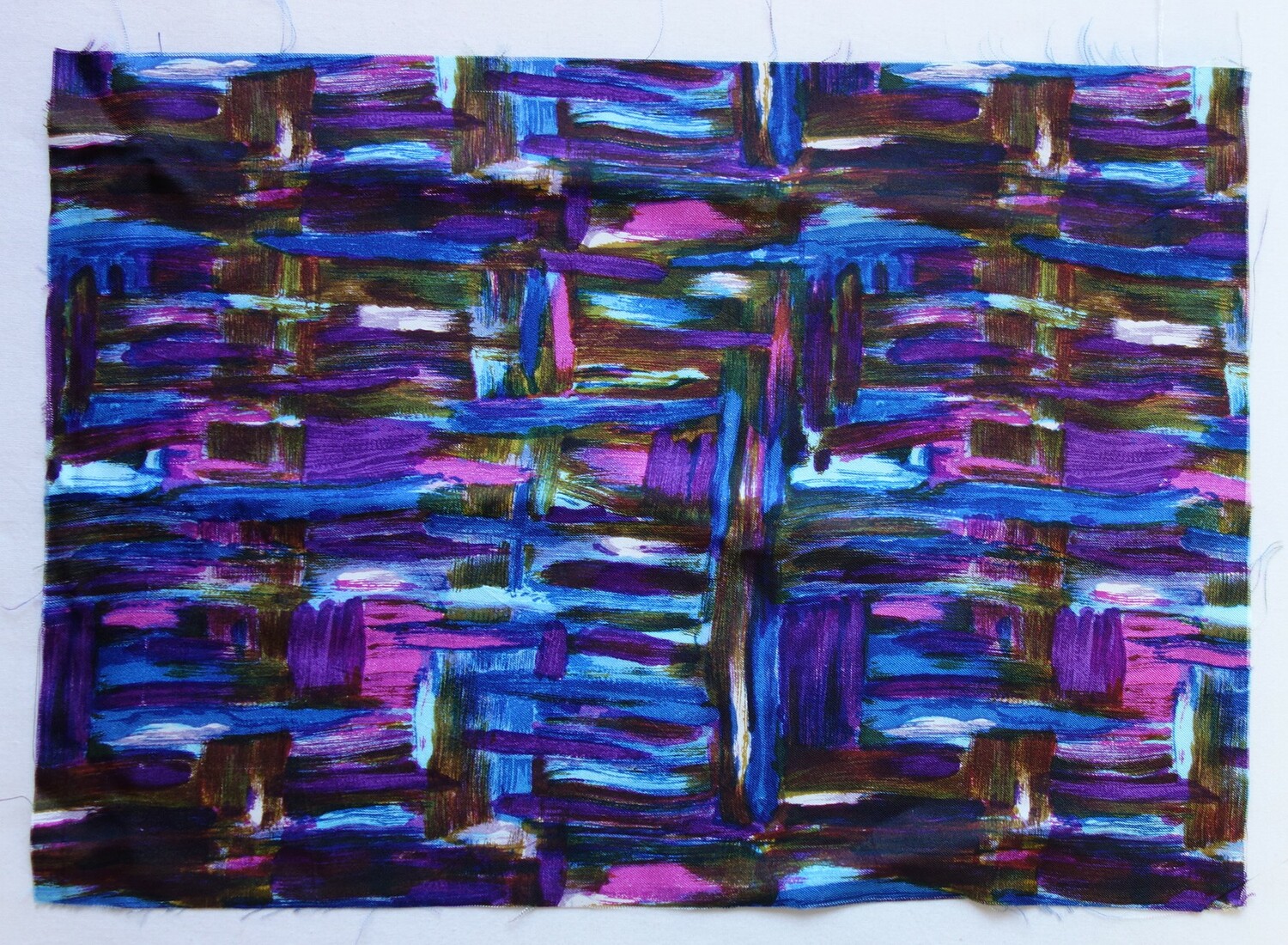 Sample from the TRC Pepin-Cuvelier collection, 1950's, Tachism movement (TRC 2020.1190).
The Pepin-Cuvelier collection at the TRC contains nearly 200 abstract, ‘painted’ samples from the 1950's that belong within the Tachism art movement. This was a French artistic development that arose in the late 1940’s and was very popular in the 1950’s. It is part of a movement that is generally known as Art Informel and is very similar (but not identical) to the American Abstract Expressionism.
Art Informel is characterised by ‘spontaneous’ brushwork, drips, blobs and scribbles. It should be noted that some of the designs on the textiles are extremely abstract and consist of lines and blobs. Others are more structured and include checks and lines. There are also examples that are less abstract and for which we can detect the source of inspiration (such as a landscape or flowers).
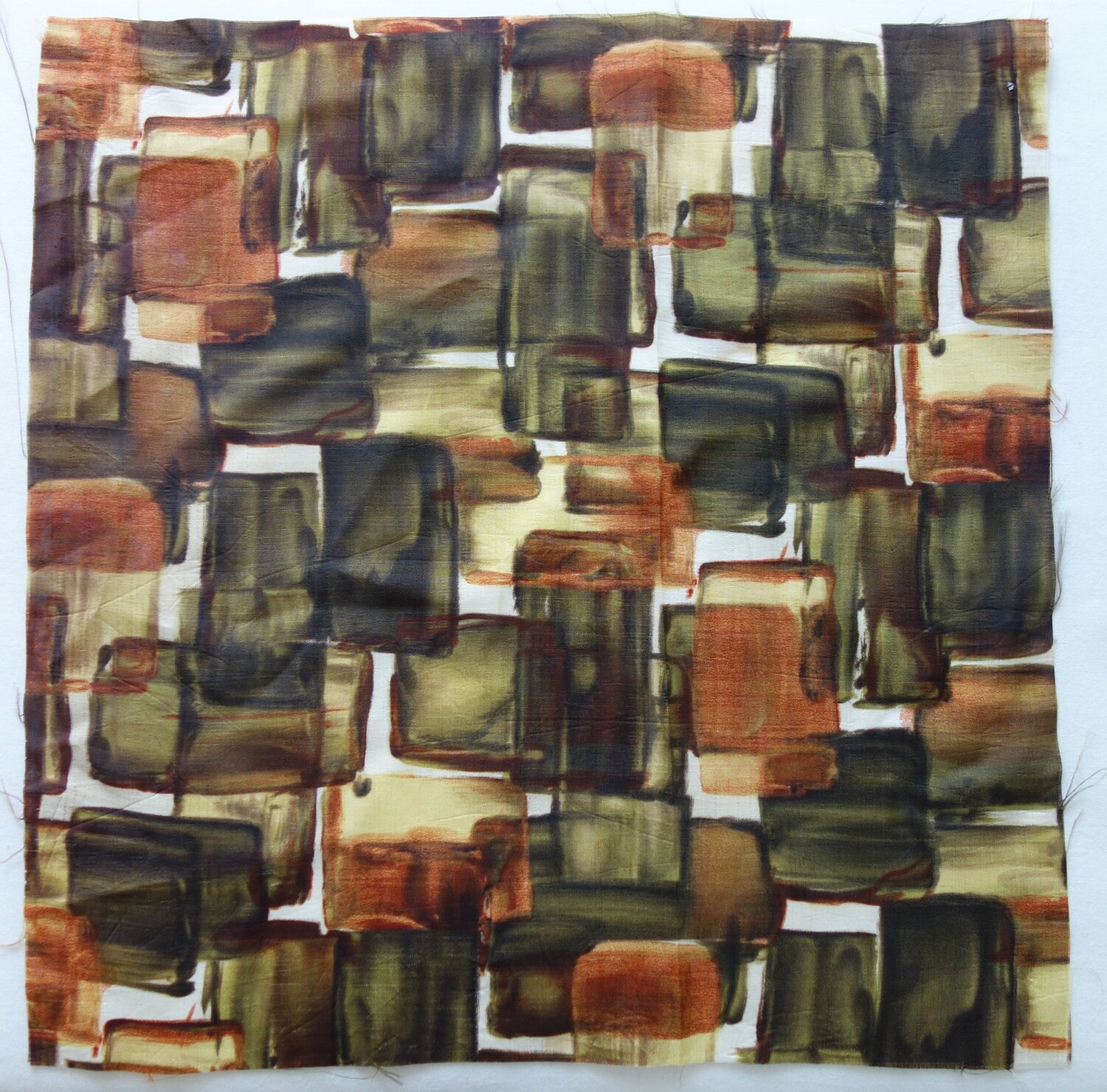 Sample from the TRC Pepin-Cuvelier collection, 1950's, Tachism movement (TRC 2020.1215).Both Yves and Geneviève Cuvelier were involved in this movement and produced a range of designs for fashionable garments based on Tachism. The Pepin-Cuvelier collection at the TRC Leiden includes items created by the Cuveliers themselves, but also by other textile designers. All of these textiles were designed to be used by commercial groups and needed to appeal to a group of clients that was different from the art collectors of abstract paintings that were produced by famous (and not so famous) artists.
The Tachism textiles are an interesting group, which not only reflects how quickly designers and producers could react to an international artistic trend in order to make fashionable and ‘chic’ textiles. The samples also illustrate (literally) how textiles can be used as a medium to transmit ‘new’ colour and design ideas, which are then translated into garments and household items.


