The TRC Collection database: More technical information being added
Over the last few months we have been looking at presenting more information about specific textiles or groups of objects to the public. In this context, we have been talking with various groups about a range of scientific analysis techniques that can be carried out at the TRC or elsewhere.
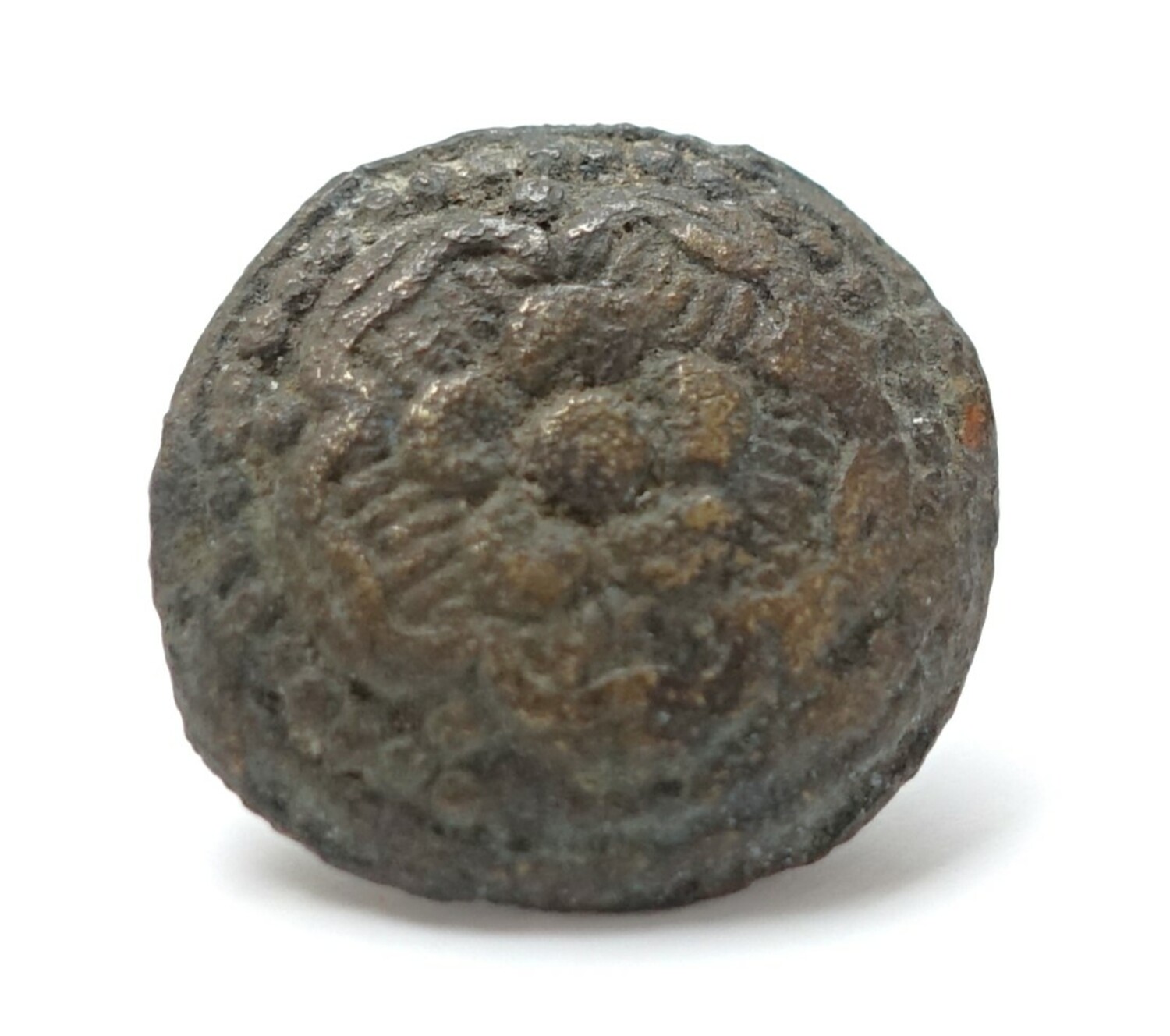 A slightly domed metal button with an alpha-type shank, with flowers within flowers inside a dotted border on the front. The Netherlands, 15th-16th century (TRC 2024.2582).We are already working with various techniques. Emilie Lambert, a TRC volunteer and archaeology student (Leiden University), for example, is examining a group of 15th to 19th century metal buttons that were found in the Netherlands. She wrote a separate blog on the subject, published on 16th October 2024.
Emilie is studying the buttons with XRF (X-ray Fluorescence). This non-destructive technique sends radioactive signals through an object, and quickly provides precise ratios of its elemental components.
The knowledge gained is often used for provenancing. With respect to the TRC buttons, this work is being carried out in order to identify what exactly they are made from and perhaps determine their provenance, but also to see if there are similarities that might indicate if any have the same profile, suggesting they might even have been made in the same workshop. The aim is to have some of the metal analysis results appearing in the TRC Database from May onwards.