


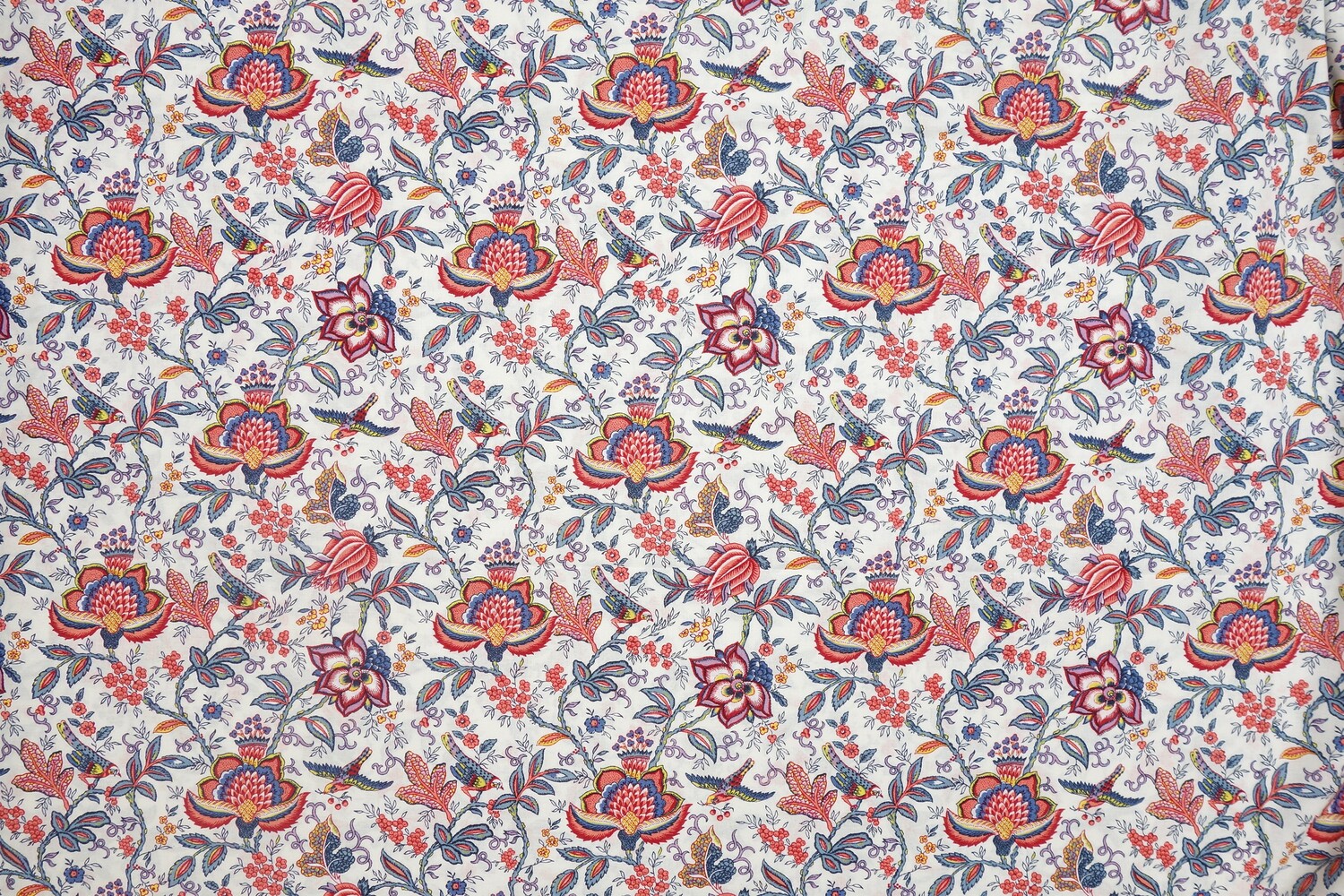
 Modern example of tissu Provencal (TRC 2020.3198).There has been considerable attention over the years for a typical type of Indian cloth generally called chintz (sitz in Dutch), its European copies, and the popularity of these textiles in Europe in the eighteenth and nineteenth centuries. Museums such as the Victoria and Albert (London), the Metropolitan Museum of Art (New York), as well as various smaller institutions have all had exhibitions that highlight the economic, social, technical and artistic role of these textiles.
In this blog, I would like to draw attention to a specific form of these textiles that is still alive and very popular in southern France. It is known as tissu de Provence, tissu Indienne, tissu provençal or cotonnades provençales. The production of these textiles, which still continues, is based on seventeenth and eighteenth century cotton textiles that were initially exported from India to France and then copied in various southern French towns, notably Marseille, Mulhouse and Rouen.
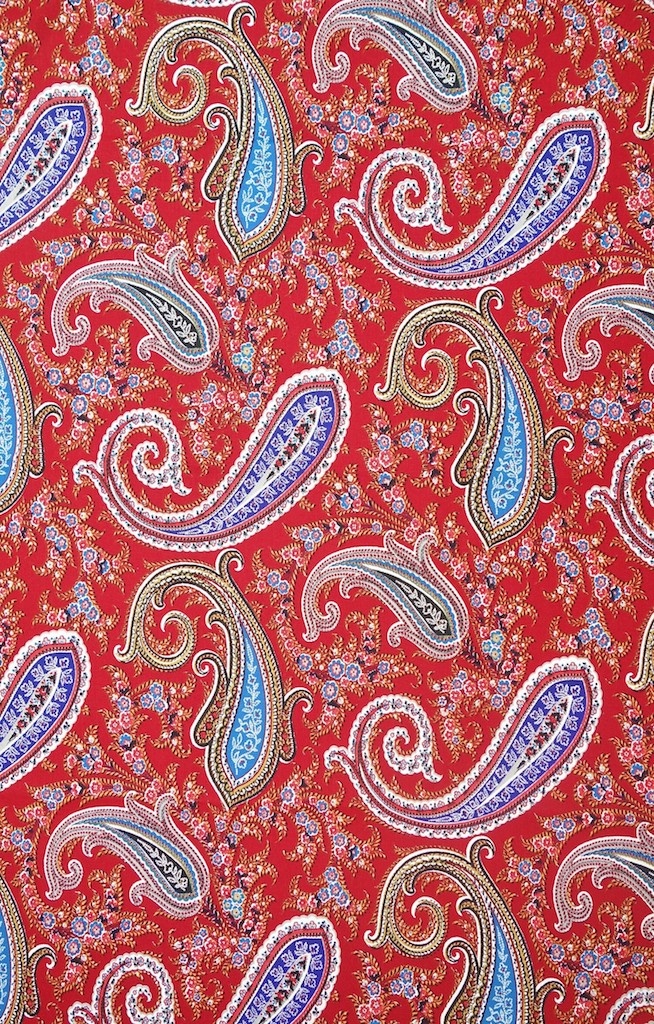 Modern example of tissu Provencal, with buteh, or Paisley motifs (TRC 2020.3192).Only last week we noticed that the historic, walled city of Avignon in southern France, for example, has a street known as the ‘Rue de Teinturiers’ where, according to local information, this type of cloth was produced in the eighteenth century.
It is also worth noting that one of the Mulhouse merchants involved in the production of these textiles was a member of the Dollfus family, that much later set up the well-known company of Dollfus-Mieg et Compagnie (or DMC), which has produced embroidery textiles and yarns since the 19th century.
The designs used for tissu Indienne have changed over the centuries and may include both Indian based motifs as well as ones that are designed to appeal to local people and tourists (such as images of Provençal lavender or the cicades, which make such a loud noise, especially in the summer months). The TRC has recently acquired a number of modern examples of these textiles, directly from a specialist supplier in St-Saturnin-les-Avignon (called Tissus Grégoire), some ten kilometres east of Avignon.
The TRC Collection now houses various forms of these textiles, including ones that can be directly traced back to Mughal originals from India, with individual motifs on a white or red ground (such as TRC 2020.3195 and TRC 2020.3205), but also those with stylised and very ornate floral and bird motifs (TRC 2020.3198 and TRC 2020.3200). The new TRC acquisitions also include what is known in India and Iran as buteh motifs but in Europe are more commonly known as the Paisley design (after the Scottish town of Paisley, where ‘Kashmir’ shawls were woven in the nineteenth century; see for example, TRC 2020.3192).
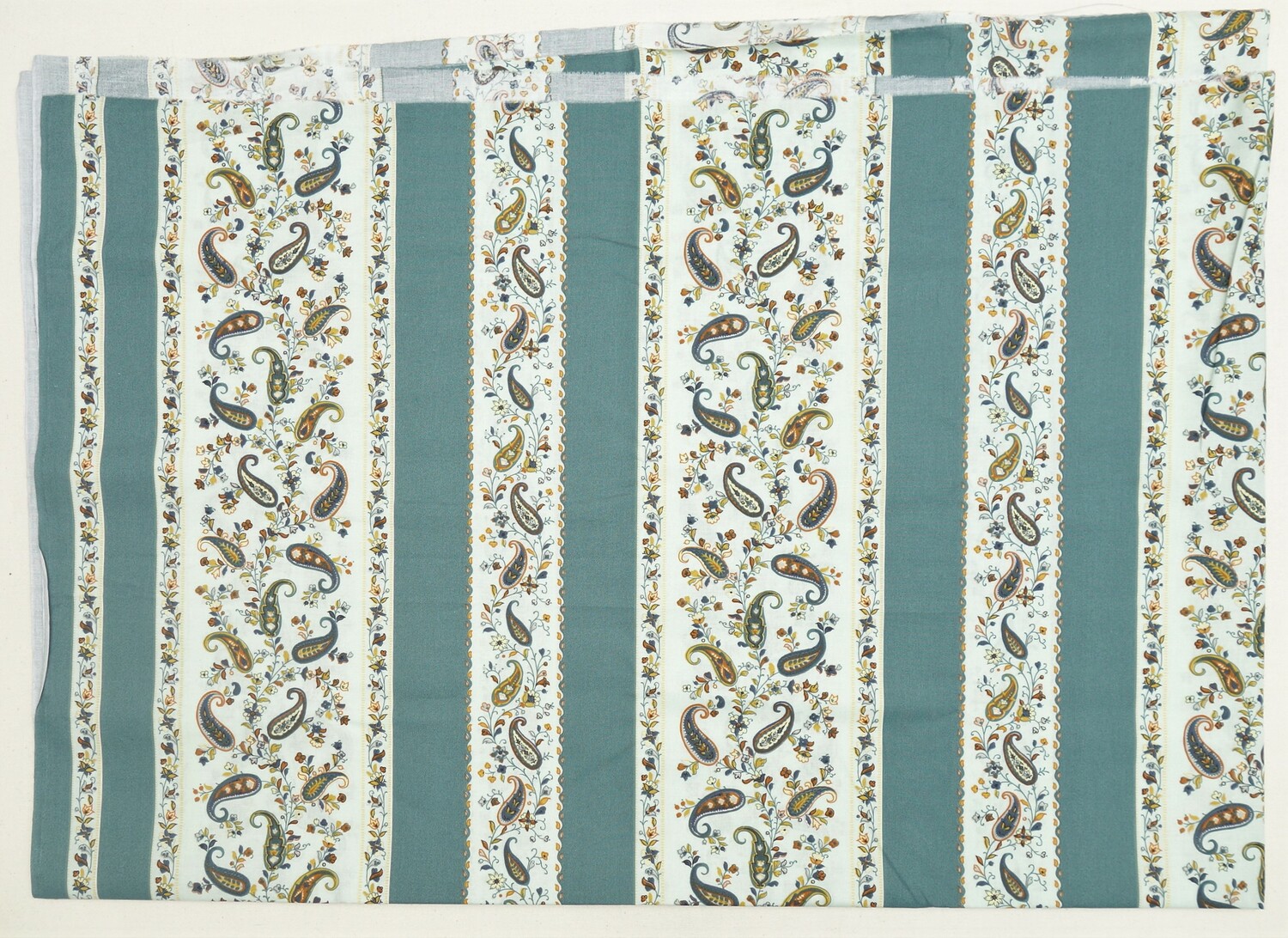 Modern example of tissue Provencal, with a Regency-style lay-out and small buteh/Paisley motifs (TRC 2020.3193).European influences can be seen in the ‘Regency’ style examples, which use broad bands or ‘ribbons’ in a single colour, alternating with small, sometimes chintz-like motifs (TRC 2020.3193 and TRC 2020.3194). And then there are those with more modern, European designs, such as those noted above with lavender and insects.
The TRC is hoping to have an exhibition (actual or digital) about this type of cloth in the near future. If you have examples of tissu Provençal that you would like to donate to the TRC for inclusion in the collection and for the exhibition, please let me know at This email address is being protected from spambots. You need JavaScript enabled to view it.
PS: As a general warning, if you use Google Translate for French entries on this subject, then Indienne becomes ‘Indian woman’, which leads to some very strange passages about the production and manufacture of ‘Indian women’ in various French cities.
Gillian Vogelsang, 6th August 2020


