


Mengying Zhang, familiarly known as Eden, is a TRC volunteer and student at Leiden University. She has been helping with cataloguing the TRC Collection and getting to know and understand about the running of a small collection, the setting up of exhibitions, and how to come to grips with some of the many stories behind the objects. This is the second in a series of blogs she is writing about her work and the TRC collection.
She writes: I would like to bring your attention to a particular variant of Dutch regional dress, namely women's upper body garments from Marken, until recently an island in the province of Noord-Holland, in what is now called the IJsselmeer, and what used to be called the Zuiderzee.
The local dress of this village is one of the most famous regional dress forms in the Netherlands, because it has been kept and worn for centuries. My personal interest in these garments is the unique ways in which the garments are worn and their interesting structures. There are three types of upper body garment, namely the mouwen, het buisje and the borsik.
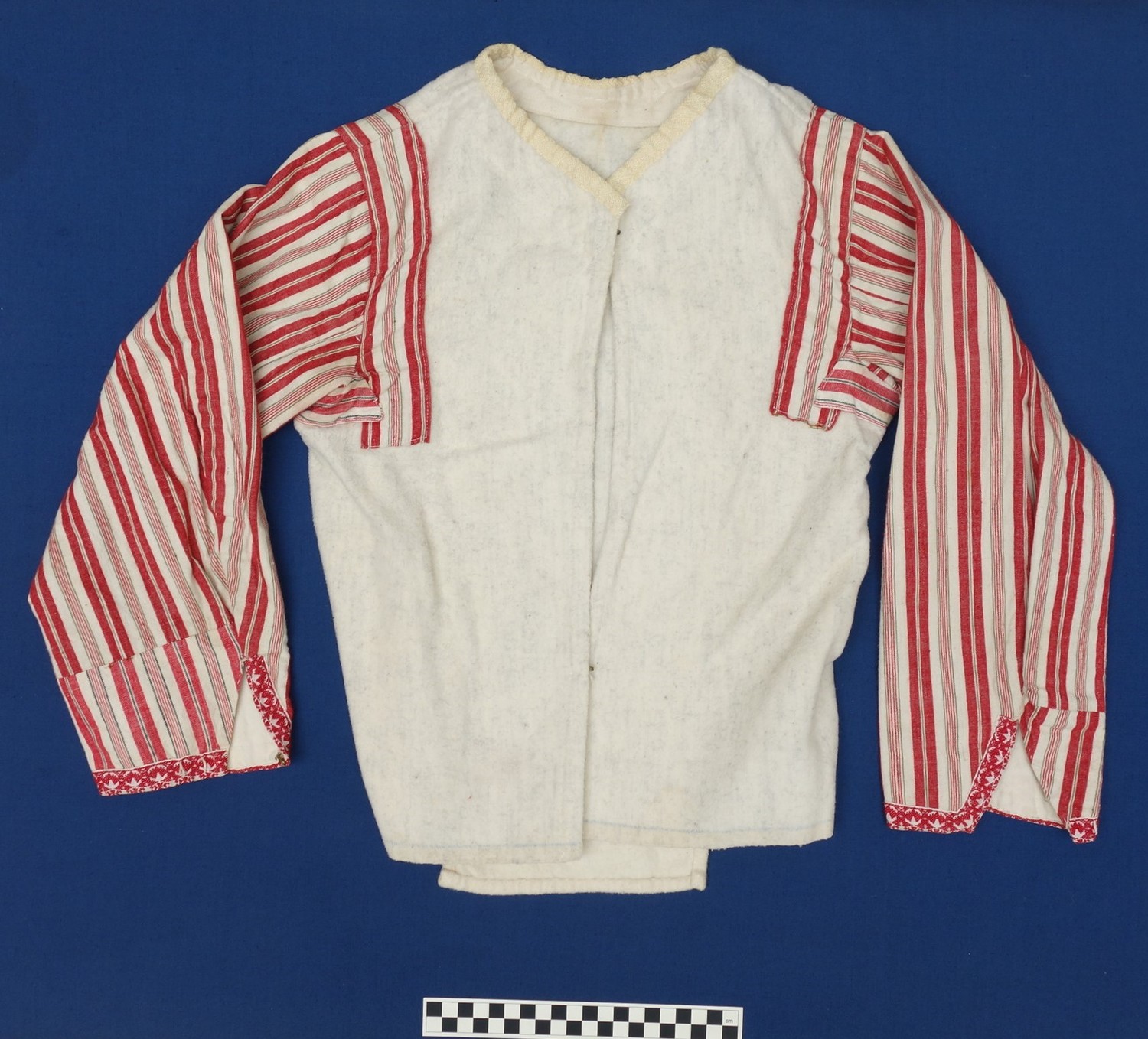 Mid-20th century mouwen from Marken (TRC 2014.0681).Mouwen
The mouwen are worn in the summer time, while the buisje and borsik are winter wear and are worn over the mouwen. The buisje and borsik are not worn at the same time! Twentieth century mouwen are normally made of white cotton flannel with characteristic, red striped sleeves. Mouwen generally have a high neckline. They are fastened down the front with small hooks and eyes.
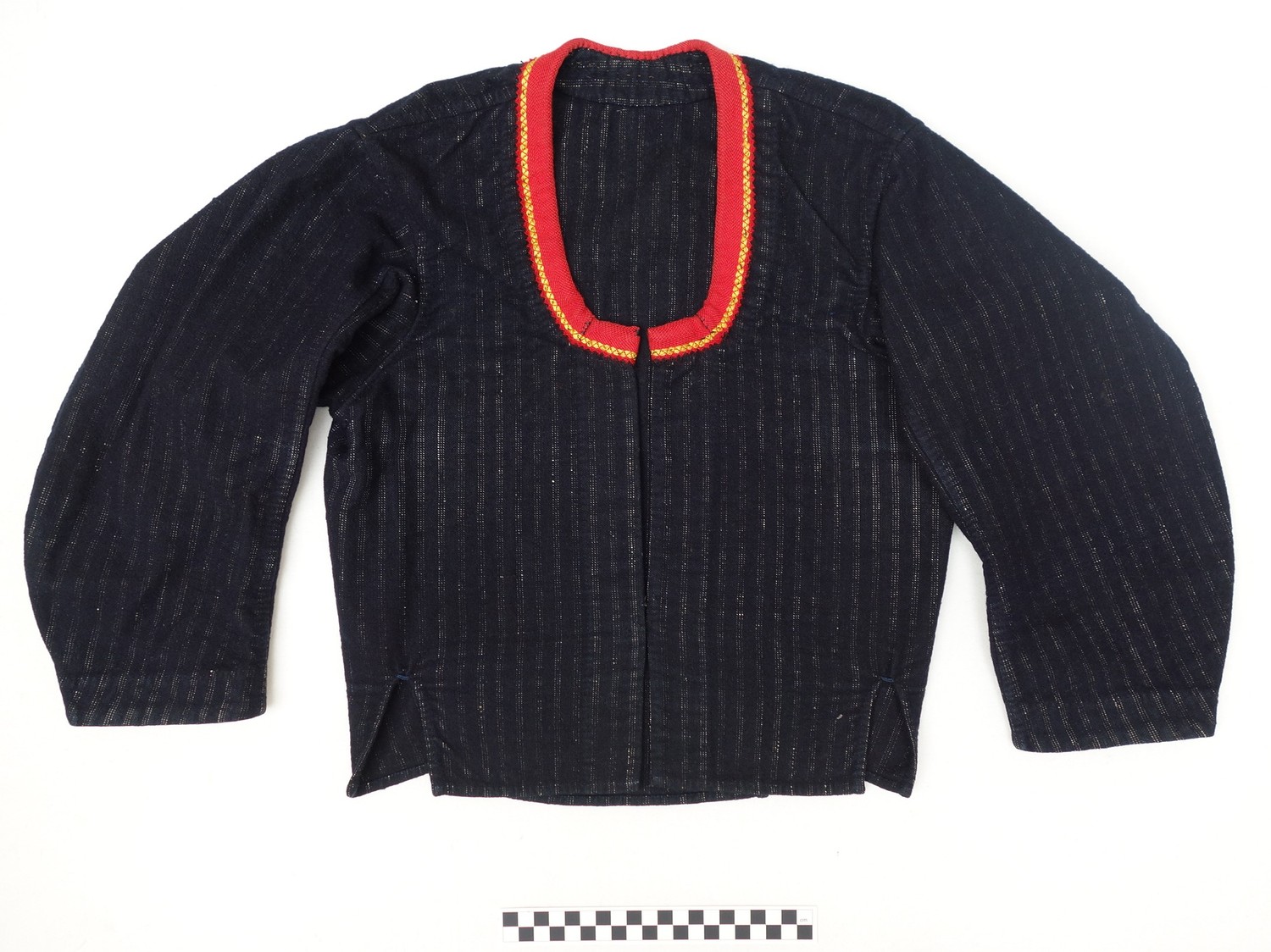 Buisje made of wool and silk, from Marken, mid-20th century (TRC 2012.0285).
Buisje
A buisje is a black or dark blue garment decorated with woven bands that can vary in forms of decoration. There are seven buisjes in the TRC collection and they are all made of felted wool. Three of them have vertical, thin, white smouwen tripes woven throughout the garment. The neck opening of a buisje is normally trapezoidal, with bands sewn around it.
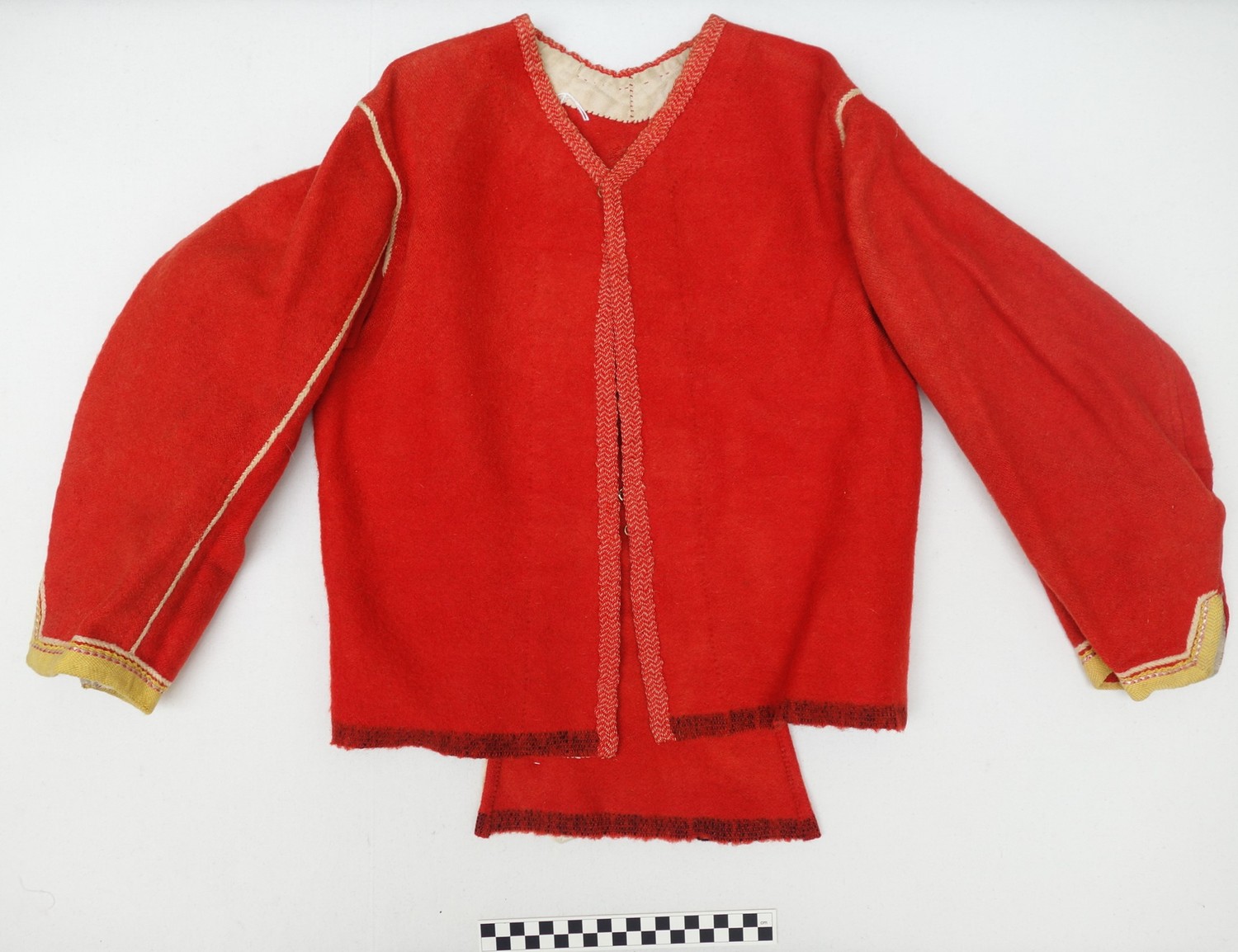 Borsik in red woollen flannel, Marken, mid-20th century (TRC 2016.0715).
Borsiks
Borsiks are made of a similar dark material as the buisjes, but some are made of red cotton flannel. The main differences between a buisje and a borsik lie in the shape of the neckline and the use of decorative bands sewn not only onto the neckline (as in the buisje), but also along the sleeve vents and the front opening. Many borsiks are also decorated with embroidered lines on their shoulders and front sleeve seams.
Terminology
These three types of garments are often called either a jacket or a bodice, which are terms derived from the West European urban dress system. However, these terms are not always suitable. First of all, I would not consider any of them as a bodice, because a bodice is properly speaking the upper part of a dress, while all three types of Marken garments are independent garments that only cover the upper body.
When considering the term ‘jacket’, only a buisje and a borsik are appropriate terms, because a jacket is worn as the outermost layer. However, the way the mouwen are worn is much too dynamic to match a term from of the West-European urban dress system, since mouwen can be worn as inner wear, as well as an outer.
We may ask ourselves why we feel the need to define garments from other dress systems on the basis of terms designed for and originating from the West European urban dress system? Mentioning a familiar term that shares similarity with the unknown element could improve the understanding of the unknown, but replacing or translating one term with another can cause misunderstandings or make certain meanings disappear.
Mengying Zhang, Saturday 4th August 2018


