


Big changes are hard. Whether it is moving to a new building or about thirty years of revolution and regime changes, change requires flexibility. One object from our collection knows all about change, the Leiden journeyman hat (Fig. 1; TRC 2010.0056a).
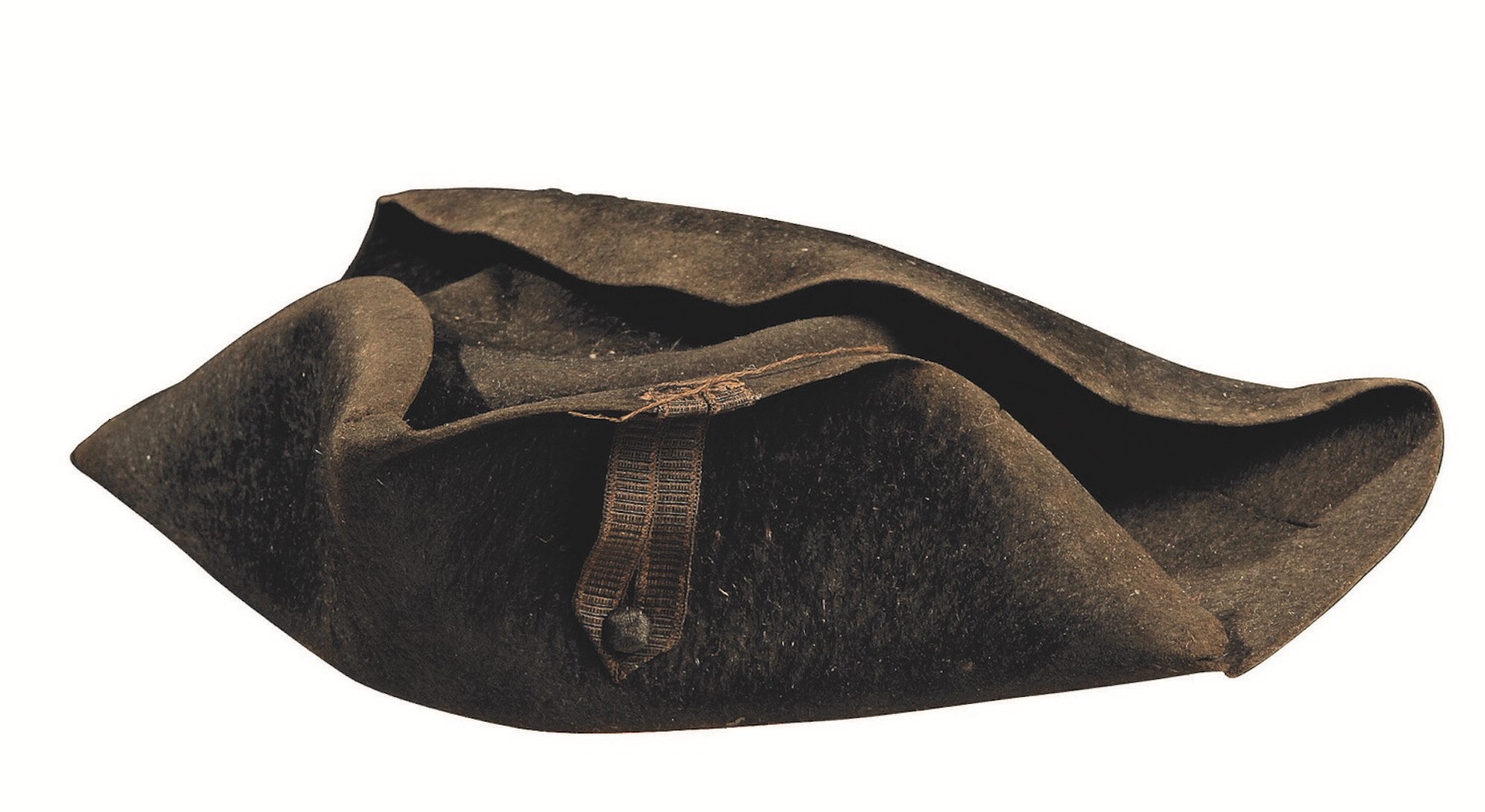 Fig. 1. Miniature bicorn hat in beaver (?) fur with a silk band, made for a journeyman's examination. Leiden, The Netherlands, 1796 (TRC 2010.0056).
This little hat, 30 cm in length, was made for the examination of apprentice hatmaker Hendrik Visser, member of the Leiden hatmaker’s guild. It is made of fur, probably beaver, with a silk band on one side. The small size of the hat proved that Hendrik Visser was a capable hatmaker and was therefore awarded the title of journeyman hatmaker. In 2010, the hat was professionally conserved after a public appeal to raise the required funds.
The hat in the TRC collection comes with a letter (Fig. 2; TRC 2019.0056b) that indicates that, apart from Hendrik Visser, four people were present on the 27th of December 1796, when the examination took place. The first is Hendrik Visser, father and master of the journeyman and the deeken ('director') of the guild. The second was Gerrit Voorwald, hooftman ('headman') of the guild. Johannes de Ruyter and Hendrik van Moijl are listed as guests.
The certificate states that Hendrik Visser has been acknowledged as a journeyman of the guild and requests anyone presented with this certificate to acknowledge him as such. The document mentions that this occurrence has also been recorded in the Gildeboek, which has unfortunately not been preserved.
 Fig. 2. Diploma relating to the model hat signed by the guild master and other senior members of the guild. The Netherlands (Leiden), 1796 (TRC 2010.0056b).
The history of the Leiden hatmakers guild has not been preserved very well. Most of the archival evidence about the guild was probably destroyed when the townhall burnt down in 1929. Extant records of the guild are fragmented, few and far between. The earliest mention of a hatmakers guild in Leiden is in the Provisional Ordinance, a concept set of rules for the guild, which dates to 1657. The last mention of the guild is in a list from 1811, enumerating all the former guilds (by that time all guilds had officially been abolished by the French authorities). Our hat (compare Fig. 3) and certificate are absolutely unique and fascinating sources of not just the guild's history, but also of an underrepresented period in Dutch history.
In the 1790s the spectre of the French Revolution haunted Europe. The centuries-old Dutch Republic came to an end in 1795 as Willem V, the Stadhouder, flees to England. The young Bataafse Republiek declares universal human rights, which includes the provision that any citizen has the right to do whatever causes no harm to someone else. The guilds, who blocked anyone from freely taking up an occupation, were officially abolished. However, the guilds happily resumed their work after a while, when it became clear the Batavian Republic could not enforce the abolition of the guilds.
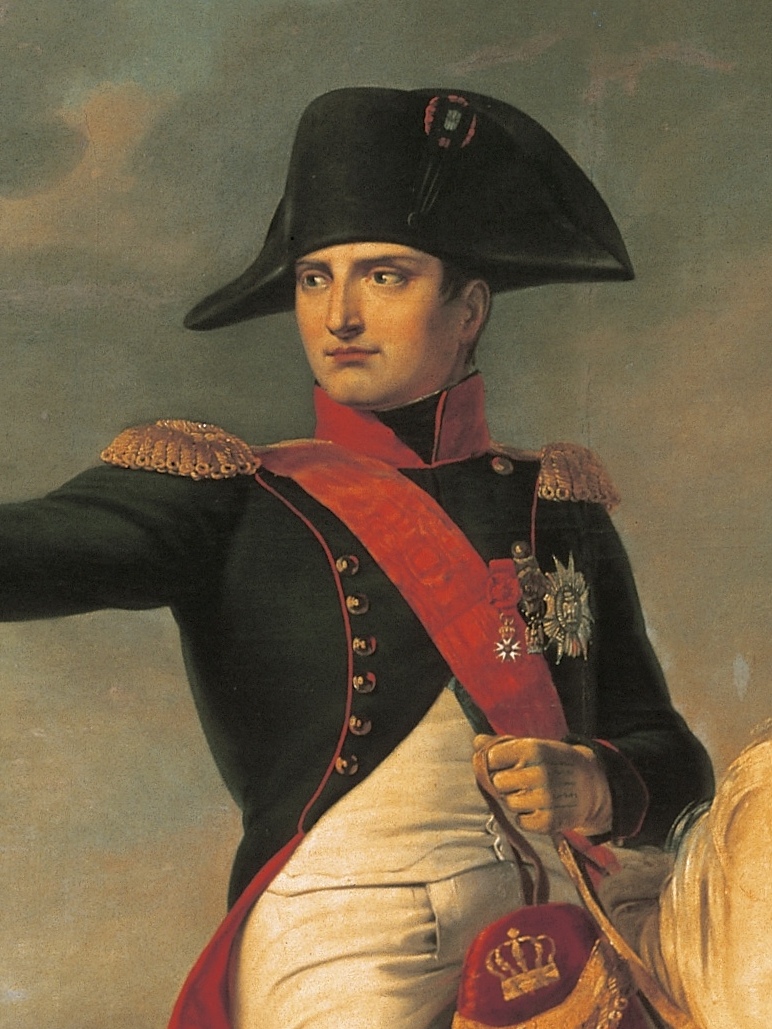 Fig. 3. Napoleon wearing his bicorne hat in his characteristic side-to-side style. Wagram Chabord 1810.In 1806 the Republic fell and, under the influence of Napoleon’s France, the Netherlands became a kingdom. In 1808 the so-called Kingdom of Holland abolished the guilds for a second time, turning them into corporations. These were in practice still guilds, but now focussed on social security for their members and taking a step back from their economic monopoly. Former guild members and local governments acknowledged the name change, but proceeded as before.
Two years after the second abolition, in 1810, the Kingdom of Holland was annexed by France. The regime change overlooked the guilds and it took another two years before the French laws abolished the Dutch corporation or guilds, for the third time. One would think that three abolitions were sufficient. One would be wrong. A year after the third abolition, in 1813, Willem of Nassau, grandson of the former Stadhouder Willem V, landed on the beaches of Scheveningen. He became the king of the, yet again new, Kingdom of the United Netherlands. A full thirty years after the first abolition of the guilds, the fourth abolition of the guilds in October 1818 definitively abolished the guild system in The Netherlands.
That it takes four abolitions to truly end the guilds, shows how difficult change is and how stubborn old habits can be. Despite all the major political changes, normal people still needed hats. Our little journeyman's hat is a silent witness to the stubborn determination with which hatmakers continued to do their job. When big things change, small things stay the same. Hatmakers make their hats. TRC researchers write their interesting blog posts. Perhaps four consecutive moves could stop us, but not this one.
Marlies de Groot, TRC general assistant, 28 January 2026.


