


The TRC is officially shut until the beginning of March because of its move to new premises. But this does not mean that TRC activities have stopped. We are all carrying on from home and meeting in Leiden several times a week to discuss the current situation, work and projects.
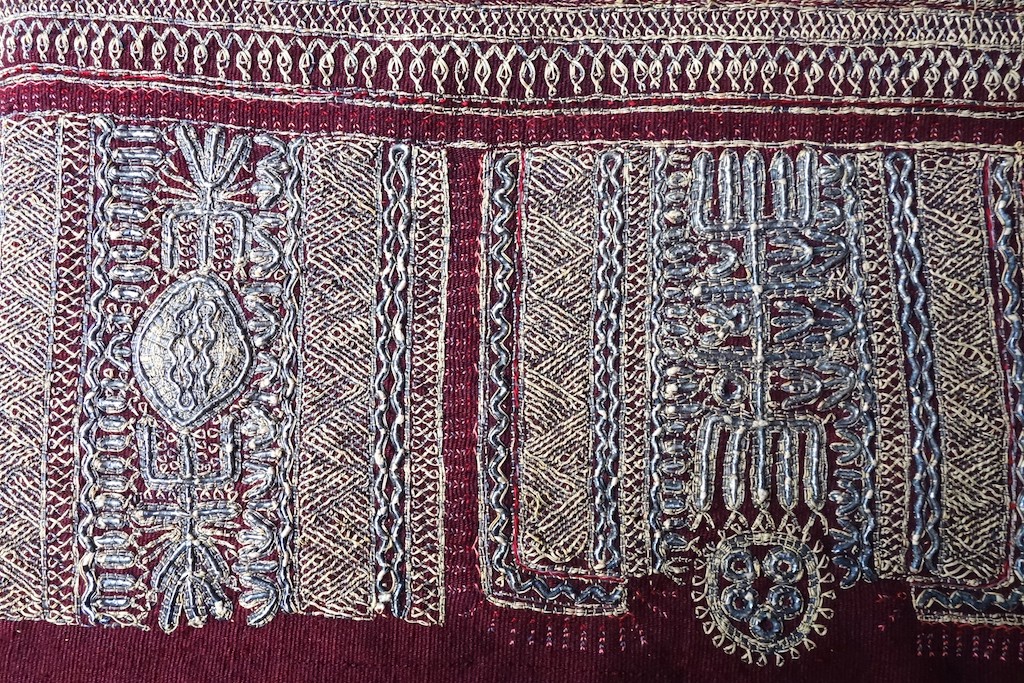 Fig. 1. Long, dark red cloth, decoratively woven with narrow mid-red stripes at regular intervals. Across the middle of the cloth there is a broad band of silver thread embroidery with stripes of repeating, geometric motifs. Tunisia, first half 20th century (TRC 2026.0187).
Fellowship programme
Some of the main items on our to-do list for the coming weeks is the Fellowship Programme. The first deadline has just passed and more than 15 applicants from all over the world have sent in proposals for the junior fellowship, as well as several people interested in the senior fellowships. It is going to be hard to decide who gets the first fellowship! As soon as a decision has been made and the candidates have been informed, we will let you know. It is certainly going to stimulate discussions in the TRC and bring more attention to textile and dress studies.
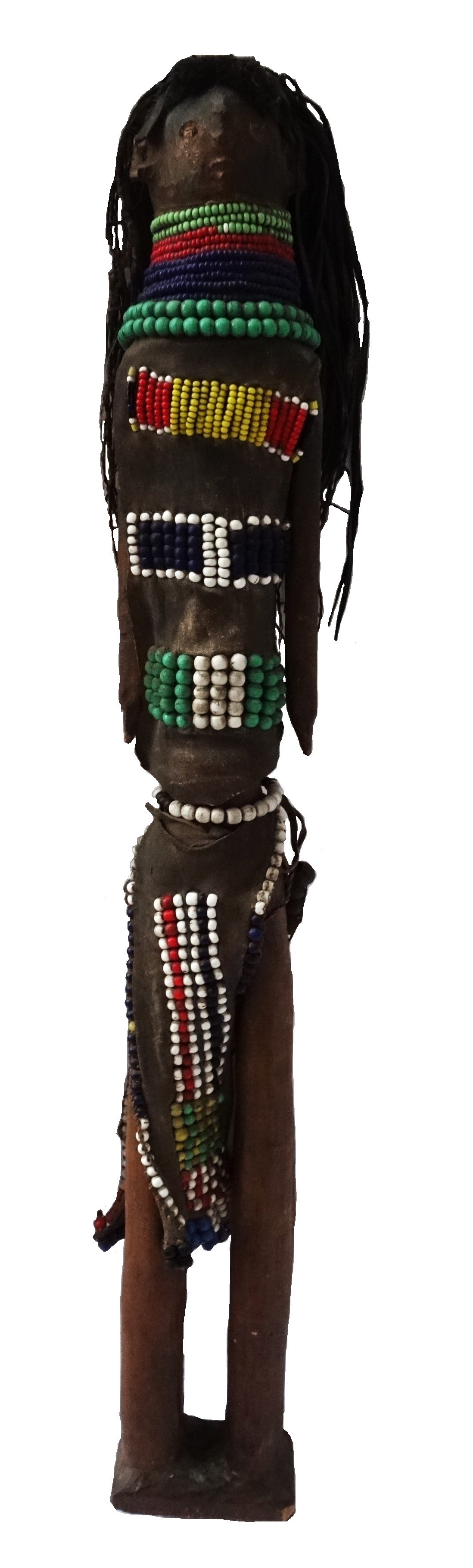 Fig. 2. Long, narrow statuette of a woman made from dark brown wood. Kenya, Turkana, late 20th cengtury (TRC 2026.0190).Exhibition programme
Augusta de Gunzbourg, our exhibition curator, has made a programme for the next two years, which includes large and small exhibitions on a wide variety of thematic and practical subjects, from the paisley motif (an enlarged form of an earlier TRC exhibition), ikats from around the world, to undergarments, lotus shoes from China and molas from Panama, card weaving, Kiswah embroidery, repairs and patches, etc. Plus various smaller, single-showcase exhibitions looking at single items or a few related objects, such as collars, pockets, the famous Leiden Hat (from 1796), and buttons. Needless to say, the preparations and setting up of these exhibitions also form an integral part of our teaching programme.
Workshops, courses and lectures
We have already put a list of workshops, courses and lectures online and they cover a wide range of subjects, including workshops on tablet weaving, band weaving, bobbin lace making, Shetland knitting and felt making. There is also going to be a study day on the subject: what is embroidery?, and we organise a lecture on Tutankamun’s Wardrobe. Many more events are being organised and planned and will shortly be announced online.
The Collection
As said, for the next six weeks we will be working from home because of the move to the Boerhaavelaan. Groups of us will continue tagging and cataloguing textiles and garments, actively studying objects, photographing items, and writing blogs about particular objects in the collection. We are also getting phone calls and emails about various objects and collections that people think might be of interest to us. And yes, in some cases we are very interested indeed!
We are now tagging a collection of garments and textiles from Laos, Myanmar (Burma) and Thailand, which were given by Marianne Kooiman. In the past we acquired a large collection of Japanese jackets and kimono from her, which resulted in the TRC exhibition of Japanese Haori at the TRC last year. The ‘new’ pieces given by Marianne include over 60 items from Myanmar, so we are seriously thinking about an exhibition about these pieces.
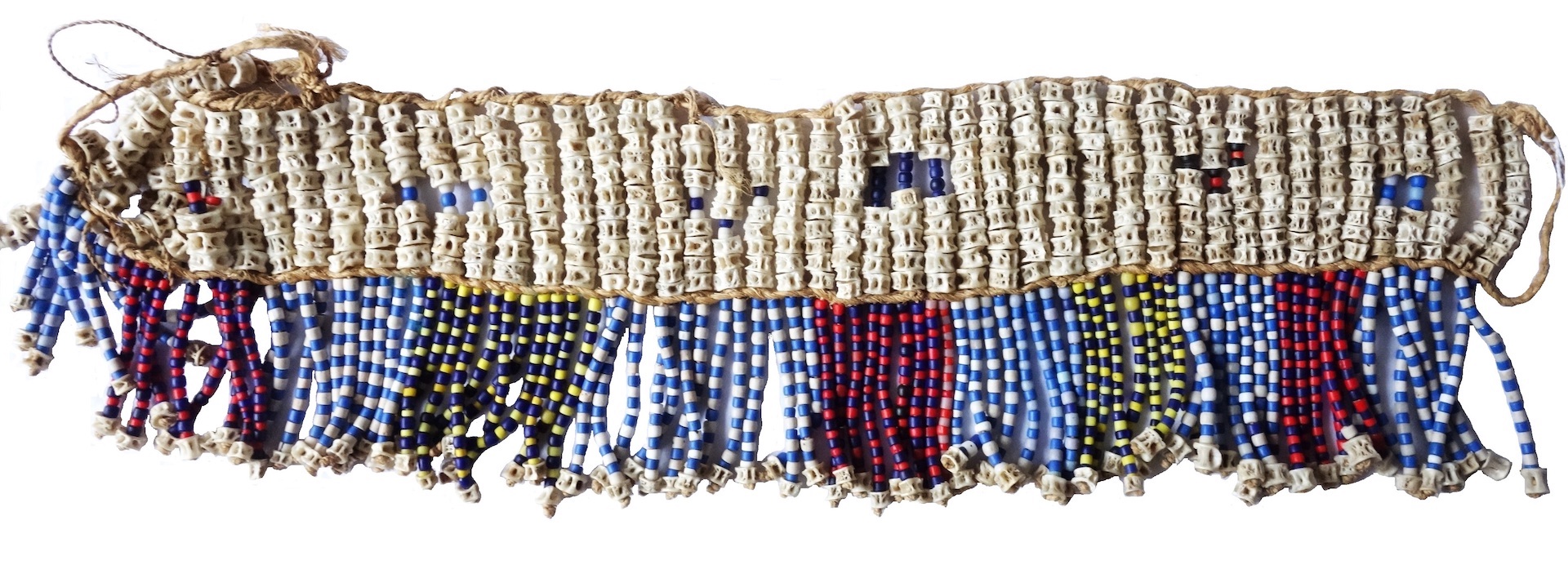 Fig. 3. Short apron with a belt of fish vertebrae, Kenya, Turkana, late 20th century (TRC 2026.0193).
Similarly, not long ago we were contacted by Anja van Ditmarsch, who is downsizing and had two very large marriage cloths from Tunisia (Fig.1), which were looking for a new home. Both of them are pre-1950s in date and are hand spun, woven and embroidered. So we have just been to meet Anja and to look at the Tunisian pieces. They are lovely items and of a type we do not have in the TRC collection (more about these pieces in due course). And, oh yes, she had other items we might be interested in.
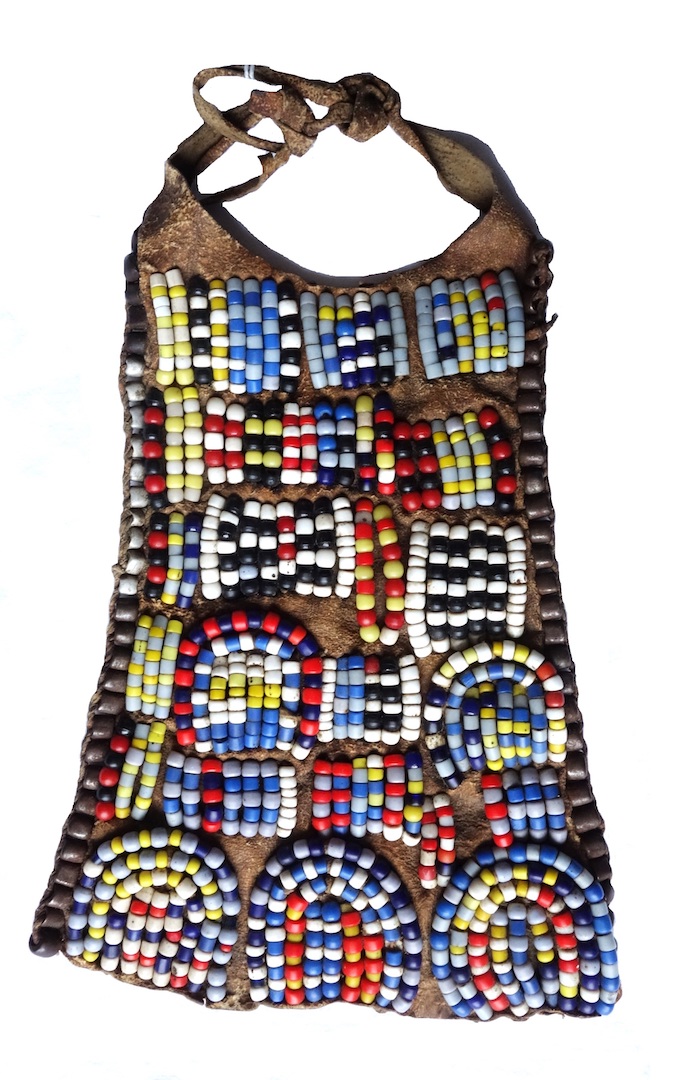 Fig. 4. Short, leather apron decorated with lines and blocks of beads in brown, grey, yellow, black, white, red and blue. Kenya, Turkana, late 20th century (TRC 2026.0192).Anja also had items from Kenya, including some fertility dolls in goat skin garments decorated with beads (Fig. 2), a woman’s apron made from glass beads and fish vertebrae (Fig. 3), a small leather apron (Fig. 4), again with beads.
The garments and fertility dolls belong to the Turkana people, who live near and around Lake Turkana in northern Kenya. The majority of the people are nomadic and live mainly from their goats and from fishing. Nothing is wasted and the fish vertebrae are used as beads. This is the first time I have seen vertebrae used in this manner, but it makes sense, given the natural hole down the centre of the boney structure.
Anja also brought out a bilum (carrying bag) from Papua New Guinea, made with a looping technique that produces a stretchy, 8-shaped loop. If anyone living in the Netherlands can give lessons in this technique, please let us know.
In other words, TRC life goes on ….
Gillian Vogelsang-Eastwood, Director TRC, 25 January 2026


