Being fashionable in communist-period Romania
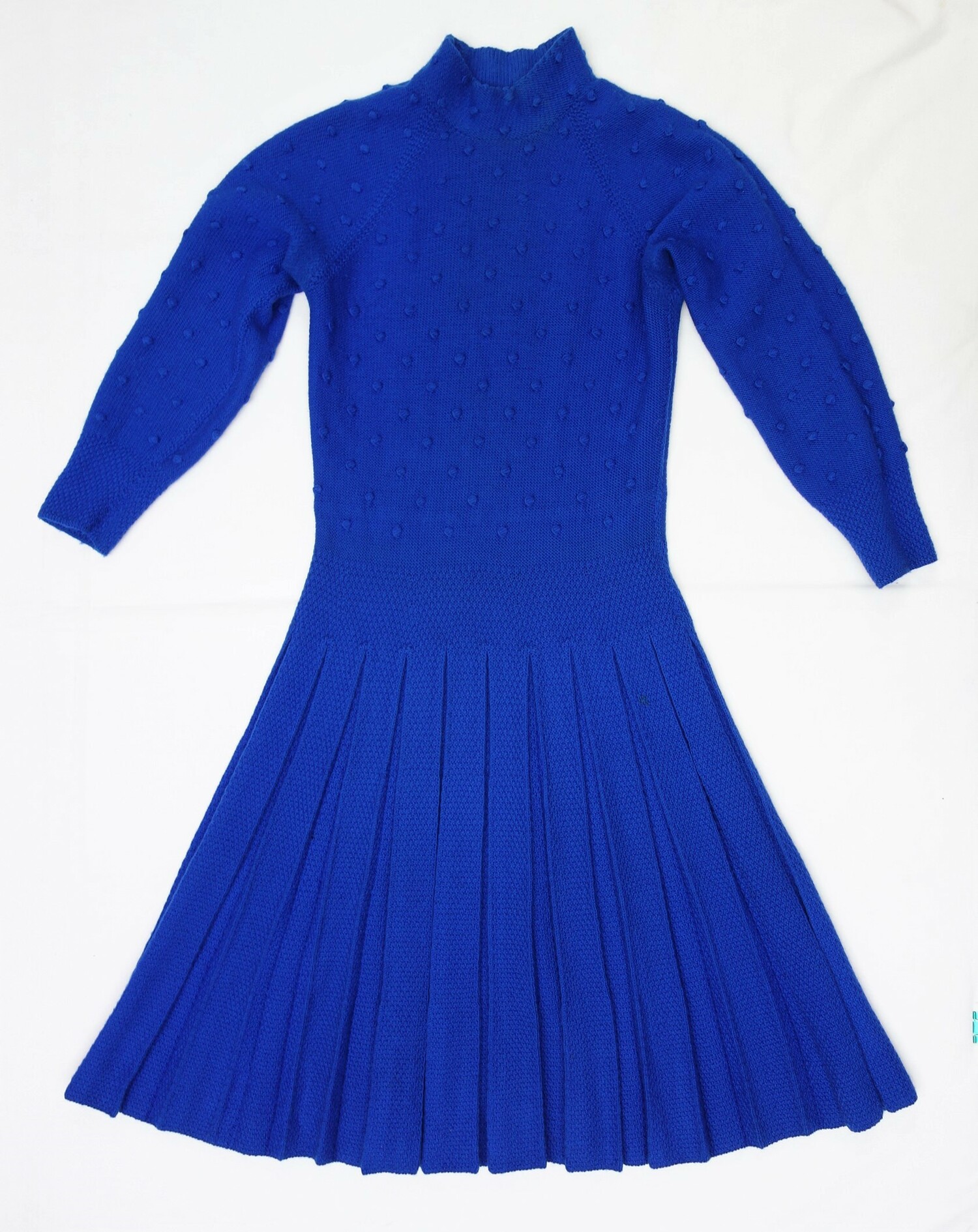 Hand knitted dress, by Eva Radu, Romania, c. 1970s (TRC 2020.0336a).What can you do if you want to be fashionable, but cannot afford the prices or even see the garments in the first place?
One solution has just been donated to the TRC Leiden! The lady in question was Eva Radu (1932-2019) from Romania, who was a professional hand knitter. She was brought up in a poor family during the Communist period when Western fashion items were not widely available.
Since she was twelve Eva Radu had been knitting and selling the garments she had produced. Later in life she made a range of garments copying and adapting Western fashions. Some of these garments she sold, other items she wore. Ideas for these garments came from East German and Hungarian fashion magazines. Sadly, Mrs. Radu died in 2019 leaving various items, including pieces from her wardrobe such as dresses, skirts, jumpers, cardigans, etc., to various family members.