


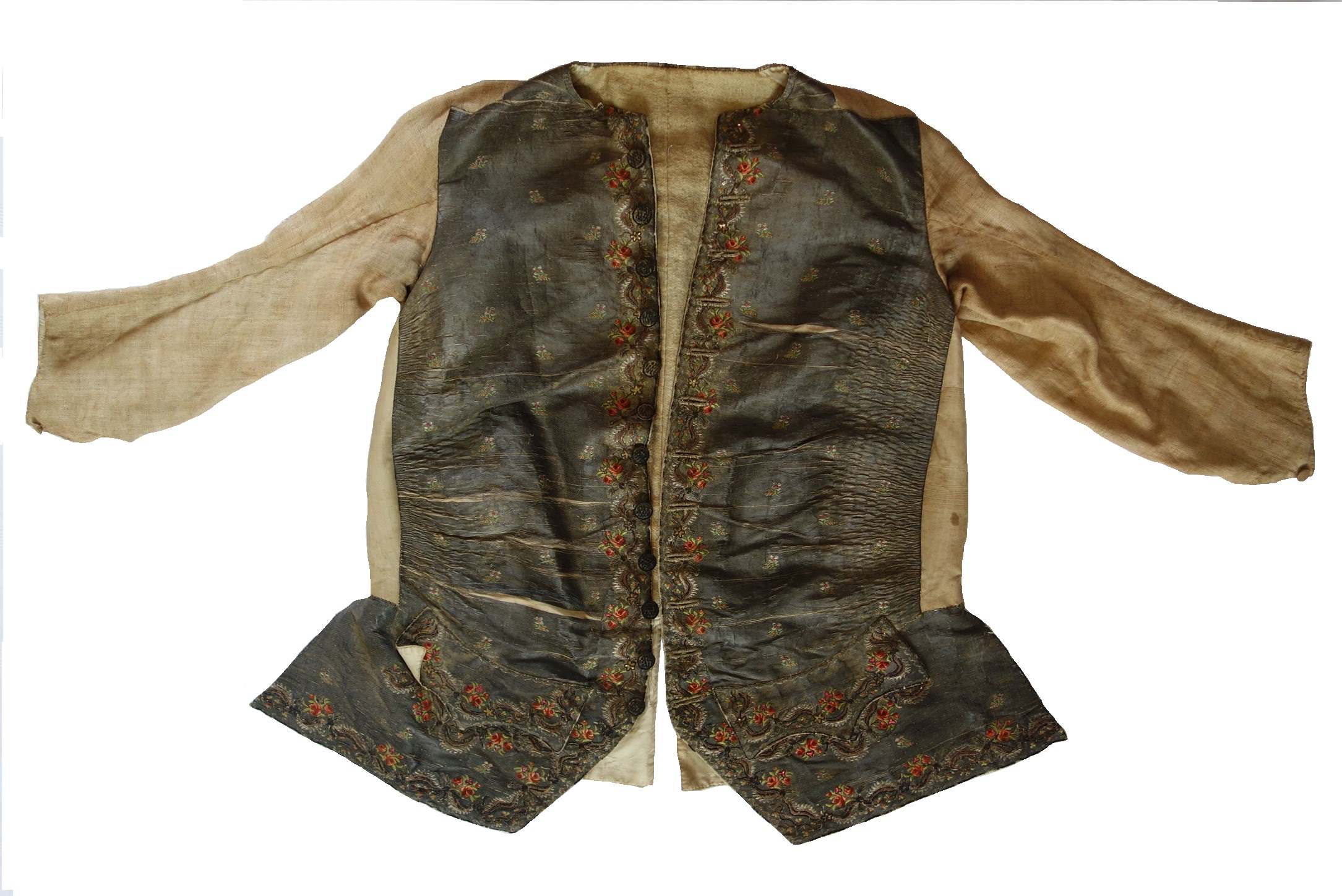
 Front of mid 18th century man's waistcoat (TRC 2020.0879).The TRC Leiden has just been given an intriguing 18th century waistcoat for a man (TRC 2020.0879). As with so many pieces, this garment found its way to the TRC in Leiden via a friend of a friend.
The waistcoat is of interest for various reasons, structurally, decoration-wise, as well as for the indications it gives about the original owner’s economic means!
The waistcoat is made from a twill silk and silver metal thread cloth with small flowers, which was woven using a supplementary wefts technique with floss silk of various colours. The flowers were set on a silver thread ground (now nearly black due to oxidisation). In addition, the garment has been decorated with applied, very small silver spangles, metal thread (passing and purl forms), as well as small shapes in red coloured metal foil. When it was first made and worn the waistcoat was must have been a piece of male bling!
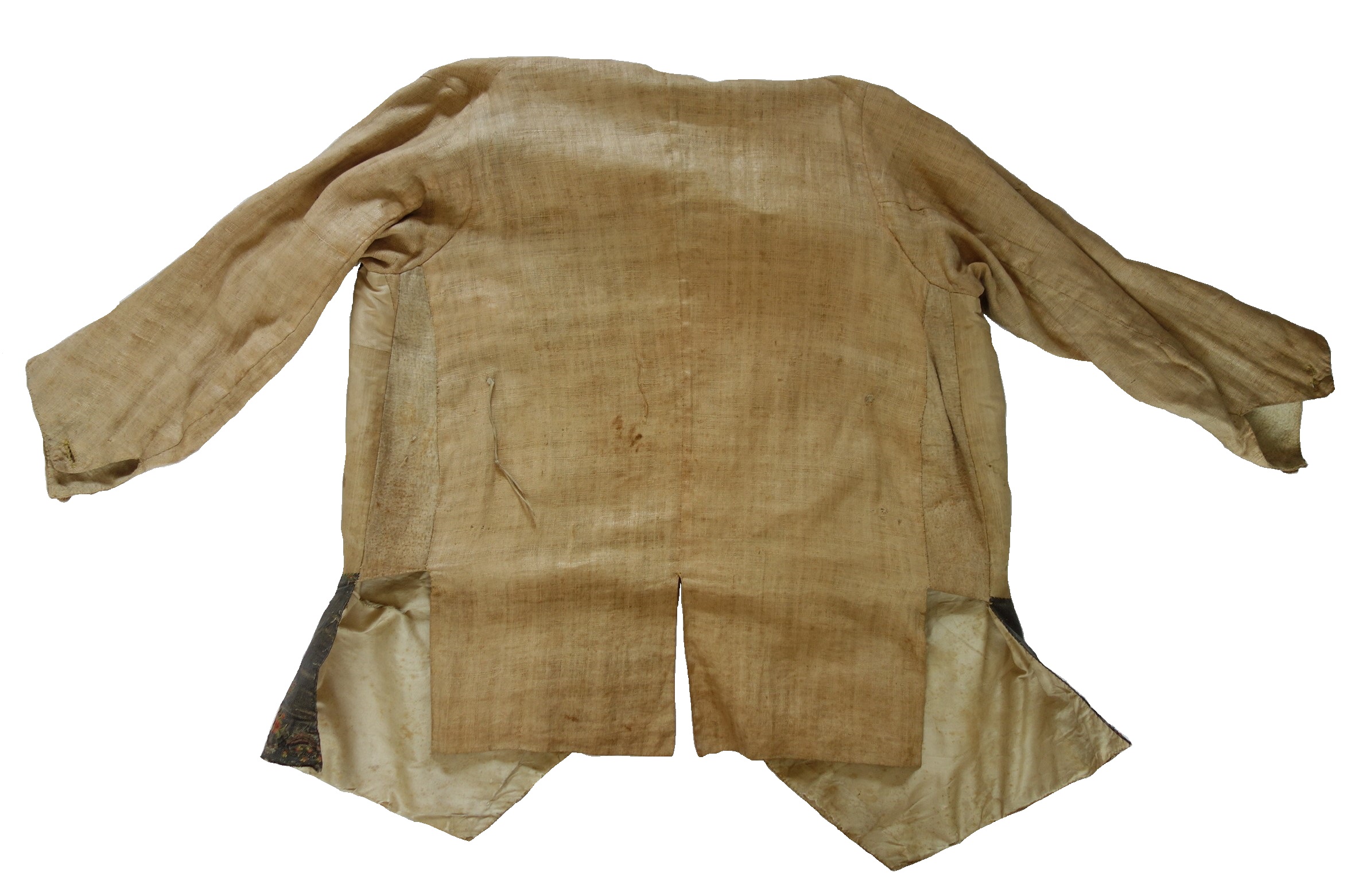 Back of mid-18th century man's waistcoat (TRC 2020.0879).But there are more sides to this waistcoat’s story. A more expensive garment would have been in silver gilt yarns rather than silver, so some savings were made in the type of metal yarn used. In order to save further costs, where the cloth is visible to the public it is ornate, but where it would have been hidden by other garments (notably a long coat), the waistcoat was constructed from various different types and pieces of plain material.
In particular the sleeves and the back of the garment are made from a fairly coarse, handwoven linen material. The side gussets are made from a finer linen material and a piece of linen damask with woven lines. These side pieces are not symmetrical and it would appear the maker had used whatever was available.
The buttons down the front of the garment are now black, but they had originally been covered with pieces of silver metal thread (purl) and would have been very shiny. In contrast, the sleeve buttons, which would have been hidden from view, are made of wood covered with a piece of plain linen material.
In addition, the garment is lined with a felted woollen material that is common for winter garments from northern Europe. In particular, the TRC has a woman’s indoor cape from the 1740’s that is lined with a similar cloth (TRC 2014.0064). This woman’s garment derives from Groningen/Friesland in the northeast of The Netherlands. It is possible that the man’s waistcoat also came from this region.
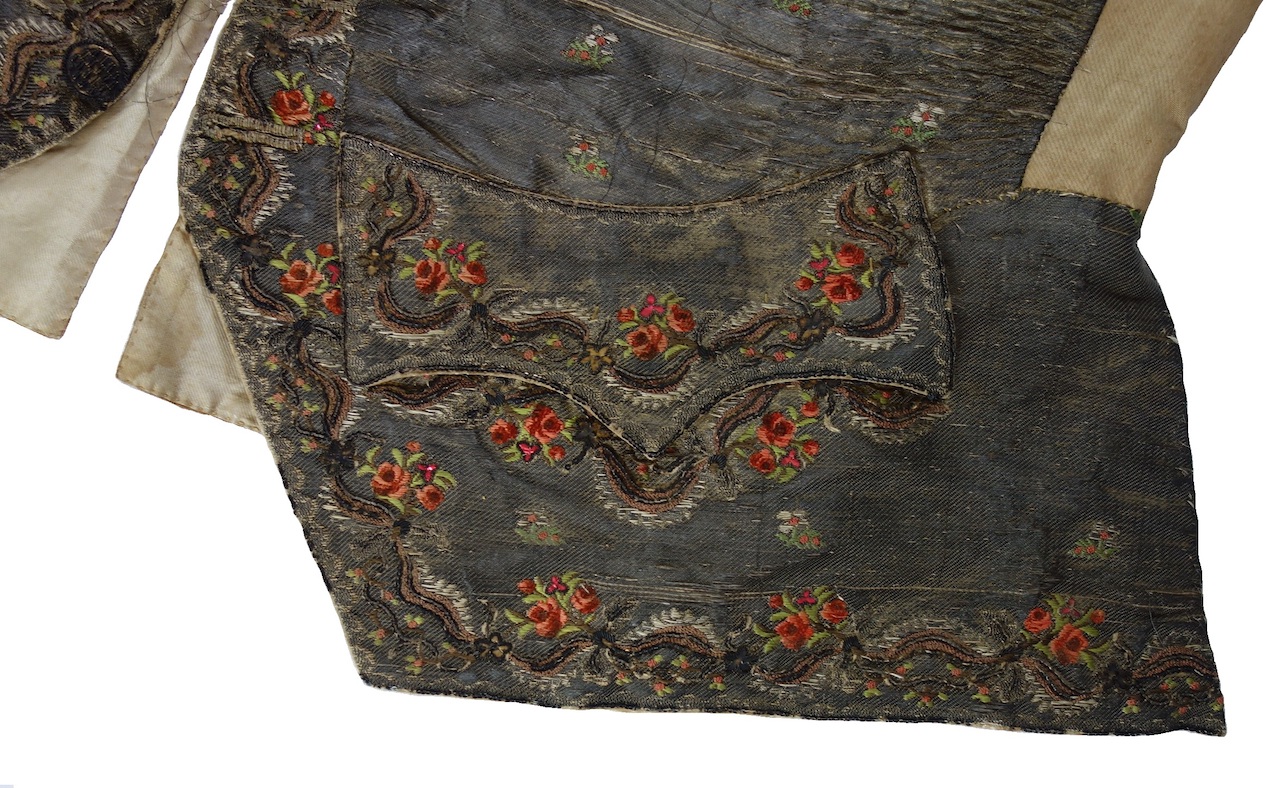 Decorated pockets and front of the man's waistcoat (TRC 2020.0879).It is also noticeable that the stitching of the buttonholes, seams, etc., is not of a top quality. Again this would suggest that it may have been a regional urban garment, rather than one worn by an elite man in a rich city such as Amsterdam.
We were asked if there any indications concerning the date of the waistcoat? Well, the sleeves of the waistcoat have a typical 18th curved elbow. In addition, the garment is fairly long and shaped at the waist, indicating a mid-18th century date - by the end of the same century men’s waistcoats were shorter and with far less emphasis on the waist region.
Furthermore, the use of elaborate decoration down the front of a man’s waistcoat (in this case a narrow band of decoration indicating the wearer did not have that much to spare for his waistcoat), and the shape of the pocket flaps, would support a mid-18th century date.
Gillian Vogelsang, director TRC Leiden, Wednesday 18th March 2020.


