


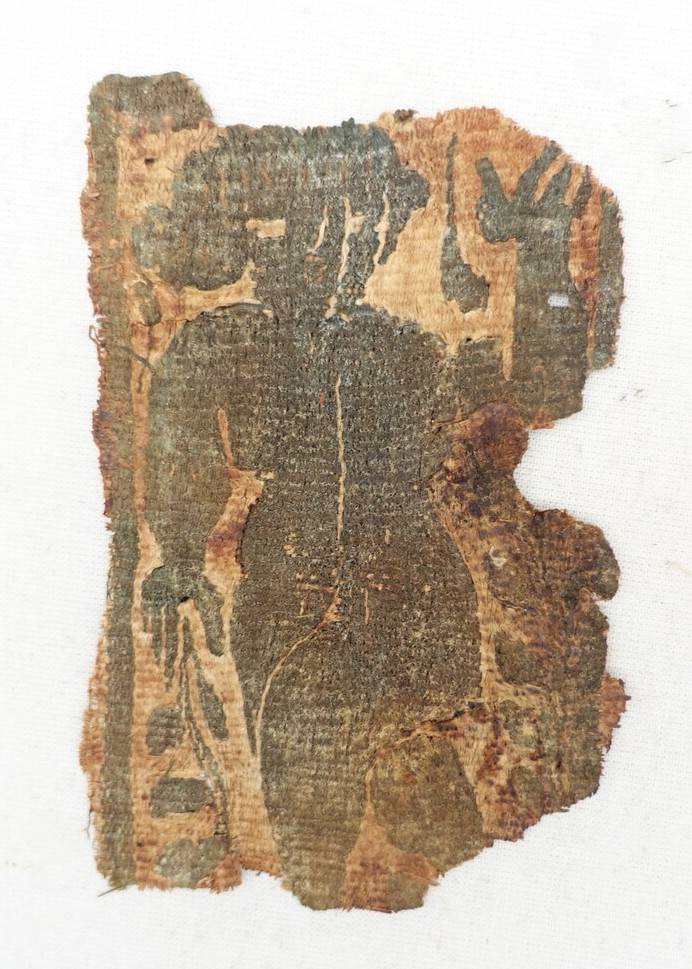
 Fragment of cloth with a stylised human figure in dark purple wool on an unbleached linen ground. Hand spun and woven (dovetail tapestry, weft-faced). Coptic, mid-first millennium. Dool family donation (TRC 2023.0070).What is a Coptic textile? A simple question that is fraught with many problems and aspects!
There are so many academic discussions about this subject. Basically, ‘Coptic textile’ is a general term for cloth from Egypt that dates to between the fourth and eighth century. But there are those who would disagree with this and prefer a more specific terminology, and dates. Others would like to the use the term ‘Late Antique’, or even ‘early Islamic’.
Furthermore, must the pattern associated with a ‘Coptic textile’ include one or more Christian symbols, that would undeniably link the piece with the Coptic Orthodox Church, which is based in Egypt and one of the oldest of the Christian community?
But why these thoughts about Coptic textiles? Simple, a few days ago the TRC was given a collection of textiles and garments by the Dool family in Dordrecht. The donation includes woven and embroidered items from Indonesia, the Antilles, Peru, North Africa, and Palestine (notably a Hebron embroidered veil (TRC 2023.0064; some of these pieces will be the subject of future blogs), as well as seven Coptic pieces (TRC 2023.0070 - 0076).
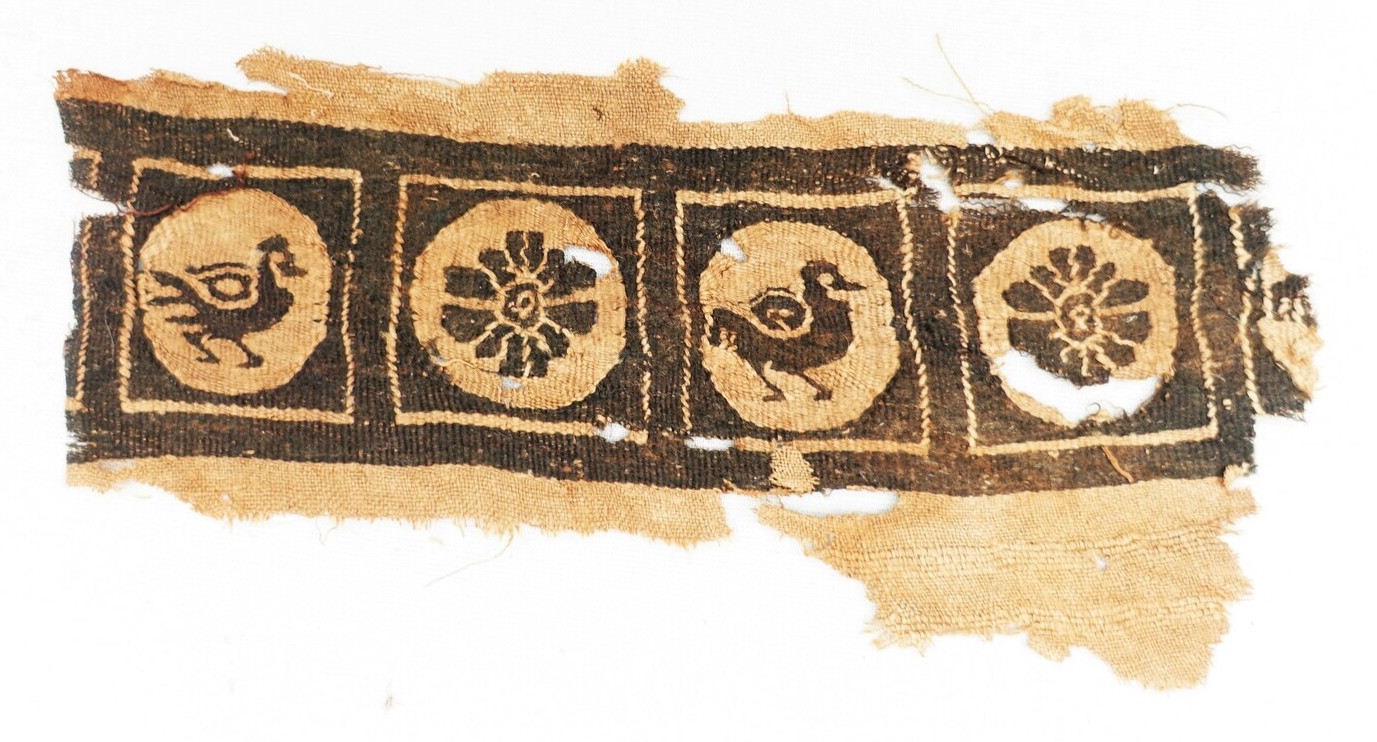 Fragment of cloth with a broad band with individual squares enclosing stylised birds and rosettes in black wool on an unbleached linen ground. Hand spun and woven (tapestry, plain ground). Coptic, mid-first millennium. Dool family donation (TRC 2023.0075).
The textiles were owned by Mw Joubert, who sadly died last year, and who was fascinated with textiles in all their varied forms.
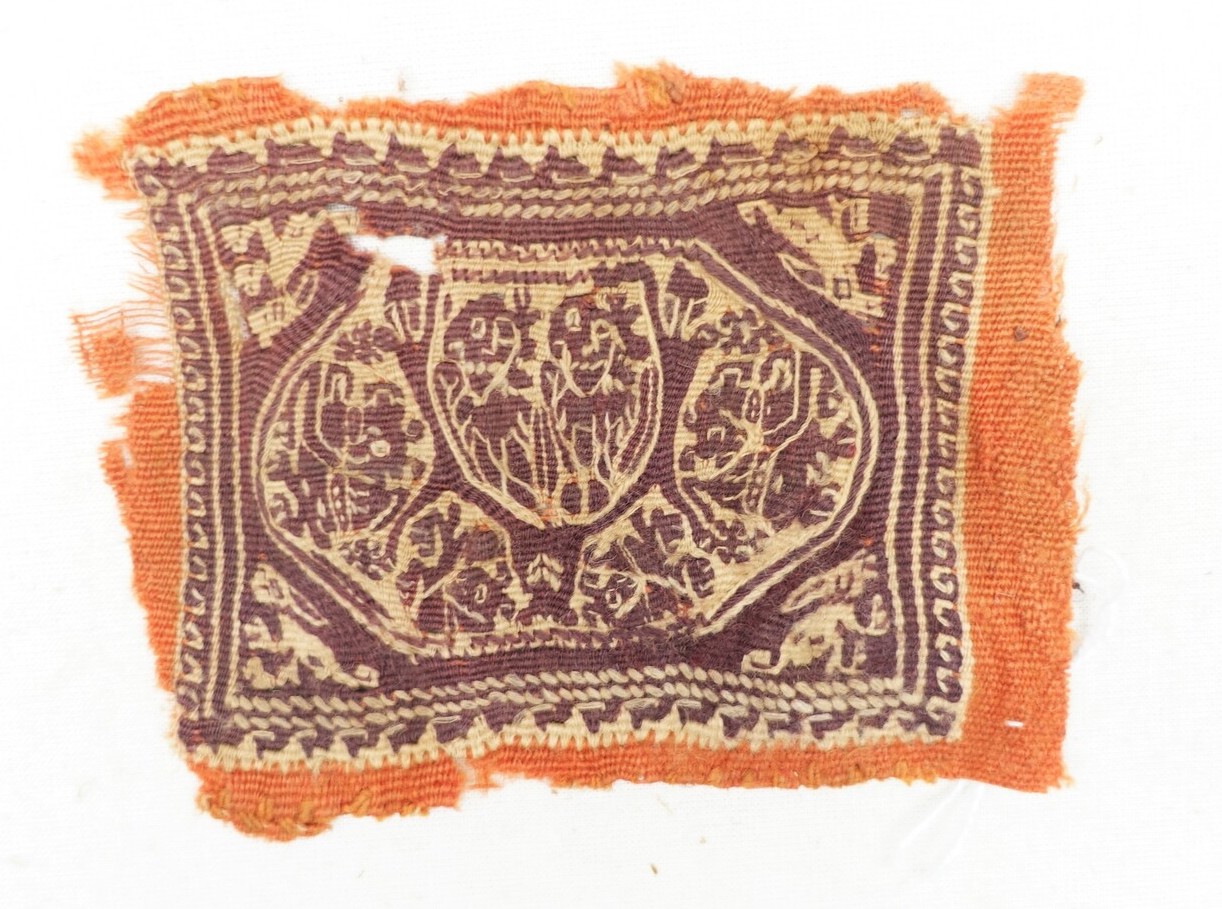 Fragment of cloth with a rectangle enclosing an oval with stylised paired human figures and foliage surrounded by very stylised animals (rabbit?) in dark purple wool and linen, on an unbleached linen ground and part of a red woollen ground. Hand spun and woven (dovetail tapestry, weft-faced). Coptic, mid-first millennium. Dool family donation (TRC 2023.0071).Based on the associated motifs it would appear that the Dool textiles come from different periods and date from the fourth century onwards. The patterns include a range of stylised animals (hares and lions), as well as foliage and warriors with shields and cloaks.
All of the pieces were made using a tapestry weave (slit and dovetail forms) technique with either dark blue or dark purple wool on a linen ground. They probably originally adorned tunics or similar garments.
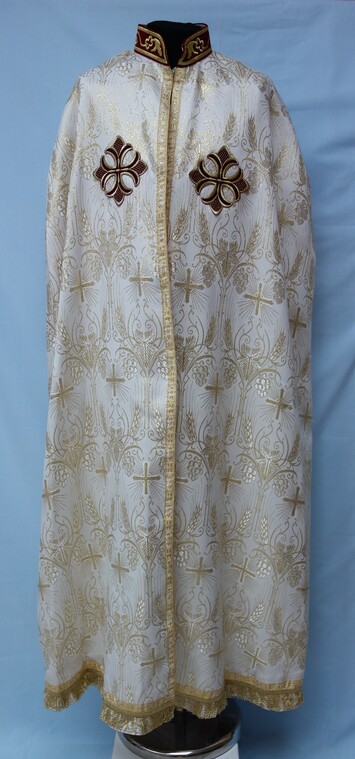 Modern priest's cape from the Coptic Church, Egypt. Brocaded cloth, with woven designs of wheat, grapes and crosses, as well as two large red machine embroidered crosses (TRC 2001.0246d).
The TRC Collection includes some other examples of ancient ‘Coptic textiles’ (both woven and embroidered forms) and the ‘new’ items will help to add depth to the collection in general and to the Middle Eastern section in particular. But it should not be forgotten that the Coptic community continues to the present day.
Thanks to the help of various people, such as Karel Innemée and Tineke Rooijakkers, we have been able in recent years to build up an extensive collection of modern Coptic liturgical and monastic textiles and garments from Egypt, which includes items for nuns, monks and priests, baptismal outfits and community items, as well as altar furnishings, prayer beads, etc.
These two groups of Coptic textiles reflect various aspects of nearly two thousand years of Egyptian history: social, economic, religious, political and of course, that of art/design. And then some say textiles and clothing are unimportant….
Gillian Vogelsang-Eastwood, 18 January 2023


