


Thrift shops sometimes house real treasures among a lot of rubbish. Recently the TRC acquired a pin cushion from one of these places in Leiden (TRC 2022.0320), which dates from 1850. Pins are inserted into the cushion and they spell the word welkom and the date, among hearts, flowers and other ornaments.
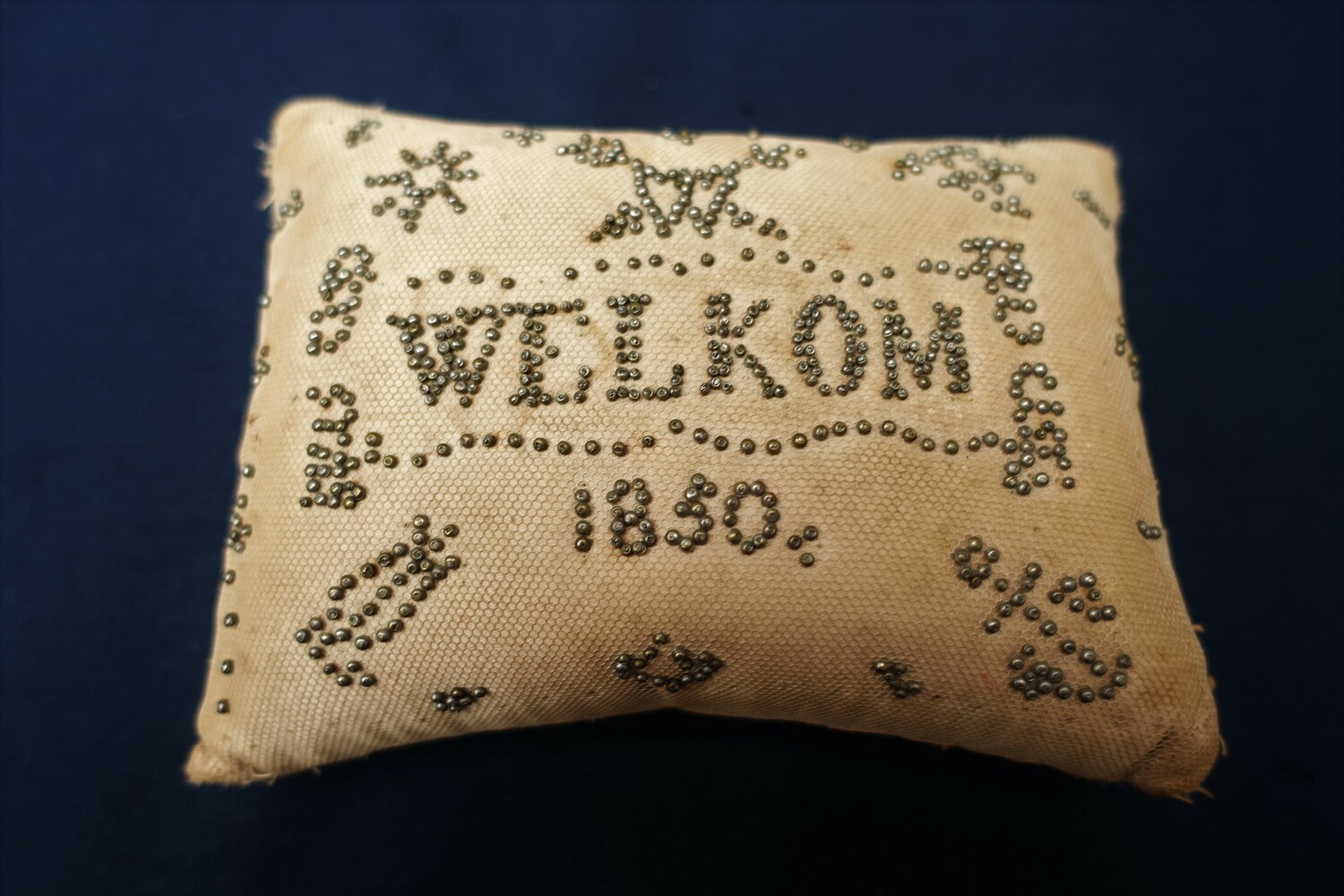 Pin cushion with the dates of 1850 (front) and 1890 (back), the Netherlands (TRC 2022.0320).
As it happened, I recently came across such a pin cushion elsewhere, namely in the epistolary novel: De Historie van den Heer Willem Leevend ('The history of Mr. Willem Leevend) by Elisabeth Wolff-Dekker and Aagje Deken (1784/1785). In one of the letters that constitute the book, the elderly housewife Martha de Harde is telling how busy she is. One of her jobs is making a bakerkussen for a newly wed young woman (part 4, 37th letter):
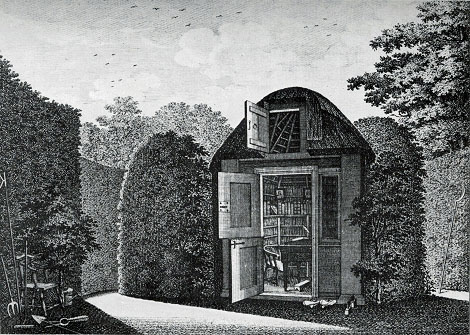 Aagje Deken (1741-1804) came to live with Betje Wolff (1738-1804) after the death of the latter's husband. Together they moved to Beverwijk, in 1777, where they used a little garden house, illustrated in this print, to write their epistolary novels.Daar by komt nog, dat myn Nigt my lang aan myn hoofd heeft leggen gonzen, dat ik toch voor haare Vriendin Renard een Bakerkussen zou maken, van myn overgeschoten goed van myn damasten Japon, en gezeid, dat er haast by ’t werk was; en daar is nog al zo een hoope geknutzel aan; zo als ook om de naamen er met spelden op te steken, en dat ik, al zeg ik het zelf, mooi doen kan …
('And then, my niece has been nagging me for a long time to make a midwife's pin cushion for her friend [Petronella] Renard, out of the fabric that was left from my damask gown; and she said it had to be done quickly; and it is quite a lot of work, for instance putting the names on in pins, which I can do quite prettily, if I do say so myself … ')
It makes me wonder: was the TRC pin cushion also a bakerkussen, namely a cushion for the pins used by the midwife when swaddling the baby? Was it also made from the leftovers of a dress? And what would the dress have looked like?
The mention of ‘names’ (plural) made me look again at another pin cushion in the TRC collection: TRC 2020.4732a. It has no ornaments, but two ‘names’ and a date: IDB 1826 AWVS. Would IDB and AWVS have been the parents of an expected baby? Probably they were.
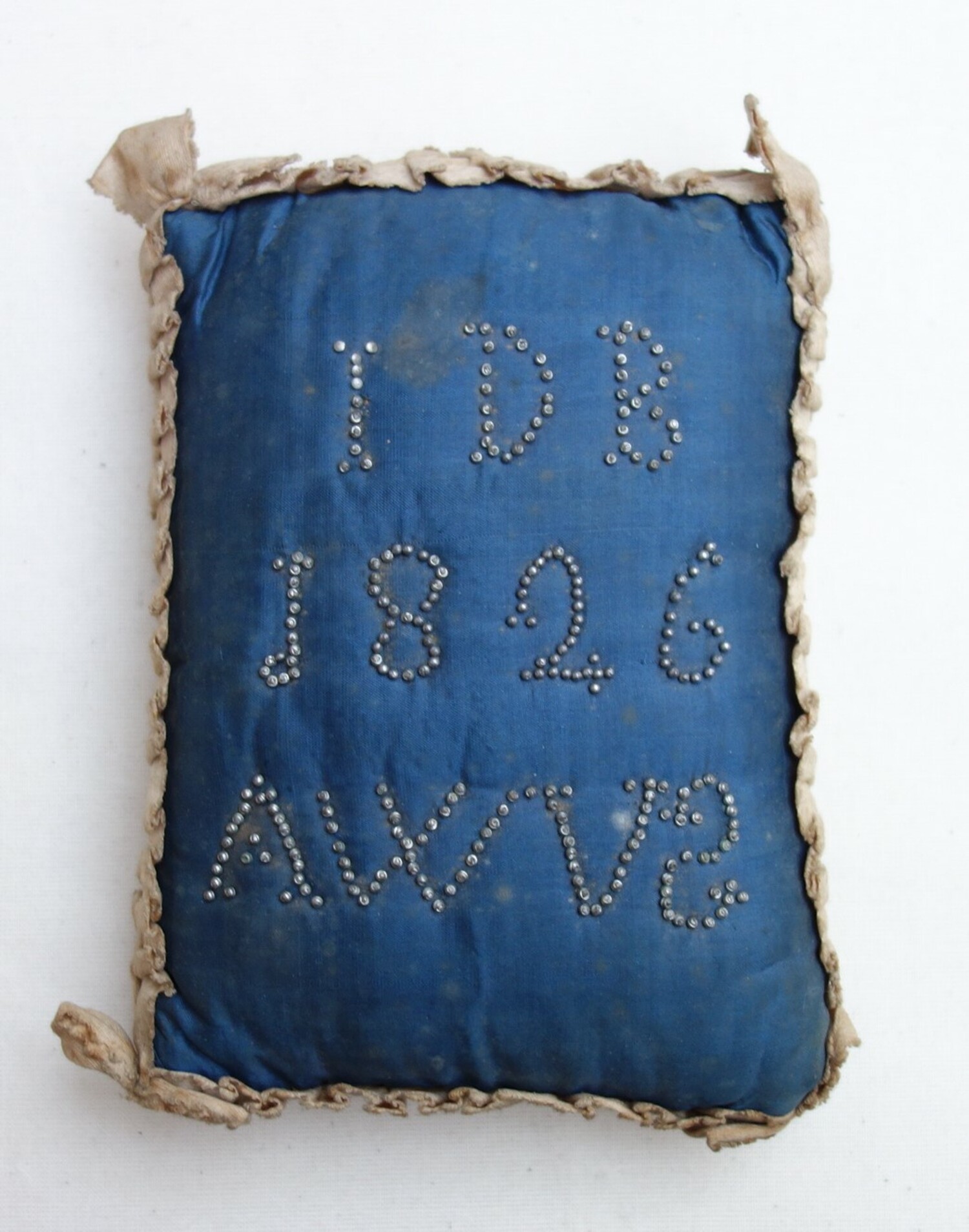 Pin cushion ('bakerkussen'?) from 1826, the Netherlands, with the initials and date: IDB 1826 AWVS (TRC 2020.4732a).
The pin cushion was said to have been made and used by a member of the Blanken family, who come from Gouda or thereabouts (Ammerstol, Bergambacht, etc). I found the names of Jan (Dirk’s son) Blanken (1809-1865) and Adriana Willemina Verschoor (VerSchoor; 1809-1845), who were married on 09-07-1826 in Ammerstol, respectively 20 and 16 years old. Their son Dirk was born on 20-11-1826 (he died in 1889). One wonders what people thought of a 16-year-old, pregnant bride, but obviously somebody was happy enough to find two very nice bits of fabric and make them into a 'bakerkussen'!
Nelleke Ganzevoort, 9 April 2022


