


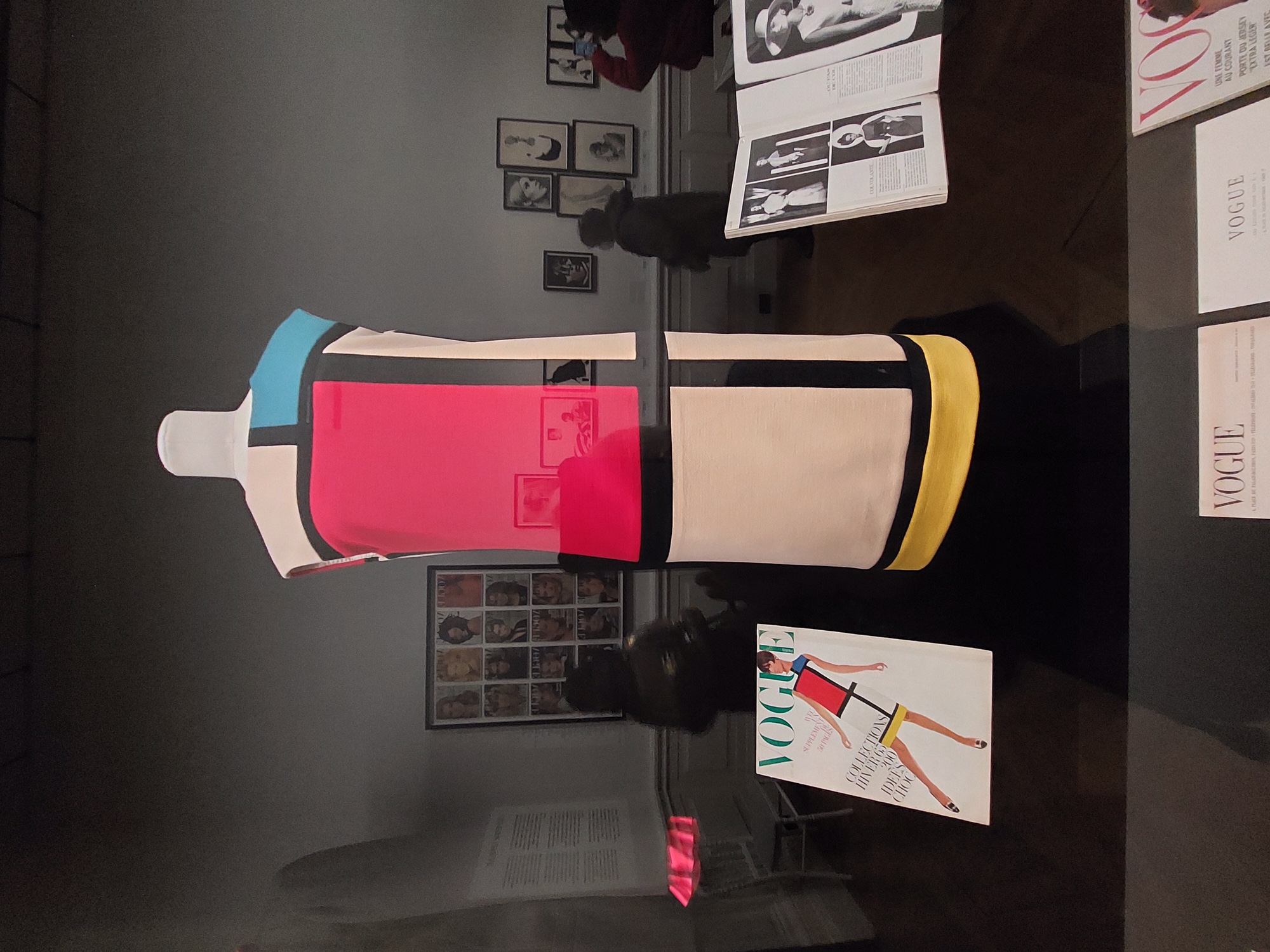
 Dress displayed at the exhibition 'Vogue Paris, 1920-2020,' based on a painting by the Dutch artist, Piet Mondriaan. Photograph by S. Anderson.The pandemic has meant living in my sweatpants and bathrobe. Perhaps because of this, a visit to an exhibition at the Palais Galliera (officially known as the Musée de la Mode de la Ville de Paris) has increased my appreciation for haute couture.
The exhibit, called Vogue Paris, 1920-2020, celebrates the centennial of the French edition of the fashion magazine Vogue. Founded by Condé Nast in 1920, Vogue Paris is the oldest French fashion magazine still in publication—and the only Vogue that includes the name of a city rather than a country.
It was fascinating to learn about the magazine’s history, especially during the Second World War. The magazine was among the first that was refused permission to publish by the German occupiers, who had searched Vogue’s offices and studio. For an article on how Vogue in England and America aided the Allied war effort, click here.
The first post-war issue, only five months after Paris was liberated, included work by Picasso and Colette. The editors of the magazine were determined to rebuild the city’s reputation as the world capital of culture, devoting thirty pages of each issue, not to fashion, but to the arts.
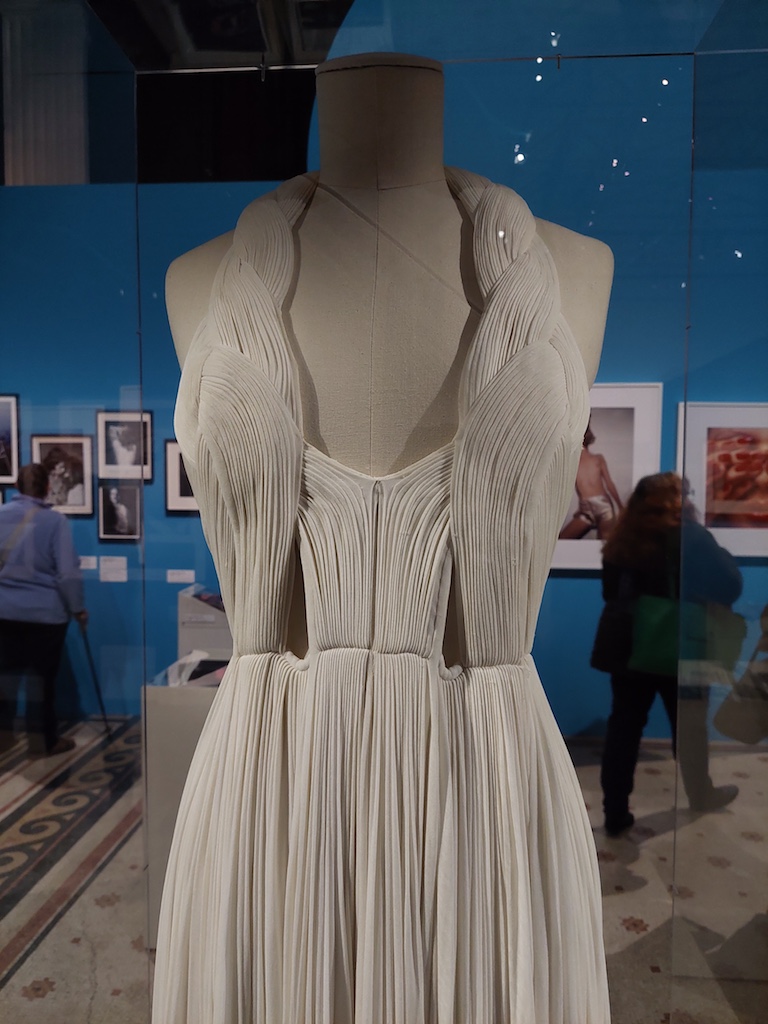 Evening gown of pleated silk jersey, by Madame Grès, Spring Collection 1975. Photograph by Shelley Anderson.In the exhibition there are over four hundred objects, including letters, photographs, illustrations, films and actual garments. The photographs alone are worth a visit, highlighting the work of fashion photography masters, such as George Hoyningen-Huene and Cecil Beaton.
But the most stunning displays are the over fifteen haute couture and prêt-à-porter garments. It was thrilling to see original masterpieces by Dior, Yves Saint Laurent (who was introduced to Dior by the Vogue Paris editor), Schiaparelli and others. The intricate pleating on a white 1975 evening gown by Madame Grès literally took my breath away.
One of the garments on display is a beautiful dress from 1965 by Yves Saint Laurent, based on a painting by Piet Mondriaan. The work of this Dutch painter inspired a full 'Mondriaan look' in the 1960s, amply supported by Vogue! And to add a link to the TRC in Leiden, Mondriaan's work also inspired Japanese garments and the TRC soon hopes to welcome a kimono decorated in the Mondriaan style. More on that in a later blog.
The exhibition in Paris is on until 30 January 2022. You can see some of these treasures on the website of Palais Galliera, Musée de la Mode de la Ville de Paris.
Shelley Anderson, 4 January 2021


