


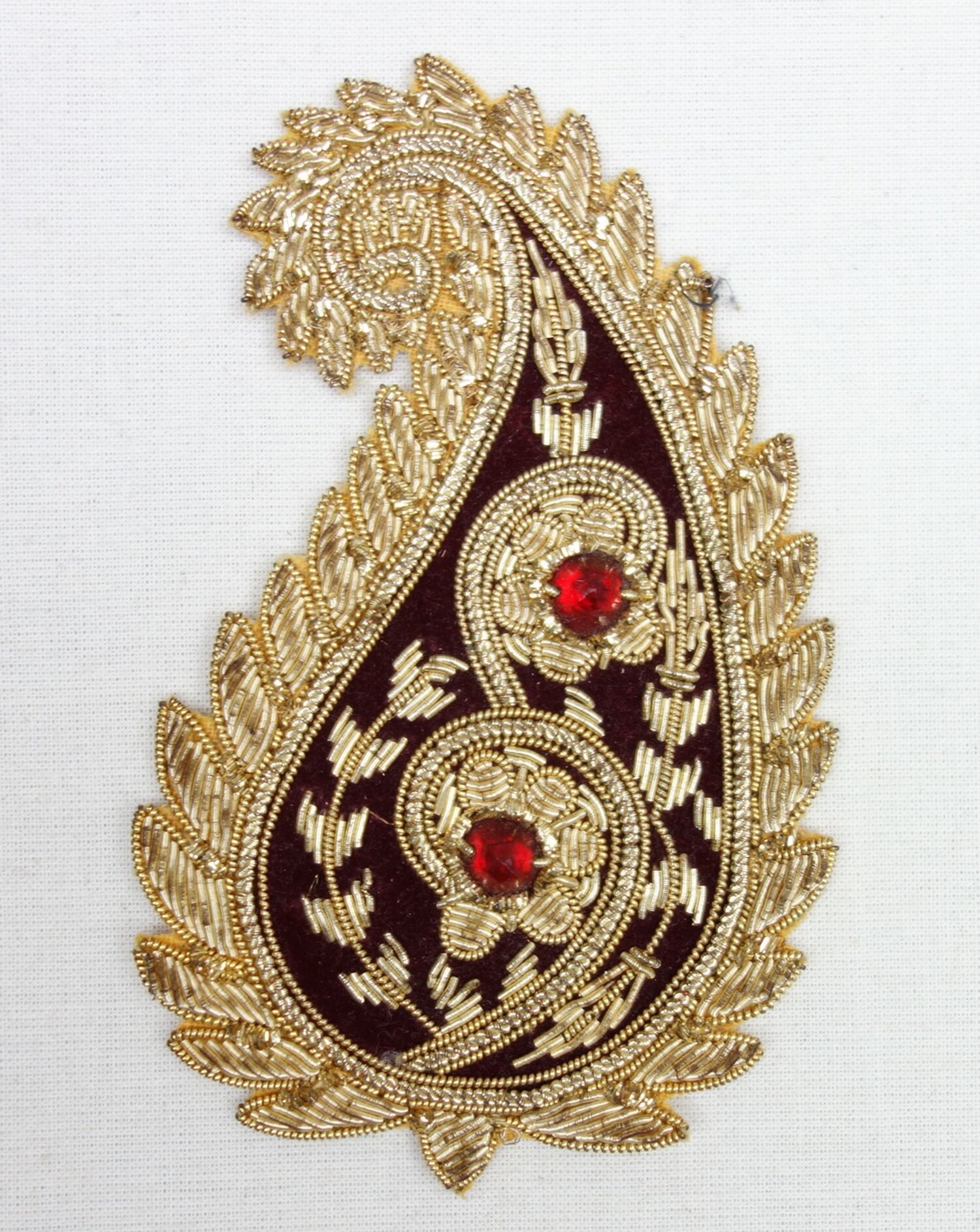
 Indian appliqué in the shape of an ornate paisley/buteh motif, hand embroidered in gold thread on a dark red velvet ground. Mid-20th century (TRC 2020.5154).It's raining paisley! Or so it felt the other day when six packages arrived at the TRC in Leiden, all at the same time. The parcels were from a variety of sources, and each one included one or more items covered with the paisley motif.
Paisley is that iconic Iranian/Indian motif (generally known as buteh) that was reproduced in the Scottish town of Paisley from the early nineteetnh century onwards. Hence the name. It is traditionally associated with Kashmir shawls, but the same motif can now be found everywhere.
The six parcels included a coat, a bikini, a line dancing outfit, a cocktail dress, a length of West African cloth and an Iraqi-style embroidery from near Rotterdam, all decorated with variations of the paisley motif. In addition, a frequent visitor to the TRC has just donated an outfit that comes from the Estonian island of Kihnu, which, from the late 19th century, has developed a form of regional, daily dress dominated by paisley motifs!
All of these items were needed for and will be included in the TRC’s upcoming exhibition called From Buteh to Paisley: The history of a global motif.
In order to get you intrigued and indeed inspired by this subject, we have attached some photographs that will give you a quick ‘walk around’ of the exhibition. Although we have not finished building up and fine-tuning the exhibition, I think you will get a good idea of what can be shortly seen.
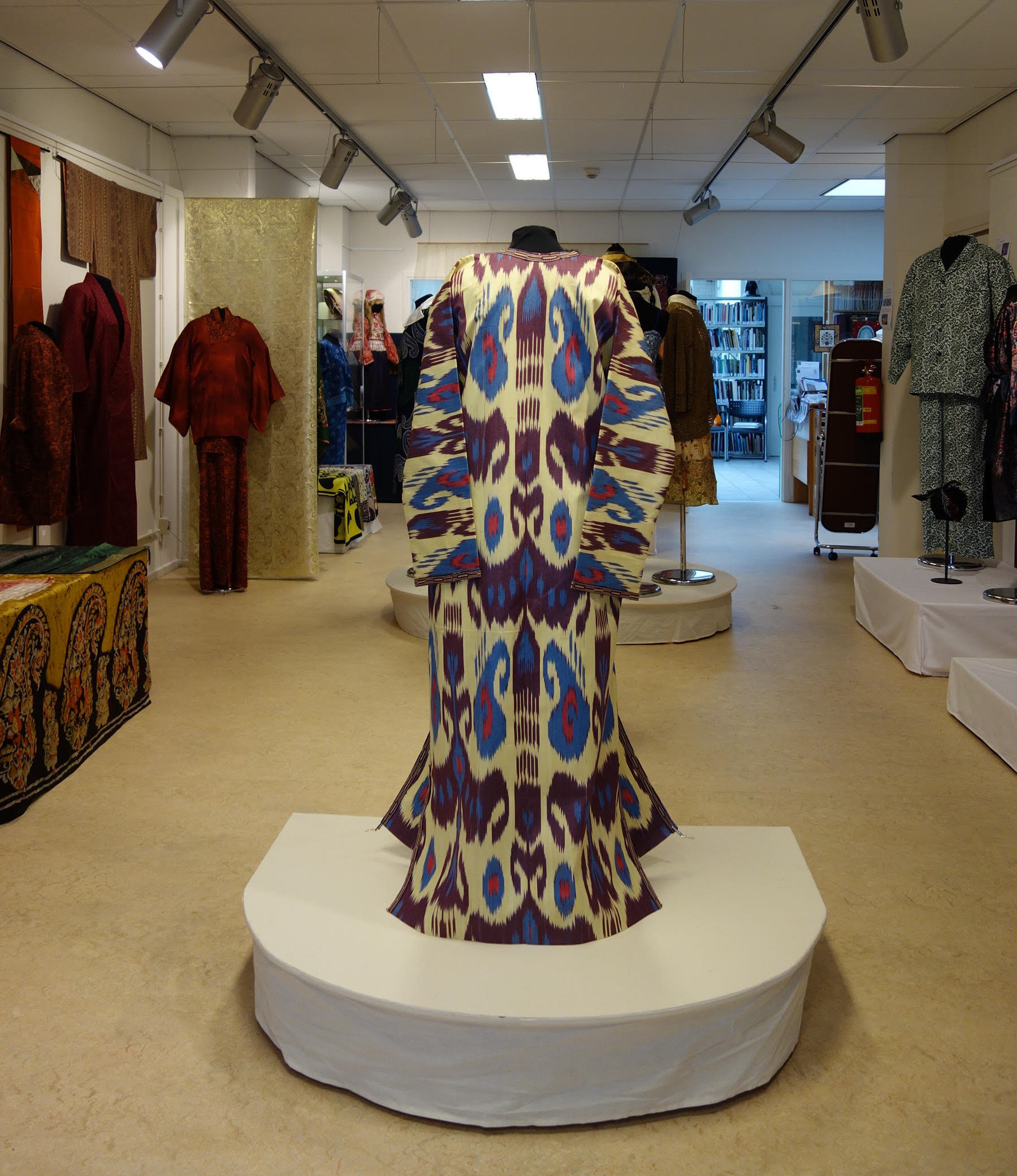 A modern ikat paisley coat from Uzbekistan.As you come into the TRC Gallery there is a modern ikat coat from Uzbekistan with large paisley (buteh) motifs. The exhibition proper starts with an explanation of the history of the paisley motif, its roots in Iran, how it travelled to Turkey and India, and from India all over the world. Some of the items on display (as you walk in a clockwise direction around the TRC Gallery) are from Iran, Turkey, India, Japan, Africa, Europe and America.
The exhibition then looks at how the motif has infiltrated Western clothing and textile traditions for well over 150 years, with objects from the mid-19th century to the present day. These items range from 19th century formal garments to modern steampunk items, as well as dresses from the 1960’s (including an ‘atomic’ paisley dress) and later. One wall, for example, is covered with ‘tiles’ of paisley textiles dating from the early 1900’s to just about yesterday. There are also ties, underwear, corsets, bandanas, nightwear and bags, all featuring different types of paisley motifs!
There are actually so many items we have just decided to expand the exhibition into the TRC workroom, so while working in the library or attending a workshop (in due course) you will be surrounded by paisley.
The exhibition will open, or so we hope, on the 3rd March 2021 and will be on display until the 28th July. You will need an appointment to see the exhibition (This email address is being protected from spambots. You need JavaScript enabled to view it.) as we have to restrict the number of visitors at any one time.
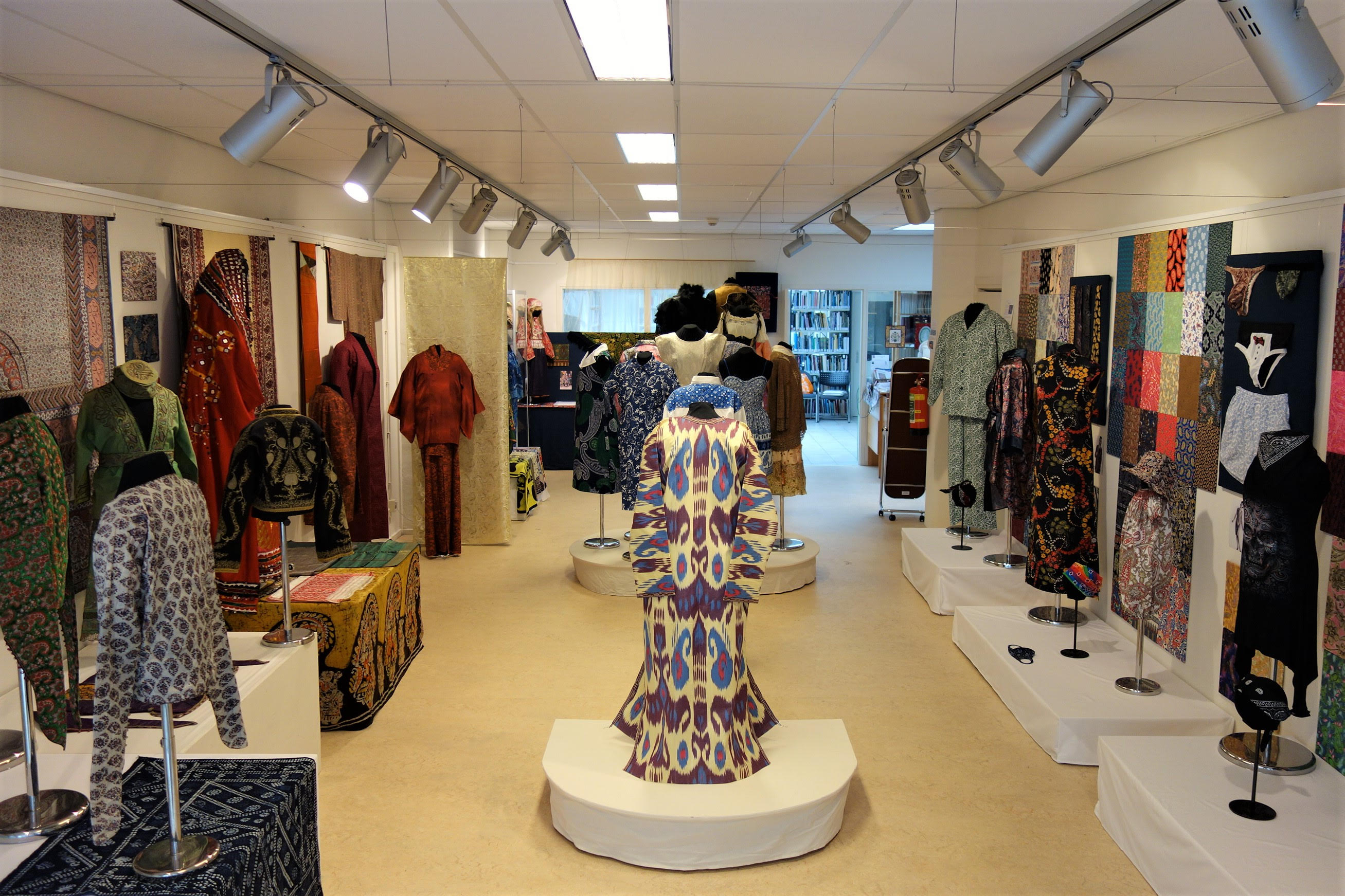 The exhibition is organised in a clock-wise manner, with an introduction and history of the buteh/paisley motif at the start (left) and ending with modern examples (right).
In addition, face masks have to be worn and social distancing observed. Please keep an eye on the information provided on the TRC website for the latest information about opening times and days. This, of course, in connection with the corona pandemic.
In the meantime we will shortly be publishing an online exhibition with the English text boards and photographs of all the objects, illustrations, etc., for you to enjoy.
The exhibition has been set up with the assistance of an enthusiastic group of MA students of Leiden University and other volunteers, including Augusta de Gunzbourg, Tchi Ridley, Kaja Sobczyk, and Joshua Verkerk. All the photographs are by Augusta de Gunzbourg.
Gillian Vogelsang, Director TRC, 20 February 2021.
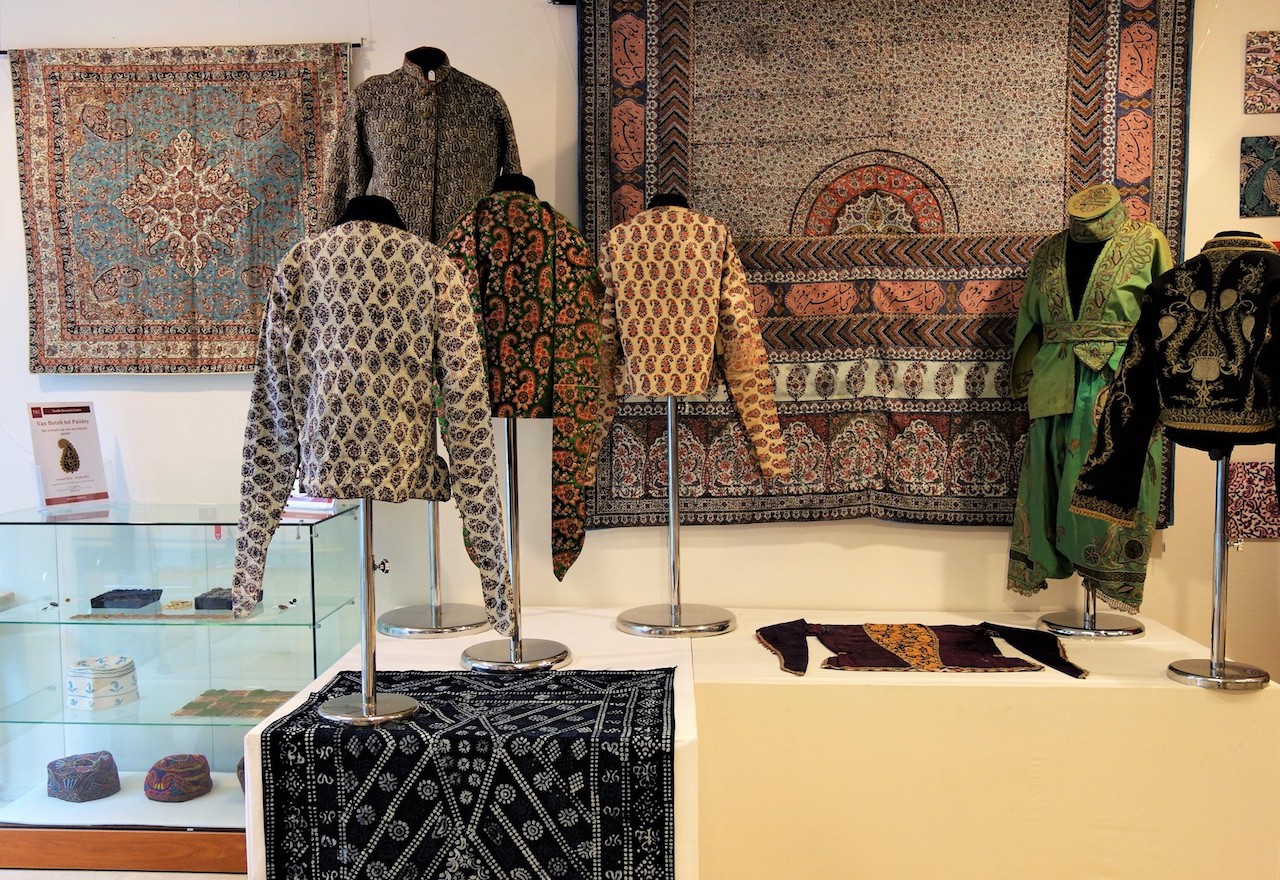 Iranian, Turkish and Afghan garments and textiles decorated with the buteh (paisley) motif. These are mainly late 19th and early 20th century in date. The blue and white Turkish panel in the middle is late 20th century in date.
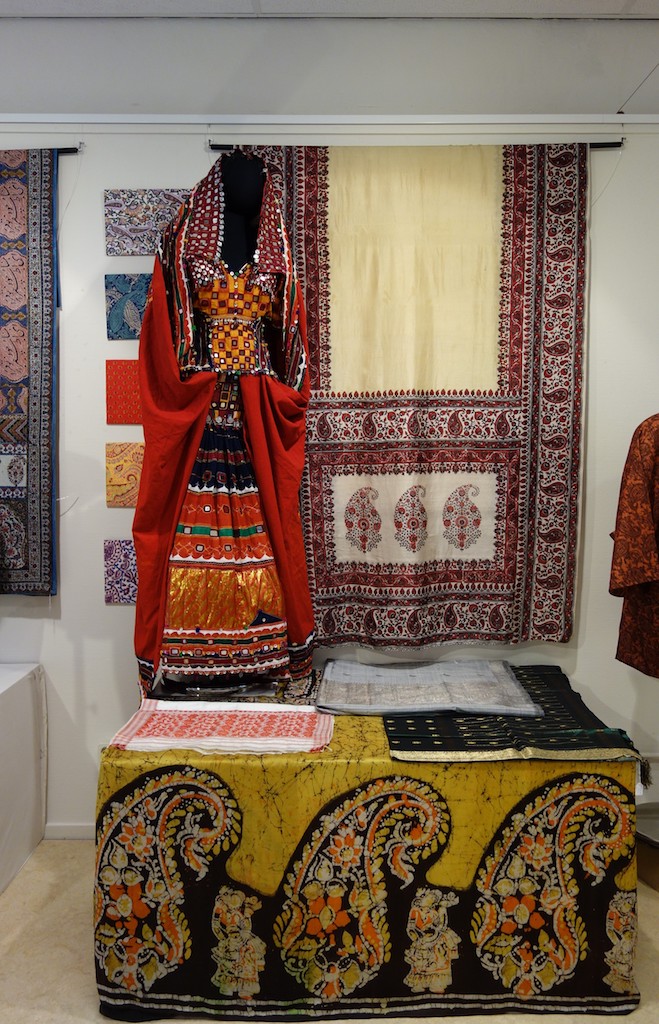 Examples of Indian paisley – sometimes you have to really look hard to find the paisley motif, but it is there!
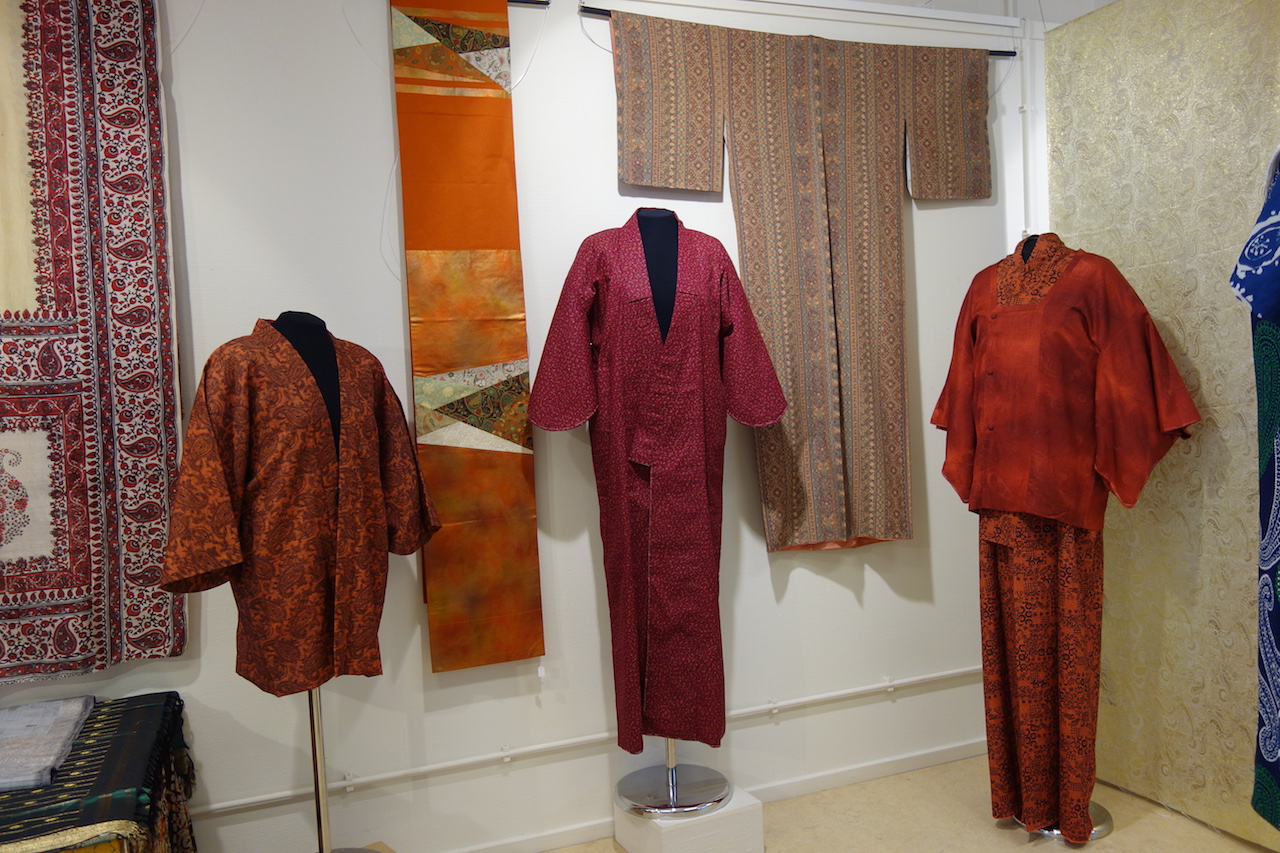 Examples of 20th century Japanese garments made from paisley decorated material.
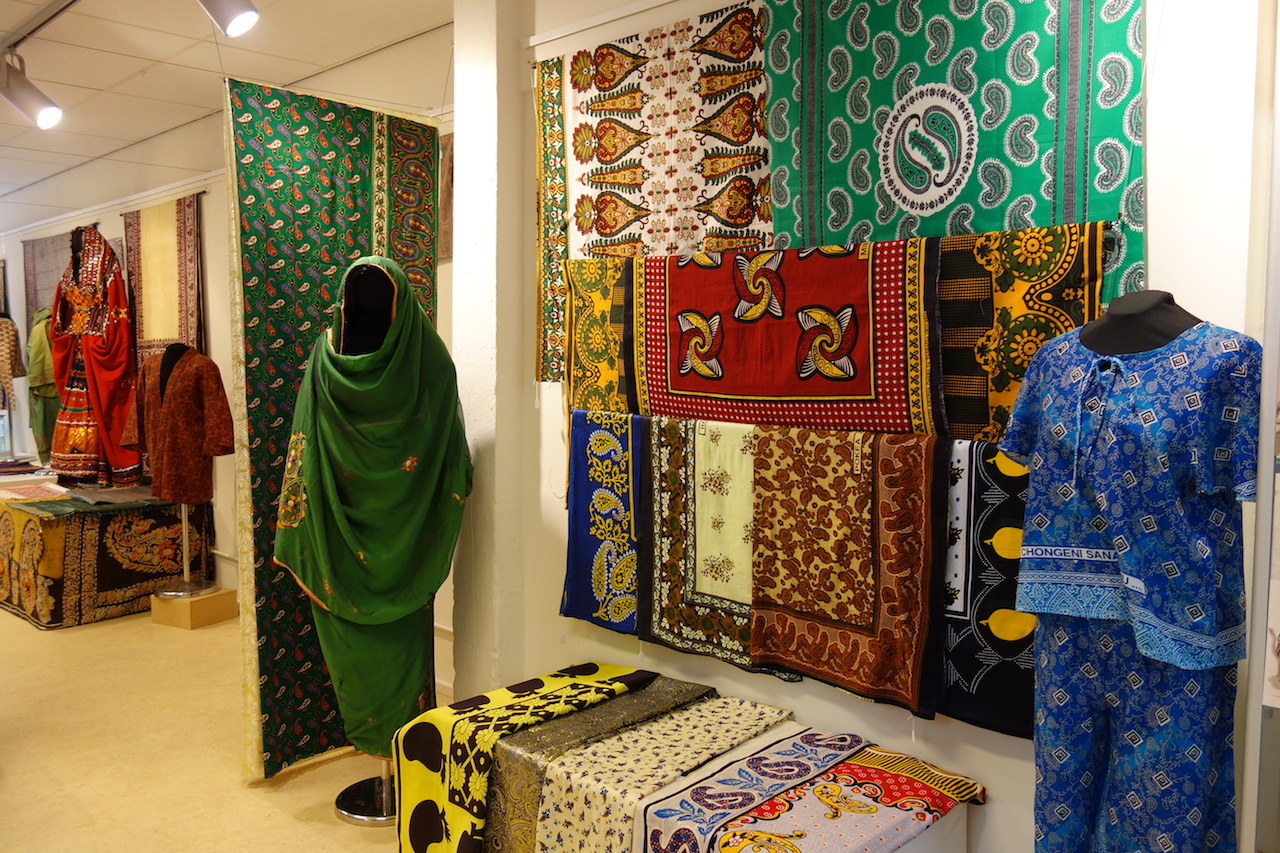 Paisley is also popular in West Africa, East Africa and Sudan. More items from East Africa are in the post and will be added as they come in.
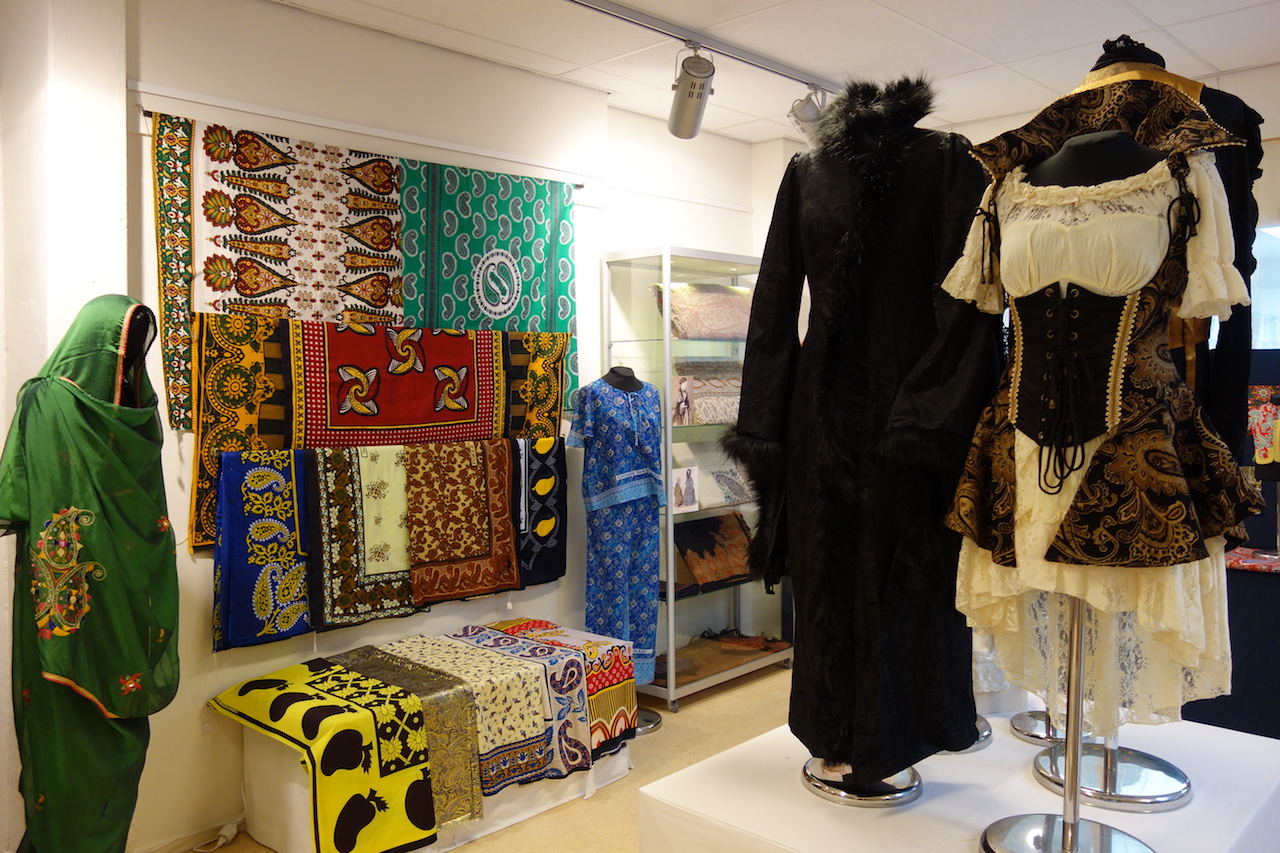 Paisley shawls, paisley steampunk and African paisley all joined together by one (iconic) motif.
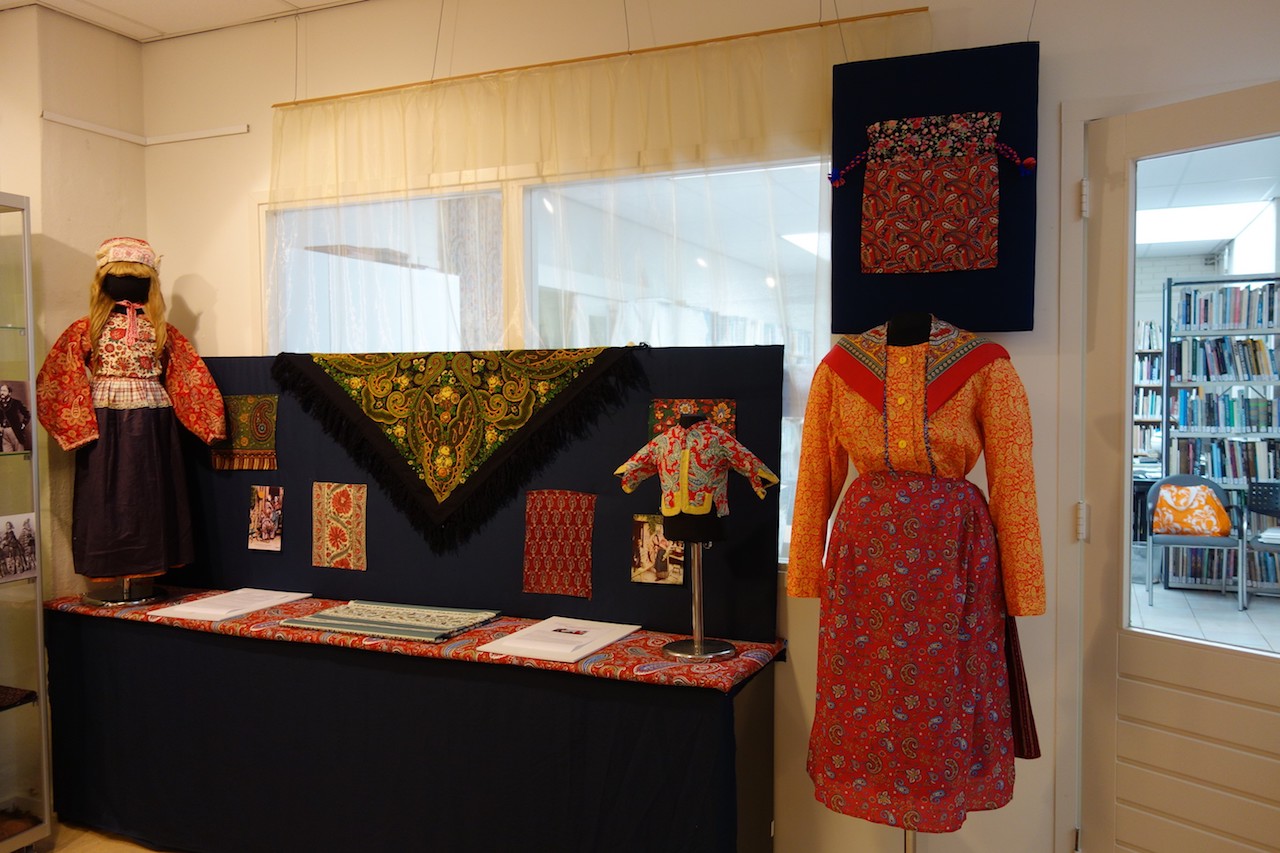 Garments from the island of Marken (the Netherlands), from Russia and from the island of Kihnu (Estonia), all decorated with paisley motifs.
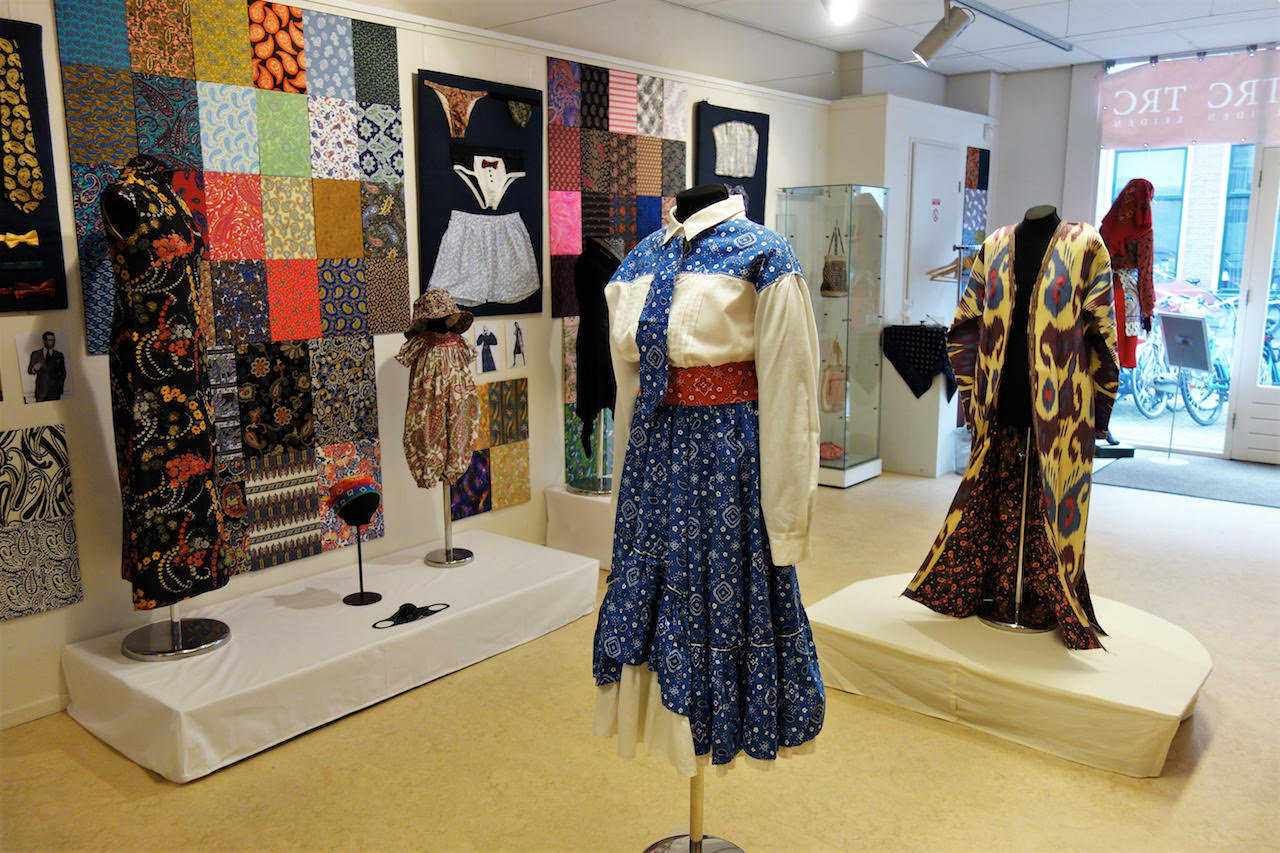 A US line dancing outfit, an Uzbek coat, a Chinese-style cheongsam dress, a baby’s rompers, men’s underwear, a biker’s bandanas and corsets. Plus part of the paisley mosaic on the wall.
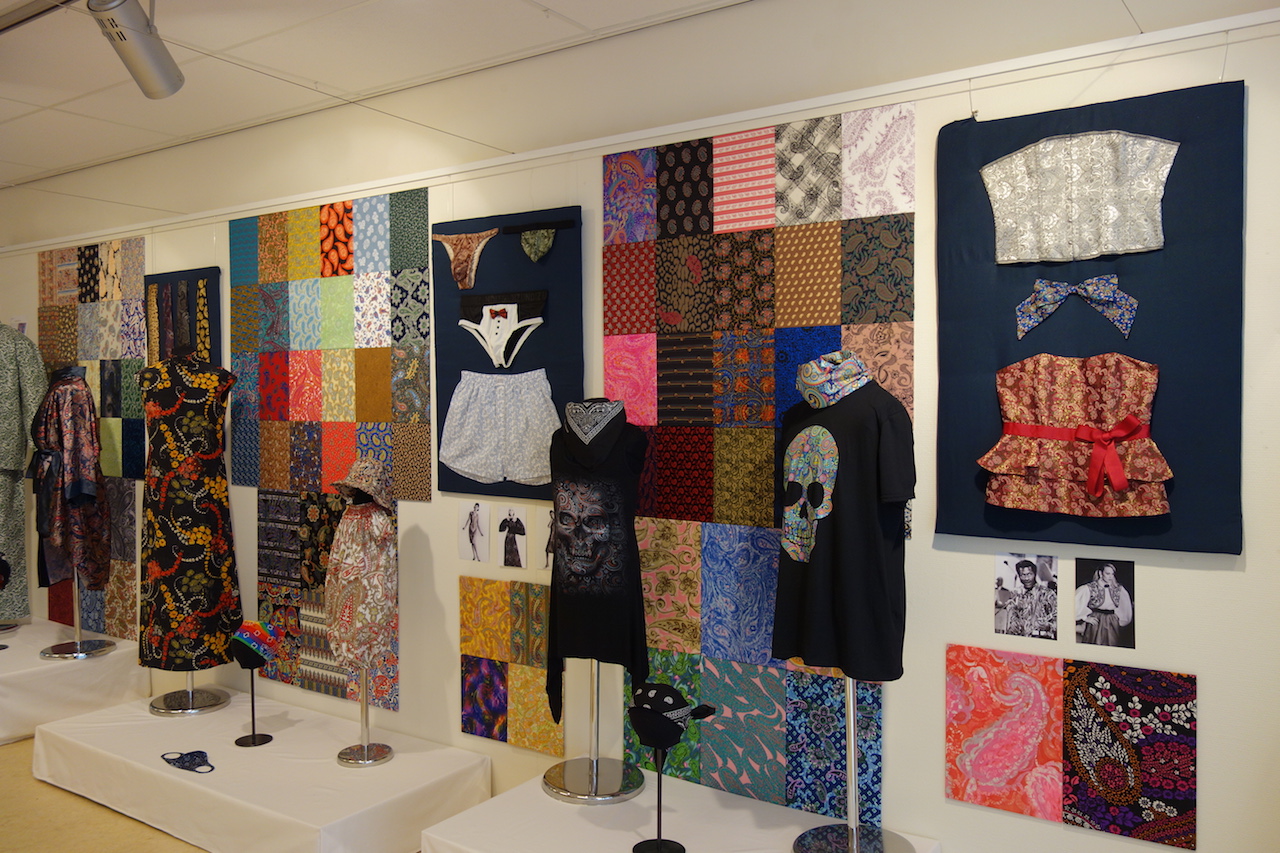 And a few more items of paisley.
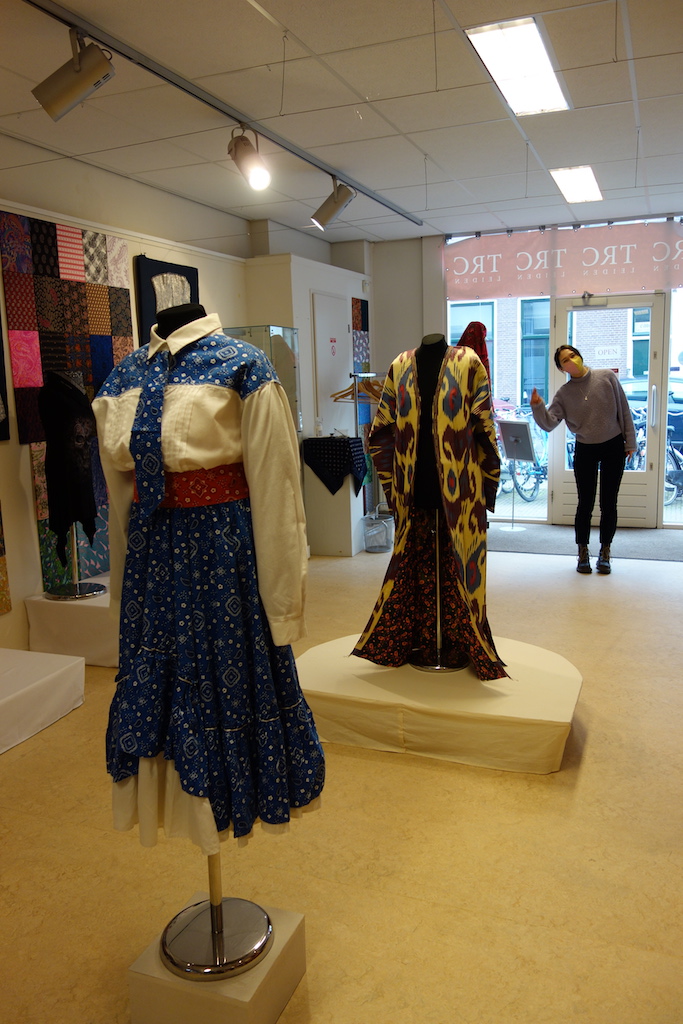 And with more paisley to come! In the background Tchi Ridley, one of the Leiden MA students.


