


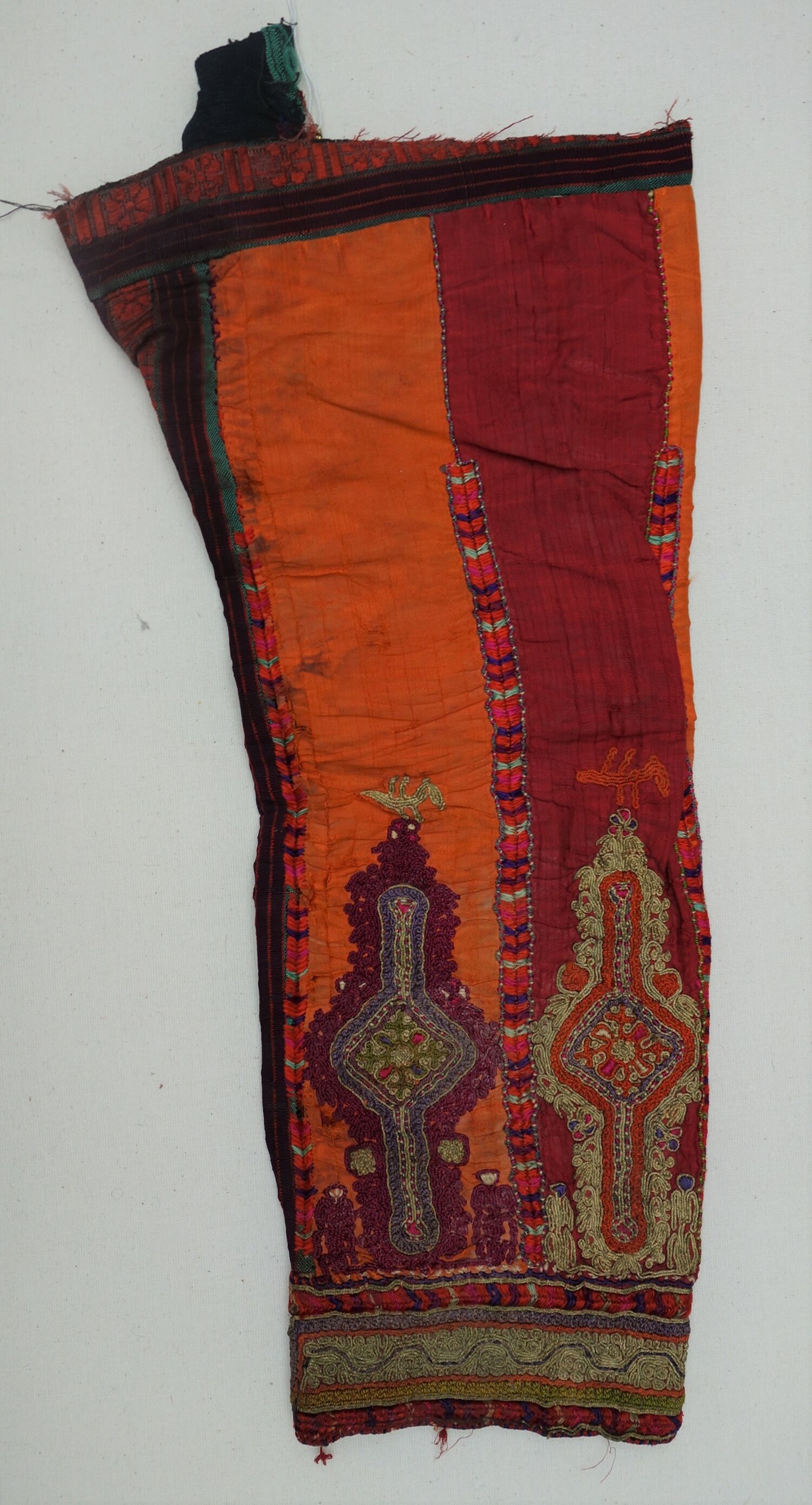
 Embroidered sleeve from a Bethlehem dress, mid-20th century (TRC 2020.2137).Fatima Abbadi, a teacher in Middle Eastern embroidery from Capelle aan den IJssel, The Netherlands, writes about her experimenting with cord couching, which is characteristic for Bethlehem embroidery. May 2020.
For many years I have been practising the art of cross-stitching because it is the most common technique used both in Palestine and Jordan, these being the countries where my roots lie. During my childhood, cross stitching was taught at school and all the women in my neighbourhood practised it on a daily basis. However, over the years my interest in other forms and techniques grew rapidly, so much so that I decided to dive into the numerous and enchanting embroidery techniques that the Middle Eastern region is endowed with.
Starting from my surrounding area, I decided to begin by studying the cord couching technique first, because I’ve always been fascinated by the magnificence of Bethlehem’s traditional costume.
Around the 19th century, Bethlehem used to be a distinctive fashion hub of Palestine. The “malak” (in Arabic 'royal') bridal dress and its short jacket (taqsireh), both important female bridal pieces, were richly embroidered with silk, gold or silver cord couch embroidery on finely textured silk fabrics, and meticulously filled with satin stitch. As an output, this unique, fashionable and prestigious dress became a very desirable piece that every woman in Palestine wanted to purchase or they wanted at least a small element of their dress embroidered with THE couch stitch technique.
The couching technique, and more precisely cord couching, is very similar to the passementerie, an embroidery technique in which a cord is laid down on a fabric and then secured with a tiny small stitch on a regular interval. A technique that is visibly tangible in Bethlehem’s dress.
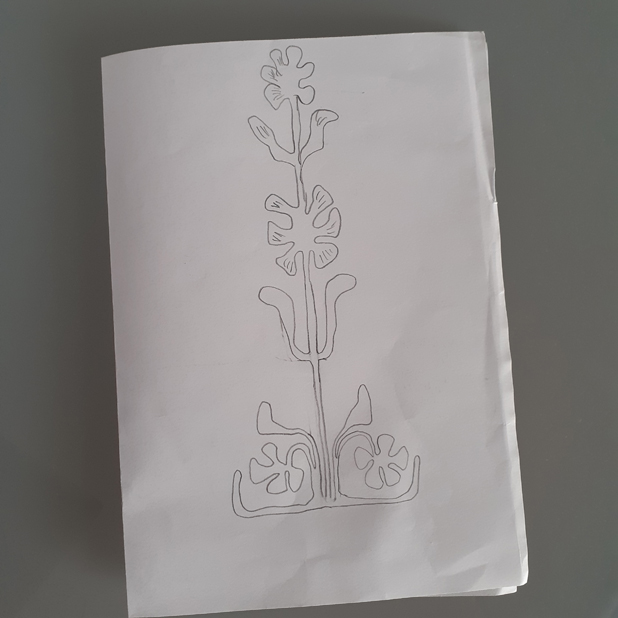 Working Bethlehem-style cord couching. Photograph by author.
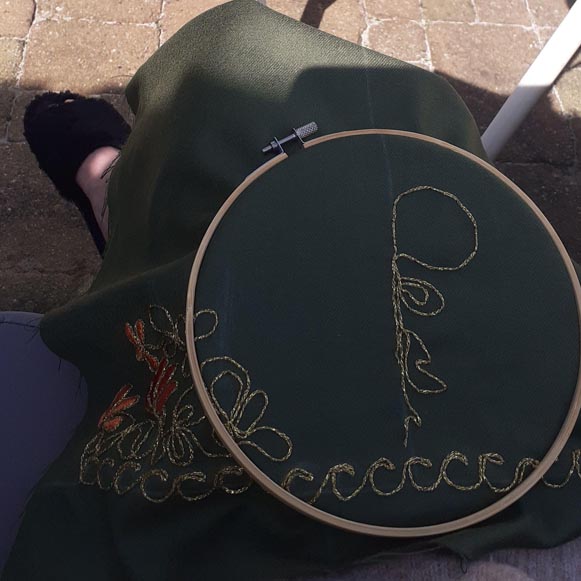 Working Bethlehem-style cord couching. Photograph by author.
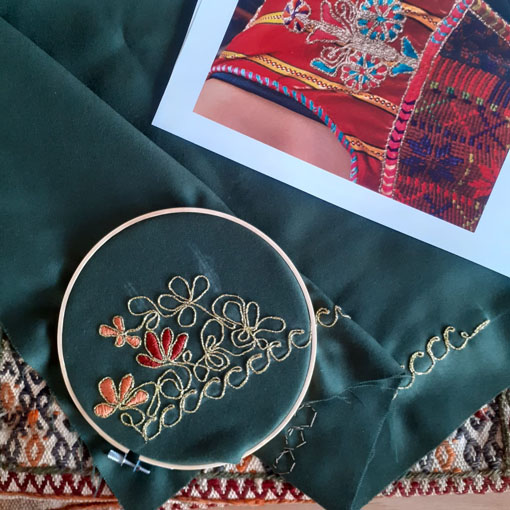 Working Bethlehem-style cord couching. Photograph by author.
Therefore my cord couching process started first by analysing and reading several important books, such as Threads of Identity : Preserving Palestinian Costume and Heritage (author: Widad Kawar) and the Encyclopedia of Embroidery from the Arab World (author: Gillian Vogelsang-Eastwood), as well as resources such as the relevant TRC Needles entries. These books provide clear images of techniques and patterns - a fundamental step to start with. The second step is to buy a good fabric, a loop and the right DMC thread size to work with. Step three is to try and draw a pattern on paper as an inspirational motif and then start couching. What I noticed from this process is that moving around the thread on the fabric needs a firm hand, lots of patience and a good mastery in creating forms and shapes. The result of a month’s work is shown in the accompanying photograph.
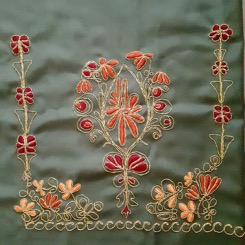 Result of Bethlehem-style cord couching. Photograph by the author.
For recent blogs by Fatima Abbadi, see also:


