


The TRC has recently been given a group of batiks and ikats, most of them from Indonesia. They were collected by textile designer and artist, Miep Spée, who now lives in the small village of Noord-Beemster, in the north of the Netherlands. Miep Spée worked in Indonesia in the late 1970s and early 1980s and focussed on the production of batik. In doing so she visited and worked in various batik factories and ateliers.
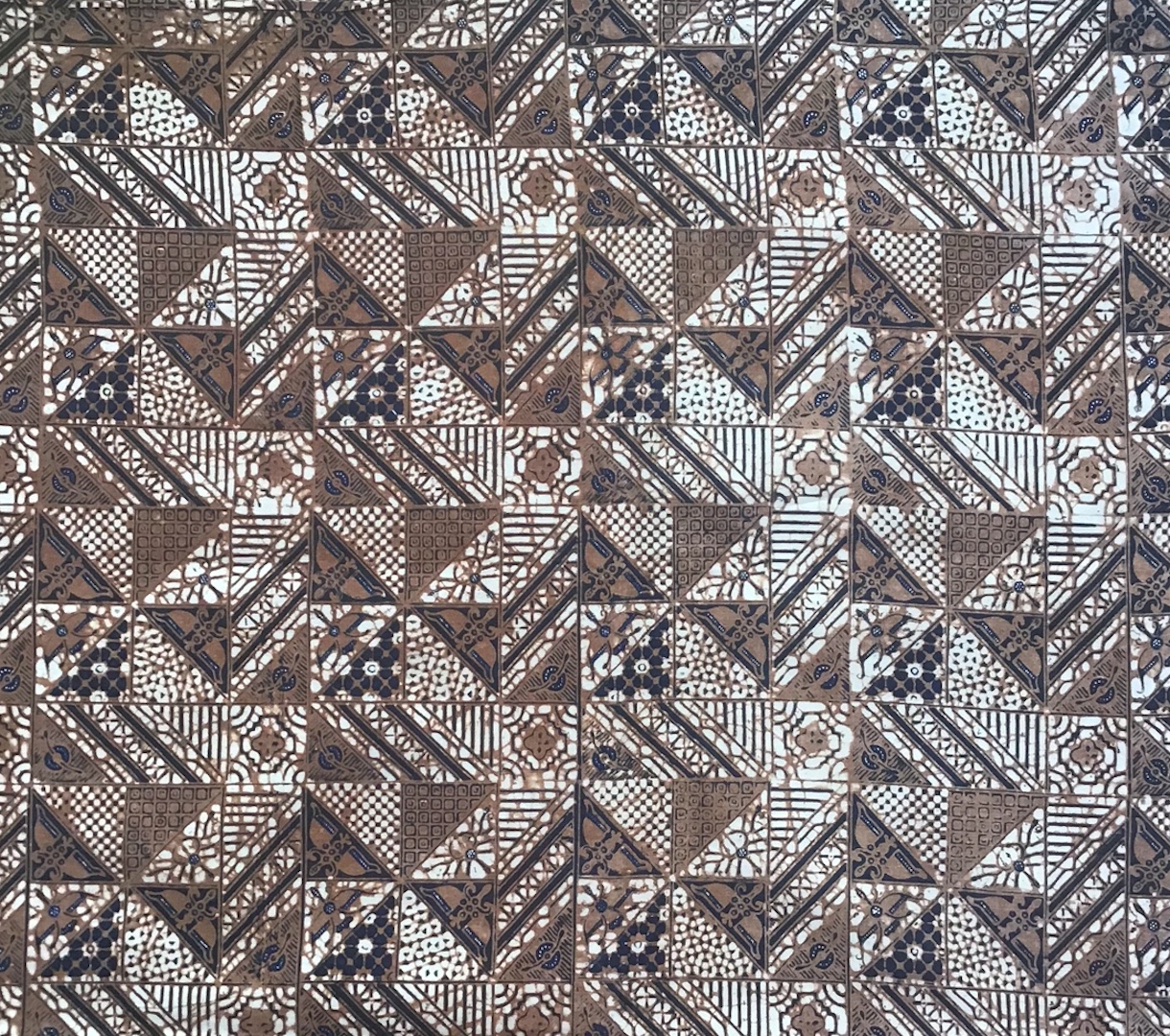 A Javanese batik from c. 1980 decorated with a repeating geometric pattern (TRC 2022.2020).
Among the various textiles that she acquired is a Javanese batik (TRC 2022.2020) that looked, at first glance, like a jumble of small geometric forms and did not seem quite right. And yet the colours, dark blue, brown and off-white, were very similar to the other Javanese textiles in the Spée collection.
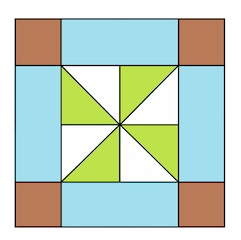 Block of an Indonesian batik cloth (TRC 2022.2020). Drawing by Martin Hense.On a second and third look I could identify the main elements of a block, namely a central square formed by triangles, and surrounded by a framework of rectangles and squares, it was the possible to find the repeats of the block, which were used to cover the ground material.
To my surprise it would appear that the pattern is comparable to an American quilt, with the top made up of blocks with rectangular/square sashing (framework). This is a ‘classic’ quilt form, called a pin-wheel.
This raises various questions for me. If this identification is correct, is the batik ‘block’ pattern an example of a separate and independently developed tradition? Or does it represent an American influence on one sector of the Indonesian batik market and this particular textile was perhaps intended for the tourist market? It could also be argued that this is an example of cultural appropriation by an Indonesian group.
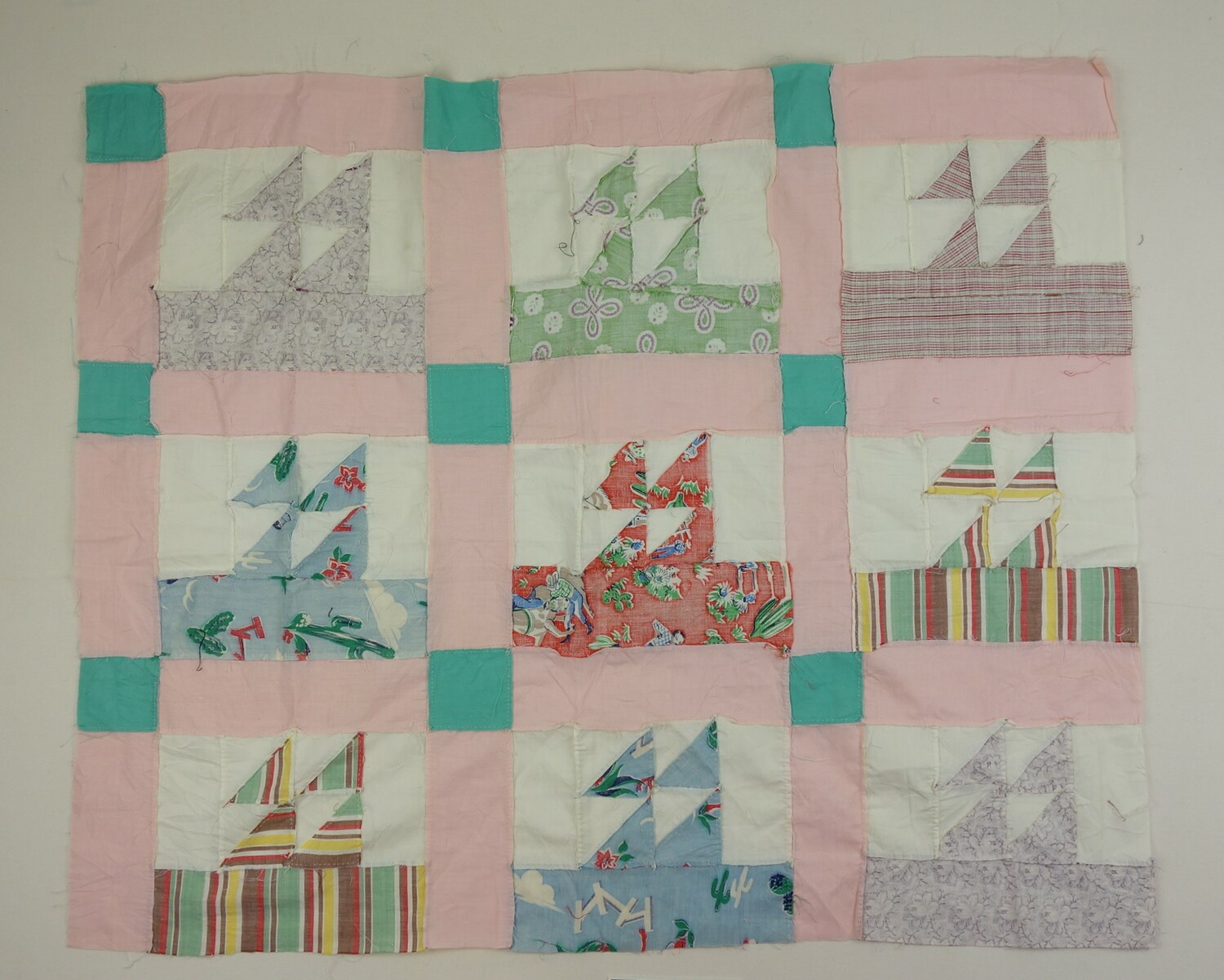 Series of blocks for a mid-20th century American quilt (TRC 2017.4040).
But it would seem much more likely that it is yet another example of the ‘adopt and adapt’ system of design transfer that has been going on for thousands of years throughout the world. In this case an American quilt block pattern was seen (adopted) and adapted for the batik market of Java.
The textiles donated by Miep Spée will be added to the TRC Collection over the next few weeks and I am sure that there will be other interesting surprises and discoveries during the course of the work.
Gillian Vogelsang, 17 July 2022


