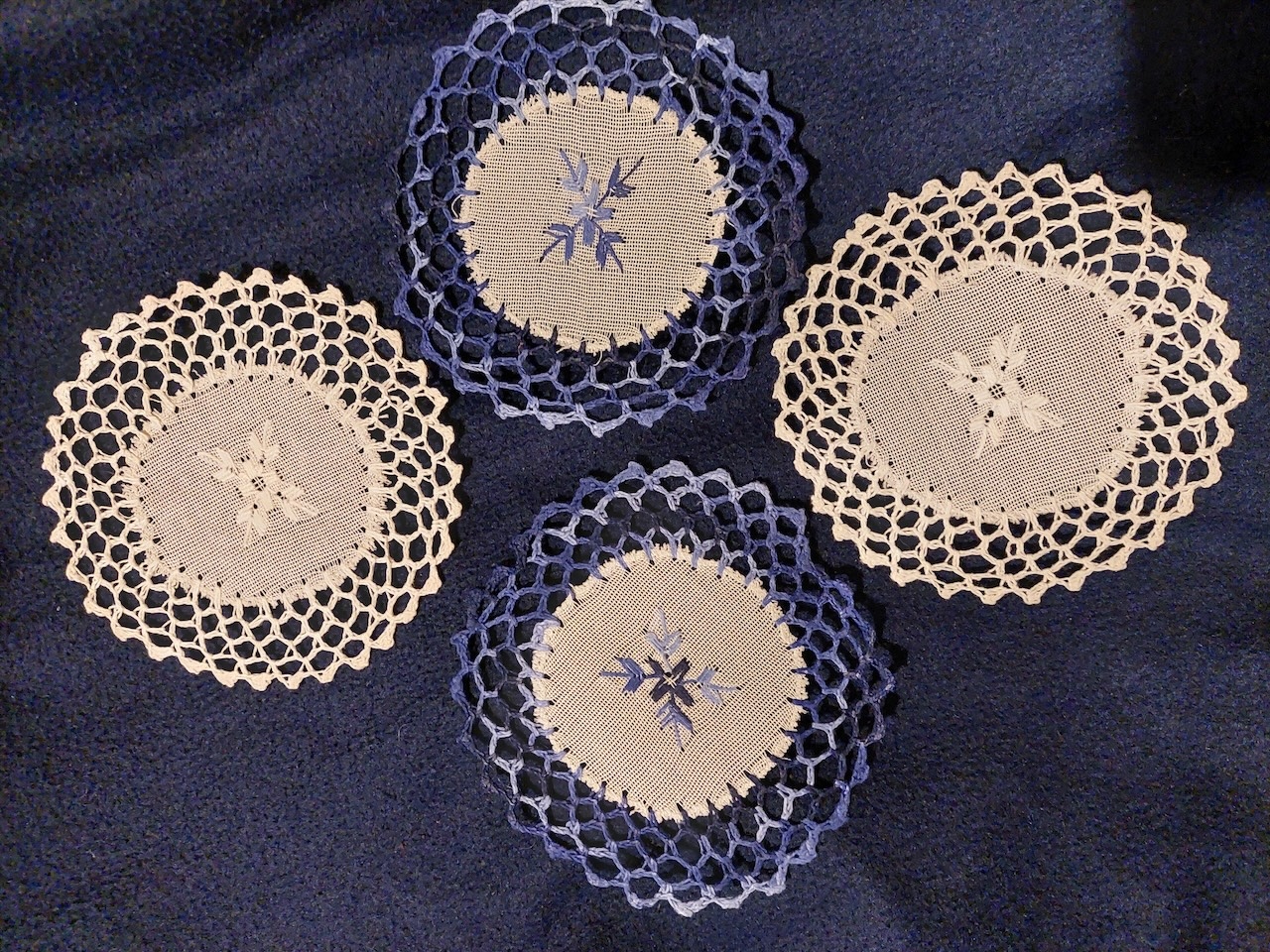
• F2
  • F3
  • F4
  • F1

Tetouan kaftan, displayed in the Bab Oqla Museum, Tetouan.Tetouan kaftan, displayed in the Bab Oqla Museum, Tetouan.(Leiden, 5 Nov. 2025) A current highlight from the TRC Collection (TRC 2023.0531)) is this Moroccan kaftan, dating from the late 19th or early 20th century. It is made out of Syrian satin silk and beautifully embroidered with gold and silver threads.

This type of kaftan used to be worn by women in the Tétouan region (northeastern Morocco) and is thus often referred to as a “Tétouan kaftan” (Caftan de Tétouan).

This style, especially with its large sleeves, is rarely worn by younger generations. It may originally have been worn together with other items of clothing, such as an embroidered bolero that was cinched at the waist with a belt.

(Leiden, 2 Nov. 2025) For the last year or so I have been muttering about having a textile garden at the TRC’s new home on the Boerhaavelaan (B6), Leiden. This is not a new idea and various museums, botanical gardens and local projects throughout Europe have set up dye plant gardens, such as that at the Palazzo Madama (Turin, Italy), Botanical Gardens, Cambridge, England , as well as the Amsterdam Colour Gardens. The main thing that was needed was a suitable garden and B6 gives us that.

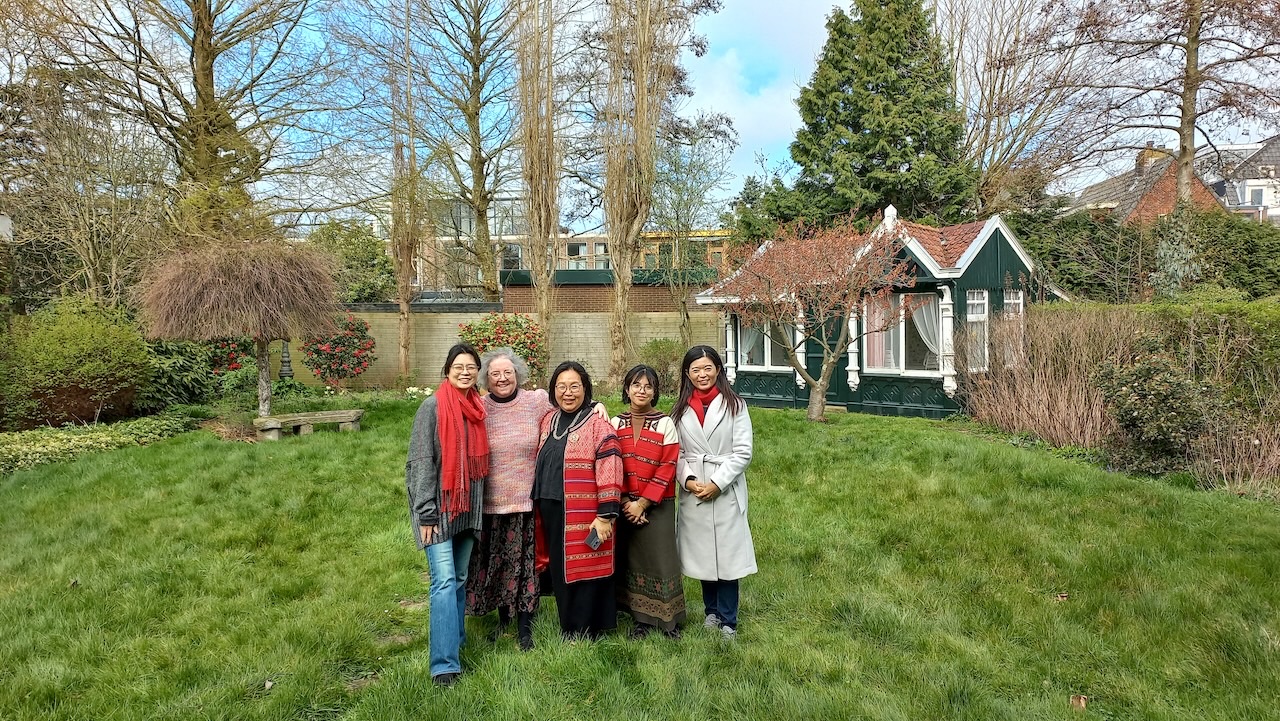
Boerhaavelaan 6, from the garden.Boerhaavelaan 6, from the garden.However, we do not just want a 'mere' dye garden, instead we want to extend it to cover the world of textiles, including fibres, dyes and related items such as seeds used for decoration or nuts used for buttons. Not all the plants can easily be grown in Leiden (some require desert conditions, which rainy Leiden certainly does not have!), nor do we have a greenhouse (yet) where such plants could be grown. However, there are many plants we can start with and gradually expand as we get more experience over the next few years.

Another difference is that we do not want just pretty plants all in a row (to paraphrase an English nursery rhyme [Mary Mary Quite Contrary]), we want to use them. Such as having a patch of flax as part of the Crafts Council Nederlands Project, 1m2 flax, here in the Netherlands. There is also a group on the Boerhaavelaan who are very keen natural dyers, so perhaps we can grow a range of plants that they can use (think onions, weld, madder, etc). Then there are various schools in the neighbourhood, so perhaps setting up a dye plant project with them as part of sustainability? The plan is also to have the garden open to the general public during the office hours of the TRC.

It has been a busy time at the TRC, thanks to various activities, meetings, applying for funds (successfully!), workshops and courses, preparing manuscripts for publication, more meetings, as well as trying to sort out the paperwork, building activities, plans, etc, involved in moving an institute such as the TRC to larger premises (Boerhaavelaan 6). Below are some of the things that have been happening over the last few weeks, in more or less chronological order. The illustrations in this blog reflect the wide diversity of the TRC collection.

Bundle of bobbin lace (edging) from Sri Lanka, 1982. The lace was ordered by Hélène Nauta-Barge (a former occupant of Boerhaave 6) from a group in Sri Lanka with the intention of selling it in the Netherlands to raise money for the lace makers (TRC 2025.1497).Bundle of bobbin lace (edging) from Sri Lanka, 1982. The lace was ordered by Hélène Nauta-Barge (a former occupant of Boerhaave 6) from a group in Sri Lanka with the intention of selling it in the Netherlands to raise money for the lace makers (TRC 2025.1497).

We are continuing to get ready for the move to the urban villa just behind the Leiden railway station, and it is now reckoned about 4000 boxes, mainly for the collection, need to be shifted! The library, for example, is just about packed and there are well over 350 boxes, each weighing 10kg (as requested by the removal company).

(Leiden, 12 October 2025) From January until April 2025, I conducted extensive fieldwork in Cairo on the subject of khayamiya, for my research master’s thesis in Religious Studies at Utrecht University.

Fig. 1. Ramadan stall in Mohandiseen, Cairo, 2025. Photograph by Christina de Korte.Fig. 1. Ramadan stall in Mohandiseen, Cairo, 2025. Photograph by Christina de Korte.

Khayamiya represents an appliqué technique that is primarily used for decorating panels for large, handmade tents, but the technique is nowadays also used for all kinds of other objects, such as tote bags and cushion covers.

Fig. 1. Modern vyshyvanka recently donated to the TRC. Kyiv, Ukraine, polyester, machine embroidered (TRC 2025.0149).Fig. 1. Modern vyshyvanka recently donated to the TRC. Kyiv, Ukraine, polyester, machine embroidered (TRC 2025.0149).If there is one thing I have learned about dress while volunteering at the TRC, it is how inextricably linked clothing is to identity. Dress is a physical marker of identity. It can embody the inexpressible—the sense of belonging to a specific culture, to a distinctive history, and to a specific country. All this carried in a piece of cloth.

Yet it still amazes me how emotive and political clothing can be. The link between identity and dress may become even stronger when that identity is perceived as under threat.

This was brought home to me yet again on a recent Instagram post. The post was from a very upset Ukrainian woman. She was reposting a photograph of a densely embroidered woman’s traditional skirt and blouse. In the original post, the ensemble had been identified as Russian.

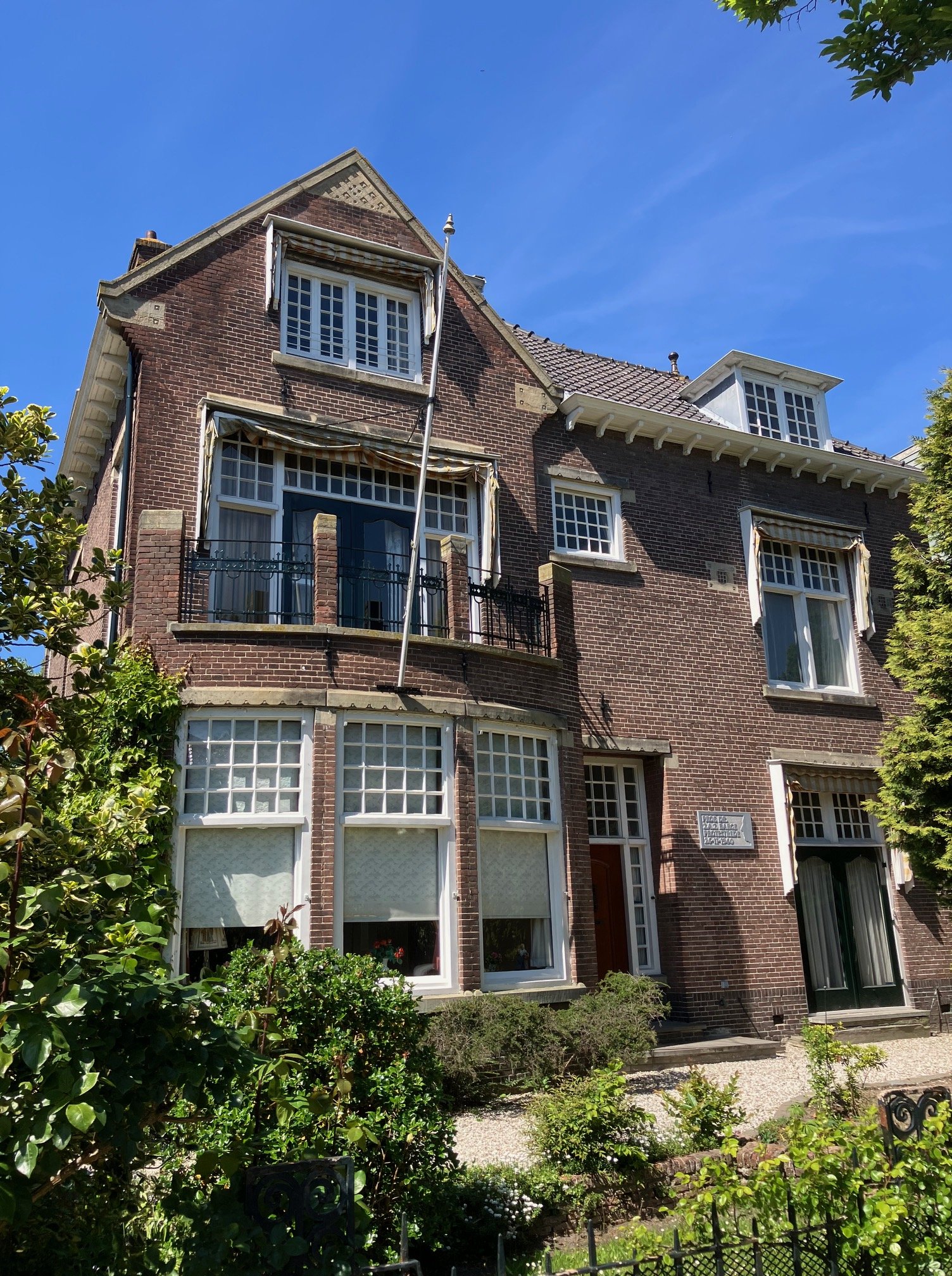
Two visitors in front of Boerhaavelaan 6.Two visitors in front of Boerhaavelaan 6.We have just experienced the Open Monumentendag  (Open Monuments weekend; 13-14 September 2025) at the TRC’s new home, Boerhaavelaan 6 (known as B6 at the TRC), here in Leiden, just behind the railway station.The building has recently been acquired by the Stichting Monumenten Bezit, which will shortly, also thanks to Leiden Council, make it available to the TRC.

It was the first time this historic building had been open to the public and we were involved in such an event. It was a steep learning curve, but great fun, both for us and for the volunteers and organisers of the Monumentendag.

The new TRC home, view from the garden.The new TRC home, view from the garden.On Saturday B6 was open from 12.00 until 17.00 and on Sunday from 10.00 until 17.00. On both days there was a constant flow of people, much to the amazement and delight of all of us.  On Saturday afternoon there were 313 visitors, while Sunday saw well over 650 (I have yet to receive the exact number).

This means that, in total, nearly 1000 people came to see the villa. There were guided tours with a brief introduction being given of its intriguing history, or people could simply wander around the house. As somebody said, the history of the 20th century is encapsulated in this urban villa, which was home to the Barge family (Prof. Barge was the Rector Magnificus of Leiden University from 1937-1938) for nearly 100 years.

Testing natural dyes. Photograph by author.Testing natural dyes. Photograph by author.I attended the five-day TRC Intensive Textile Course, 25-29 August 2025. Below I will describe what we did and what we learnt, and how much I enjoyed the course.

Day 1 was spent looking at and identifying fibres. It was also spent getting to know the amazing people who participated and organised the course, along with taking a quick tour of the TRC. This was an extra special time to look around, as plans for the TRC to move to other, and larger premises were being finalised. It was exciting to get a glimpse into the work being put into moving the collection of more than 51,000 objects from one location to another.

Fibre identification was a great first day activity. It is the most basic part of what makes up a textile, so logically it made sense to start with that, but it was also a great ice breaker. There was a lot of socialising while collecting our fibre samples, as well as a lot of learning, and a group favourite was identification through burning small samples of cotton, flax, silk, wool, and even eyebrow hairs!

Fig. 1. Woven mat (losa), made from reed or bark, from the Mbola, Democratic Republic of the Congo, late 20th century (TRC 2025.1290).Fig. 1. Woven mat (losa), made from reed or bark, from the Mbola, Democratic Republic of the Congo, late 20th century (TRC 2025.1290).Over the last year or so, Marjolijn van Scherpenzeel (Hartendief, Leiden), has given us a large quantity of textiles, mainly from Central Africa, Thailand and Laos, as well as various religious garments and embroideries from Western Europe.

Marjolijn has just given us some more pieces that we are gradually sorting out. Among the donation are some woven panels of a type I have never seen before. They are about 50 x 35 cm in size and are made from reed or strips of bark, stained black, white, red and yellow.

The pieces are now in the TRC Collection (TRC 2025.1284 to TRC 2025.1325) and are decorated with a variety of woven, geometric patterns. The mats or losa are made by Mbole women who live in the Democratic Republic of the Congo (formerly known as Zaire). They belong to the Mongo people and live in the equatorial forests in northeastern Congo.

Fig. 2. Woven mat (losa), made from reed or bark, from the Mbola, Democratic Republic of the Congo, late 20th ntury (TRC 2025.1321).Fig. 2. Woven mat (losa), made from reed or bark, from the Mbola, Democratic Republic of the Congo, late 20th ntury (TRC 2025.1321).These mats are not woven on a loom, but rather in the hand in a similar manner to a basket, with weft threads that are individually threaded using a twill weave (including 3/1 and 4/1 twill forms) into the required pattern.

The geometric patterns are apparently based on kengo or body tattoo patterns, known in general as itoko and come with a variety of names, such as bilik (bricks; Fig. 1. TRC 2025.1290), eleko (feather; Fig. 2. TRC 2025.1321), kitiwala (bed, TRC 2025.1294) and koi (leopard or leaping power of the leopard; TRC 2025.1324 and TRC 2025.1325).

We are planning a small exhibition about these pieces that will take place once we have moved into the new TRC home later this year!

Gillian Vogelsang, 7 September 2025

Sources

Zoek in TRC website

Contact

Boerhaavelaan 6
2334 EN Leiden.
Tel. +31 (0)71 5134144 (kantooruren)  
office@trcleiden.org

Het TRC is elke dag geopend tussen 10.00 en 15.00 uur.

facebook 2015 logo detail


instagram vernieuwt uiterlijk en logo


Bankrekening

NL39 INGB 0002 9823 59, t.a.v. Stichting Textile Research Centre.

Financiële giften

Het TRC is afhankelijk van project-financiering en privé-donaties. Al ons werk wordt verricht door vrijwilligers. Ter ondersteuning van de vele activiteiten van het TRC vragen wij U daarom om financiële steun:

Giften kunt U overmaken op bankrekeningnummer (IBAN) NL39 INGB 000 298 2359, t.n.v. Stichting Textile Research Centre. BIC code is: INGBNL2A

U kunt ook, heel simpel, indien u een iDEAL app heeft, de iDEAL-knop hieronder gebruiken en door een bepaald bedrag in te vullen: 


Omdat het TRC officieel is erkend als een Algemeen Nut Beogende Instelling (ANBI), en daarbij ook nog als een Culturele Instelling, zijn particuliere giften voor 125% aftrekbaar van de belasting, en voor bedrijven zelfs voor 150%. Voor meer informatie, klik hier