


(Gillian Vogelsang, 16 June 2026) The TRC recently received a substantial subsidy from the Overvoorde – Gordon Stichting / het Pauwhof Fonds, for a series of gatherings that are aimed at strengthening relationships and stimulating collaboration with a broad group of stakeholders in the (inter)national museum, science, art, and heritage fields of textiles and dress.
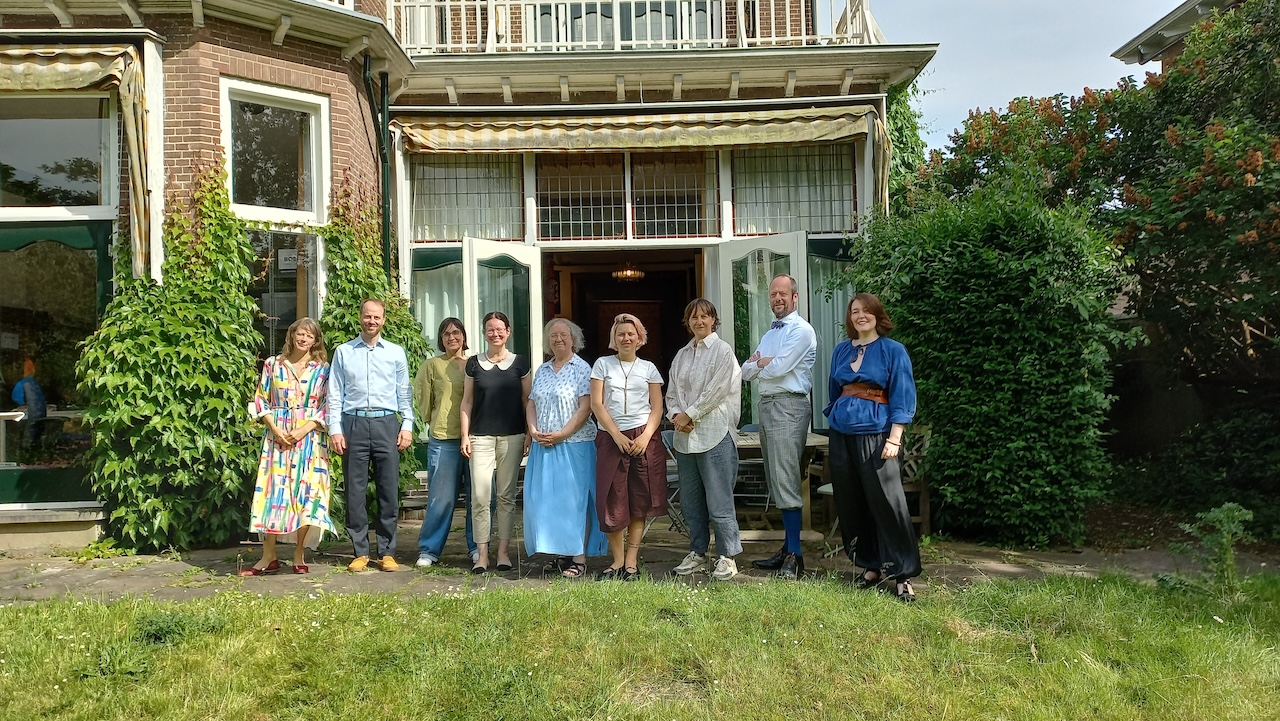 First round-table of textile studies stakeholders, TRC, 1 June 2026.
Textiles connect
Textiles are a universal language that bridges the gap between science, culture and society. With this programme, the TRC aims to realise a stronger, cross-disciplinary connection between museums, art institutions, universities, and knowledge institutes, as well as fashion professionals, makers, artists, and a broader public. By actively bringing these parties together, a dynamic network is created in which knowledge sharing, encounters, and collaboration take centre stage.
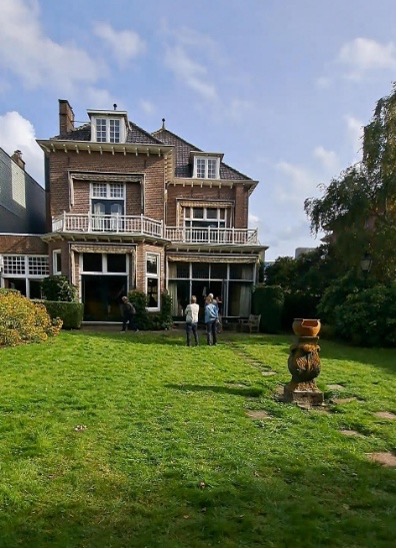 The TRC as seen from the garden, 2025.The programme builds upon the existing expertise of the TRC and focuses on deepening and renewing relationships. At the same time, the programme aligns with a current development: for several years: there has been renewed and growing interest in textiles within contemporary art, design, and fashion practices. This development is visible in museums, biennials, and presentation institutions, where a new generation of makers works with themes such as sustainability, material research, reuse, botanical processes, and heritage. This trend also marks a broader shift: alongside conceptual and artistic approaches, there is renewed attention to craftsmanship, technical knowledge, and artisanal skills. The TRC responds to this by explicitly positioning itself as a knowledge centre where the combination of thinking and doing is the focal point. In doing so, space is made for various approaches to textiles, and both the distinction and the interplay between artistic practice and craft expertise are acknowledged.
The meetings consist guided tours, collection presentations, interactive sessions, and open discussions regarding collaboration opportunities. These meetings are hosted by Gillian Vogelsang-Eastwood, TRC director, and Augusta de Gunzbourg, TRC curator. During the sessions, concrete forms of collaboration are explored,
such as loans, co-exhibitions, internships, research and education projects, guest lectures, residencies, and links with the fellowship programme.
First meeting
The first of the meetings took place on 1 June, and was attended by ten curators and other professionals from the WereldMuseum, the Centraal Museum (Utrecht), the Openluchtmuseum (Arnhem), ModeMuze (online platform), as well as a private curator. The programme started with a tour of the TRC building, and was followed by a round-tabel discussion. The TRC director, Dr Gillian Vogelsang, emphasised that the TRC is a textile knowledge centre that focusses on what is a textile, from both a theoretical and practical point of view, and on the language of dress. To do so, the TRC uses its extensive collection of textiles, clothing and accessories (some 54,000 registered pieces). The main TRC collection is based on provenance (country, group, etc). Through its focus on technique, the TRC also studies archaeological textiles. Two other points that were mentioned were the paid fellowship programme in textiles and dress (for the next three years, eleven fellows will be working at the TRC for some six months each), and the plans to lay out a textile garden, with plants that are used to produce and/or decorate a textile.
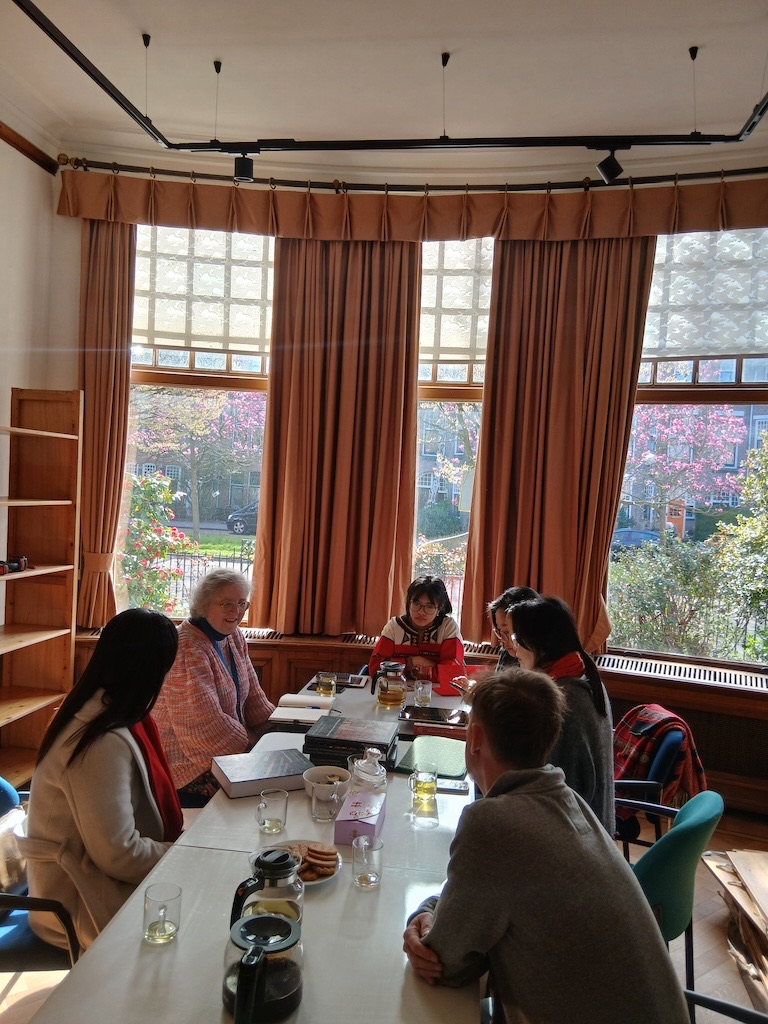 Meeting in the front room of Boerhaavelaan 6, May 2026.Gillian Vogelsang suggested the participants to further facilitate access to each other’s collections and archives for research, but also offered the TRC's assistance in training students, interns and curators about textiles and setting up exhibitions. The TRC can also help with research, with publishing research findings (the TRC has extensive contacts with Bloomsbury Publications, London; Princeton University Press; WBooks), with cataloguing textiles and with assessing potential donations. She also suggested to help each other with national and international networks. Possible areas of co-operation that were furthermore stressed included a joint webpage or platform for sharing ideas and objects with respect to collections, library, partners and donations. All participants agreed that more (public) visibility was needed for textile and dress studies, research, publications, etc.
A significant problem discussed was that museum curators often do not have the time to carry out research on their museum’s collection – yes, for an exhibition some research is normal, but not for general research. Having a research/knowledge centre, such as the TRC, may help other museums with research possibilities and questions.
Another method of working together, as mentioned during the round-table, was in the field of exhibitions and workshops. One such exhibition is currently being organised by the Centraal Museum, Utrecht, about cotton, to be held in October 2027. The possible areas of help from the side of the TRC was the loan of historic and archaeological cotton textiles, the loan of modern naturally-coloured cottons, as well as using the TRC’s network to talk with modern fashion trade.
Another practical form of cooperation would be the linking up of the TRC Library with that of the WereldMuseum, so that students and researchers have easy access to both sets of books [a similar arrangement needs to be organised with Leiden University].
It was suggested that we could have a joint meeting of this group every three months to discuss in an informal manner experiences, problems, ideas, etc. Everyone thought this was a good idea and the TRC will organise and house the meetings. On top of that, The TRC plans a series of comparable meetings in the time to come, with representatives of other institutes, both national and international.


