


Winter is coming and I am thinking of blankets, and the warmth and comfort that woollen blankets provide. Blankets such as the beautiful hand woven red, black and white Dine (or Navajo) tapestry blanket (TRC 2022.1719) from the late 20th century, or the Nepali felted woollen blanket (TRC 2019.0543) from the TRC's Susi Dunsmore collection, that ingeniously folds into a hooded cape for rainy weather.
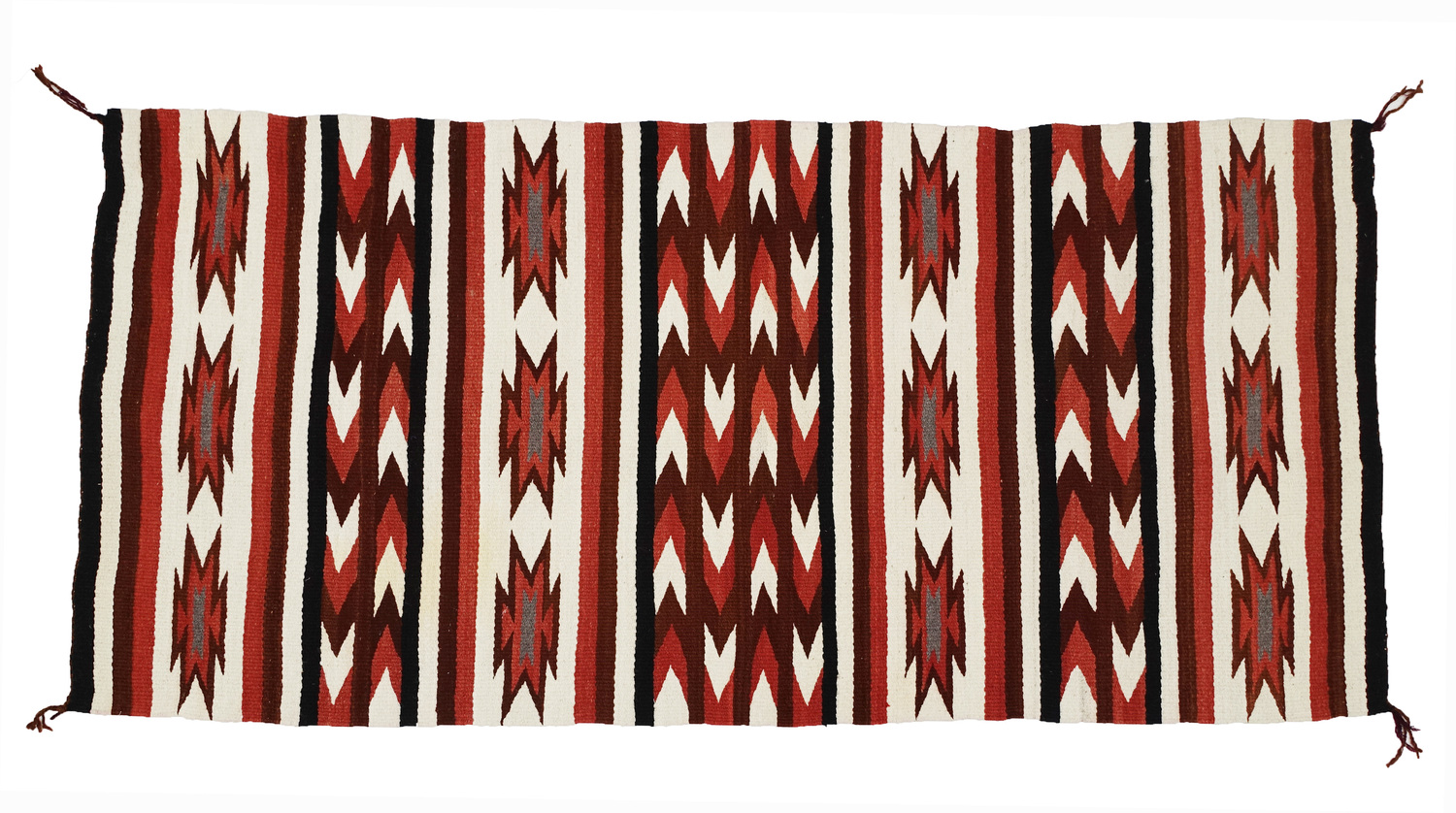 Late 20th century Navajo tapestry blanket, USA (TRC 2022.1719).
But I am also thinking of blankets because of a recent visit to Watkins Mill, near Lawson, Missouri (US). Watkins Mill was a woollen mill which produced blankets, clothing, fabric and yarns. It opened in 1860, built by a local business man named Waltus Watkins, who had trained as a weaver in his youth.
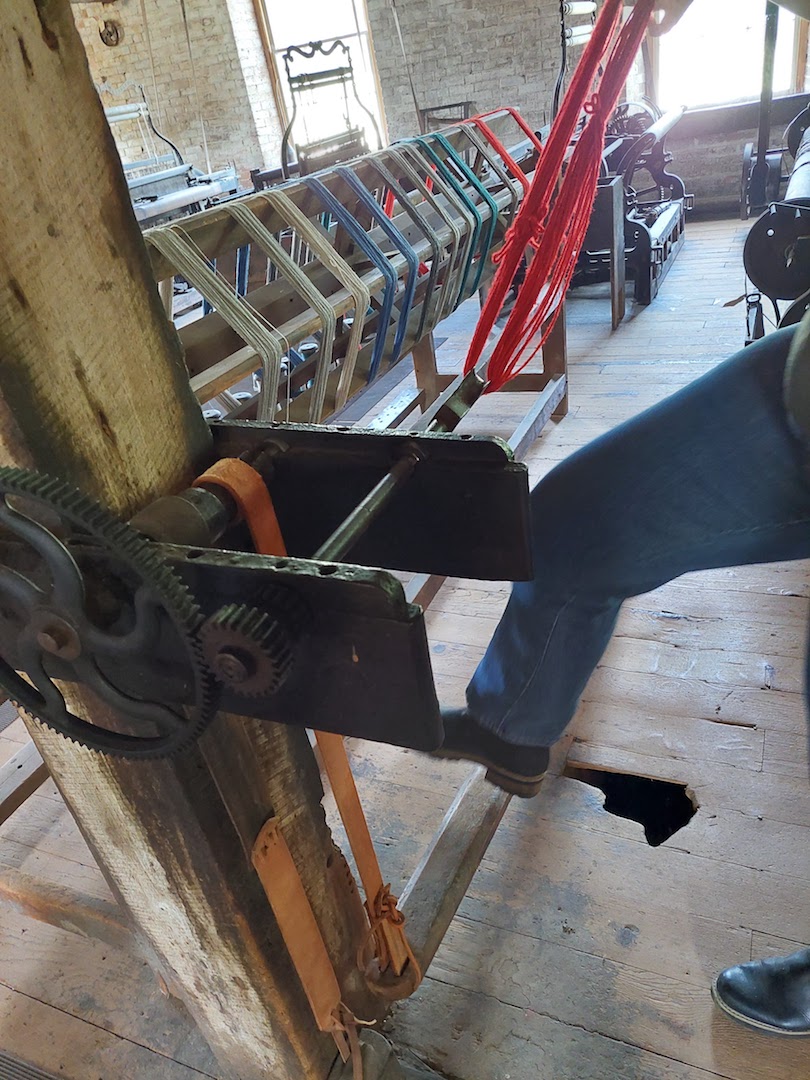 A guide demonstrates how skeins were made. The hole in the floor was made by a worker repeatedly pressing the treadle to twist the yarn. Photo by Shelley AndersonIt was one of over 2,400 small mills in the US at the time and part of a burgeoning woollen industry. Decades later the popularity of ready-made clothing and imports of better quality wool from Australia and New Zealand meant the US woollen industry declined. Watkins Mill ceased production in 1898, with cloth still on its looms and baskets filled with wool. Today it is the only surviving 1860s woollen mill in the entire US with its original machines still in place.
As such, Watkins Mill is a textile treasure. There is a visitor centre and museum on site, and daily guided tours.
From the woolshed, where fleeces (many of them from Watkin’s own herd of 300 Merino and Cotswold sheep) were sorted, to the built-to-order steam engine and boiler; from the spinning jacks and frame twisters to ply yarn, to the power broadlooms (used for weaving blankets), the plain looms (to weave tabby or twill fabrics) and the fancy looms (to weave patterned fabrics); to the tentering racks on the top floor, where the fabric was stretched to dry on tenterhooks, you can see how cloth was manufactured in the 19th century.
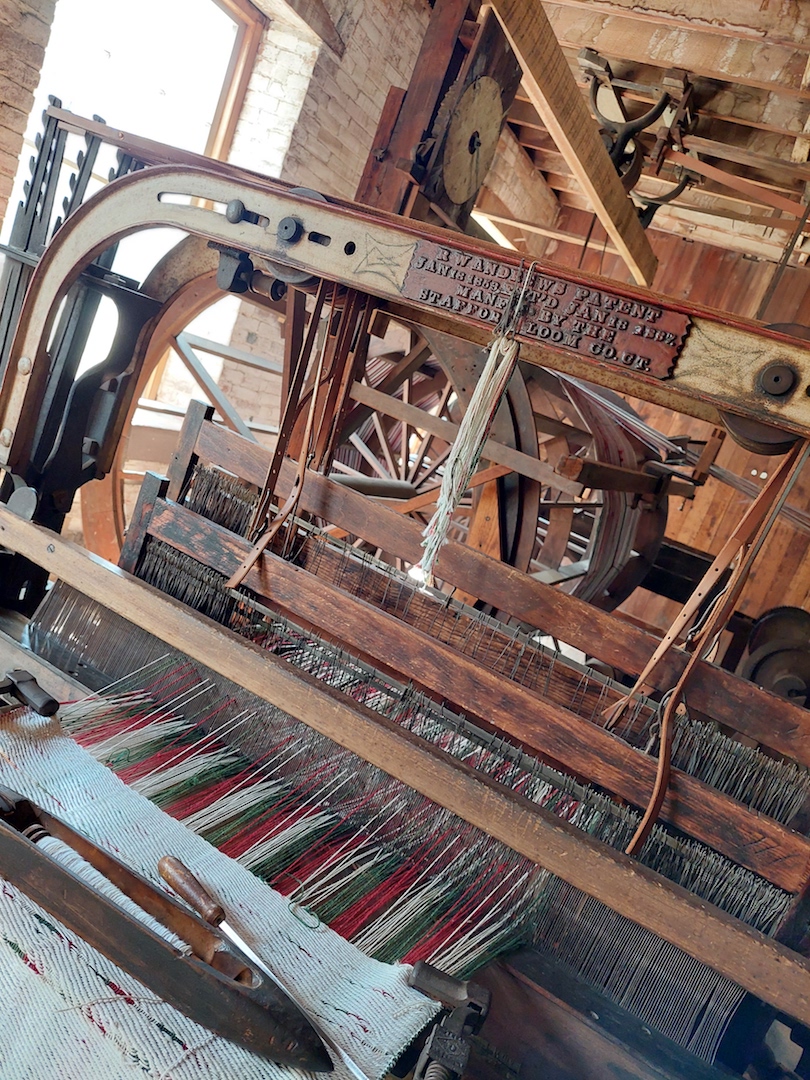 Weaving a blanket on a loom at Watkins Mill. Photo by Shelley Anderson.A few buildings connected to the Mill don’t remain. There was a dyer’s cabin, and a bleach house where woollen fabric was exposed to sulfuric acid fumes. This was to remove bits of plants or burrs that would have marred the cloth, not to whiten the material. Perhaps it’s best the bleach house is gone: it was described like smelling “as if hell was a half mile away.” There was also a sawmill for cutting the immense amount of firewood needed to keep the Mill’s steam engine powered.
From detailed business accounts we know that the Mill employed forty workers: twenty-five men, ten women and five children. There are photographs of some of the Mill’s workers, such as the sisters Mary Elizabeth Dagley and Martha Jane Dagley, who both worked as weavers.
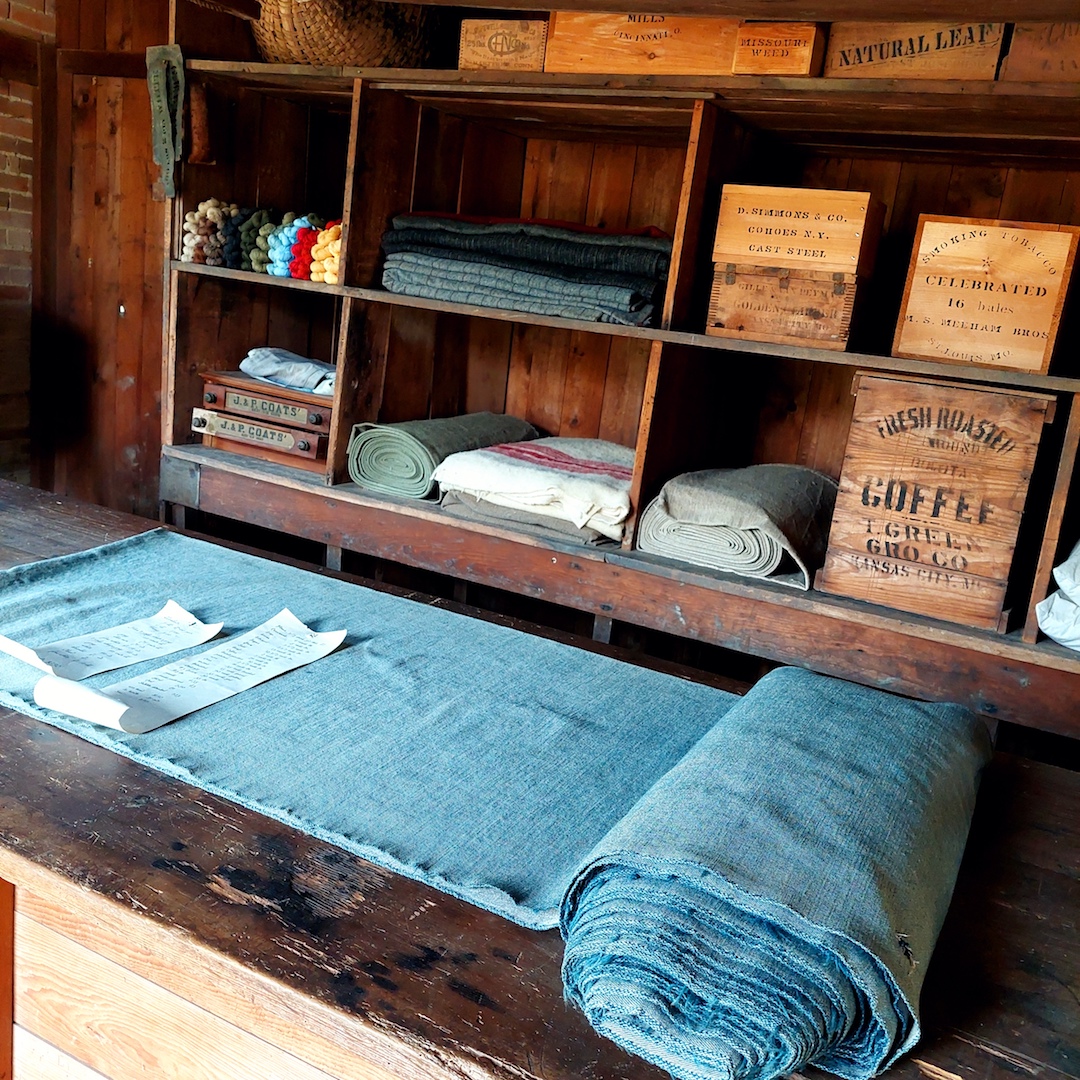 The store attached to the Mill, and a bolt of Mill-produced cloth. A pair of wool blankets cost $6.00 in 1877; a ‘fancy’ (or patterned) pair cost $9, while a pound of 3-ply yarn cost between 65 to 75 cents. Photo by Shelley Anderson.An unskilled Mill worker was paid US$1 per day, for a ten or eleven hour-long day. The Mill’s foreman received a princely $3 per day. This was at a time when one of the most common jobs, that of farm worker, paid 77 cents a day, for an average work day of twelve to fourteen hours.
As the nights get longer and the days chilly, I’ll make a cup of hot cocoa and curl up under my warm blanket. I’ll appreciate it even more after my visit to Watkins Mill.
By Shelley Anderson, 11 October 2023
More info: Waltus Watkins & His Mill, by Ann M. Sligar, Watkins Mill Association, Lawson, 2002. For the Watkins Woolen Mill State Park and State Historic Site: www.mostateparks.com


