


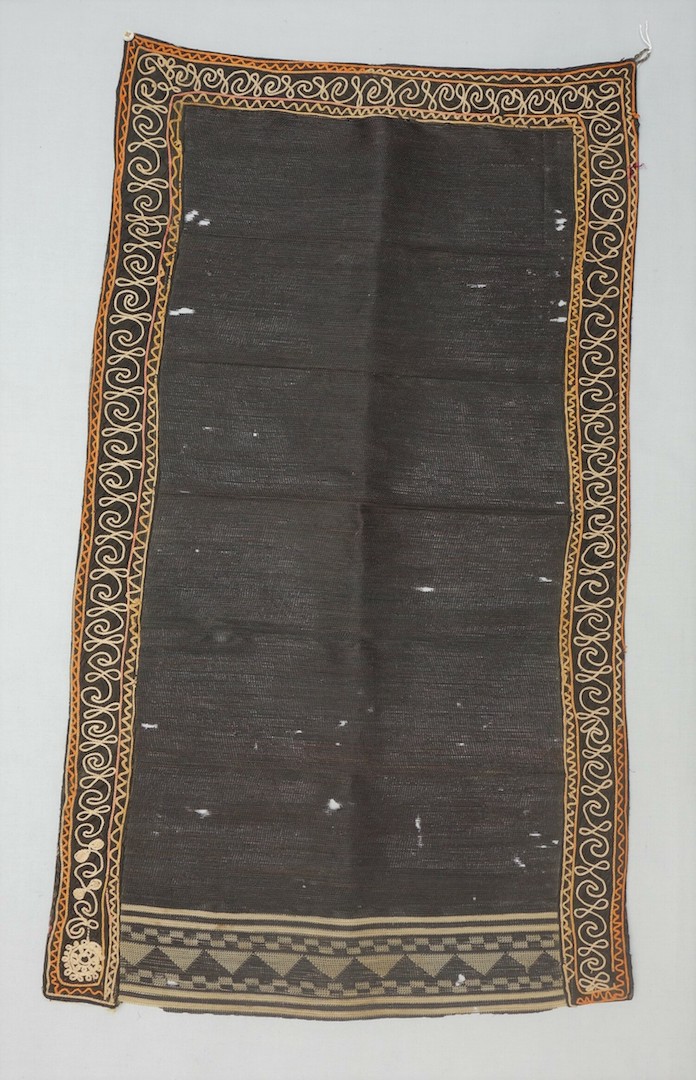
 Looped horsehair veil from Uzbekistan, 20th century (TRC 2005.0261).The TRC has a fascinating collection of face veils from different countries. One that has always interested me is a handmade veil from Uzbekistan, dated to the mid-20th century, which is machine embroidered around the edges (TRC 2005.0261). This veil intrigued me because of the material, which was new to me: it is made from horse hair, a stiff and very durable material.
Imagine my delight when I recently saw many other Uzbek face veils made from the same material. They are in an art installation now on display at the EYE Film Museum in Amsterdam. The exhibition, called “18,000 Worlds”, is by award-winning Uzbek artist Saodat Ismailova (b. 1981, Tashkent). While she is best known for her films, this exhibition contained many textiles.
The first piece that drew my eye was a long strand of hanging horse hair that almost obscured a neon light that read, in Arabic script, “What was My Name?” (2020). In this piece Ismailova explores the multi-faceted Uzbek identity, combining Arabic, Mongol, Persian, Russian and Uzbek aspects. The language is Uzbek, the script is Arabic, and the horse hair, traditionally used in Uzbek face veils, may have originated in the Mongolian belief that horse hair protects against the evil eye (see also a TRC blog about horse hair veils that used to be worn in Afghanistan, and the TRC online exhibition 'Dressing the Stans').
Even more striking was the piece Chilltan #1 (2020; compare Persian chehel for '40'), which involved forty chachvons (compare the Persian word chashmband, for face veil) from the artist’s personal collection, many of them handwoven from horse hair. In the middle of this installation a red neon sign reminds the viewer that each veil represents the life of a unique, individual woman.
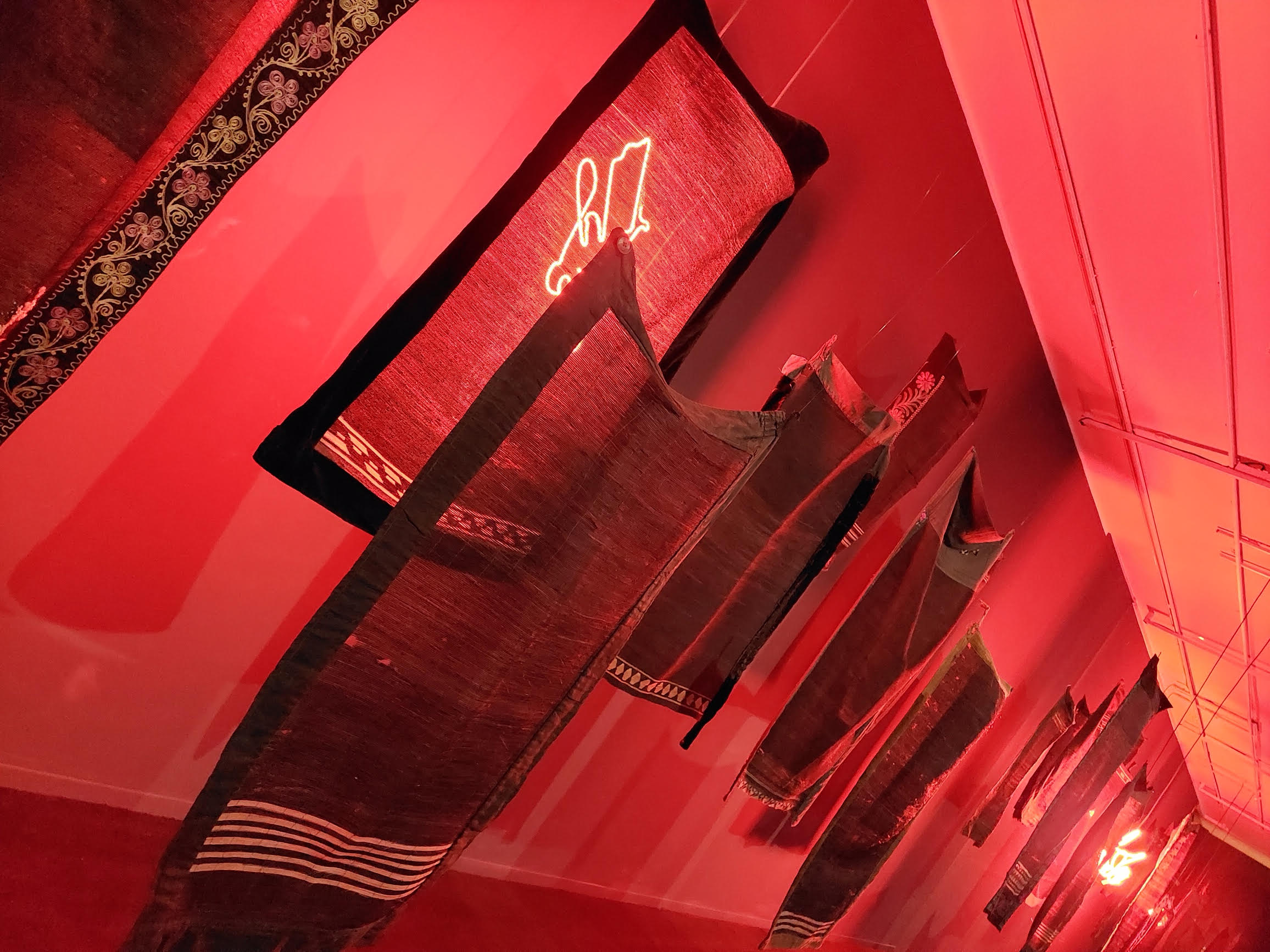 Chilltan #1 installation of 40 horsehair veils. From the exhibition: “18,000 Worlds” by Saodat Ismailova, until 4 June at the EYE Film Museum, Amsterdam.
The accompanying text notes that veils were a common piece of traditional clothing until 1927, when Soviet Union officials began the hujum, or a campaign to stop women from wearing the veil. As in other countries, many women died during this campaign, killed by traditional family members for abandoning the veil. Chilltan refers to the forty invisible spirits that Uzbeks believed guided and protected humans.
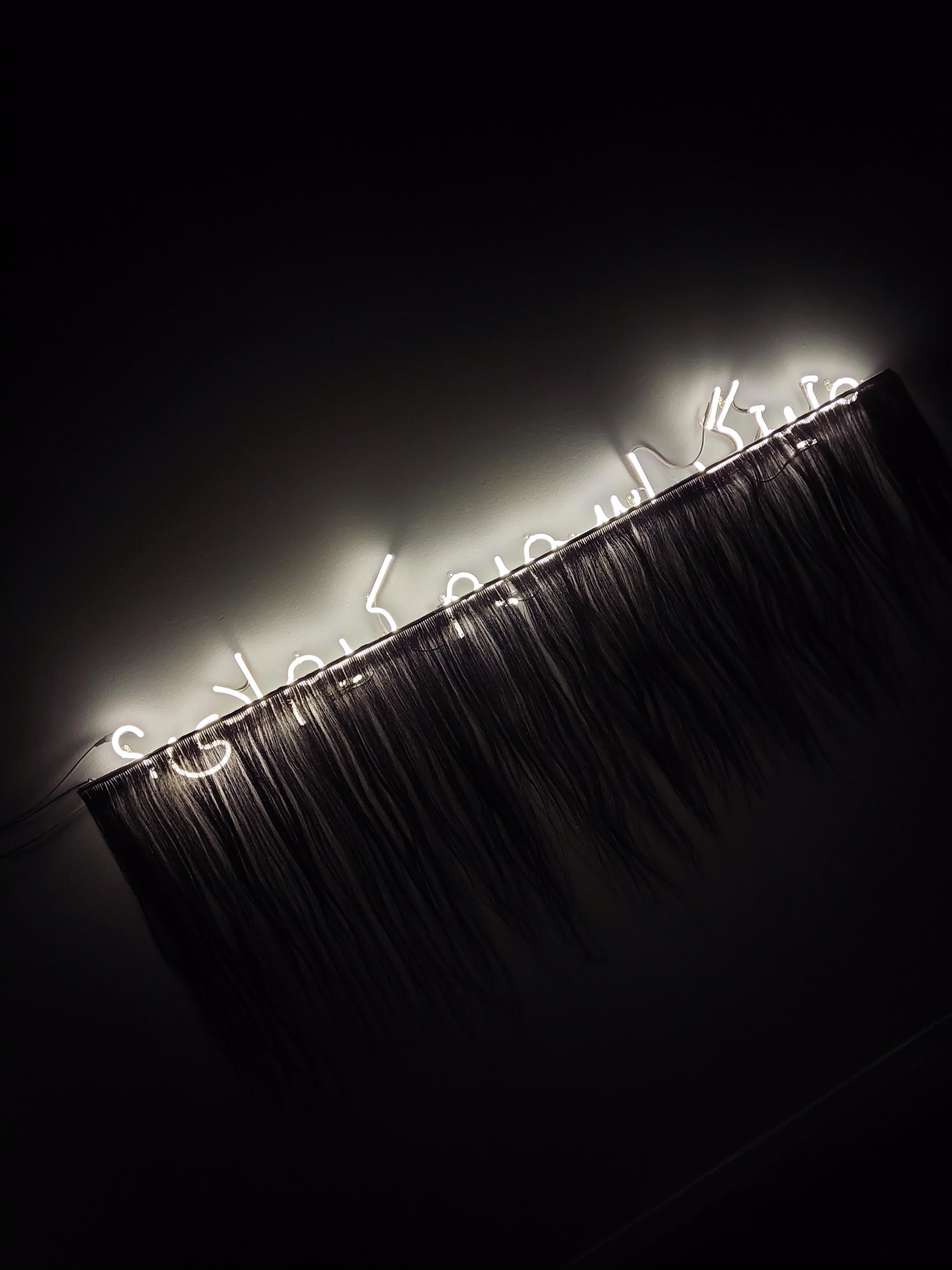 “What was my name?” in neon light, written in Arabic script, in Uzbek language. Exhibition “18,000 Worlds” by Saodat Ismailova, on until 4 June at the EYE Film Museum, Amsterdam.Several other textiles were part of the exhibition: zukhra (an embroidery style that uses cosmic motifs like stars) features in a piece on ritual; while other pieces incorporate traditional mattresses (called kurpacha in Uzbek), which once formed a common part of many Uzbek women’s dowries.
Last but not least was the short film “Chillpiq”(2018). In this film young women engage in an outdoor ritual. They circle a wooden tripod, then tie a strip of cloth around the wood, while making a wish. I realized I had once seen a similar ritual.
While travelling in Scotland, near Inverness, twenty years ago I saw a tree covered in strips of cloth. Each cloth rag (called a clootie or clouty cloth) had been tied around a branch by a person wishing for good health or luck. From rituals to protecting us from the elements, textiles are amazing!
The exhibition “18,000 Worlds” by Saodat Ismailova is on until 4 June at the EYE Film Museum, Amsterdam.
Shelley Anderson, 30 April 2023


