


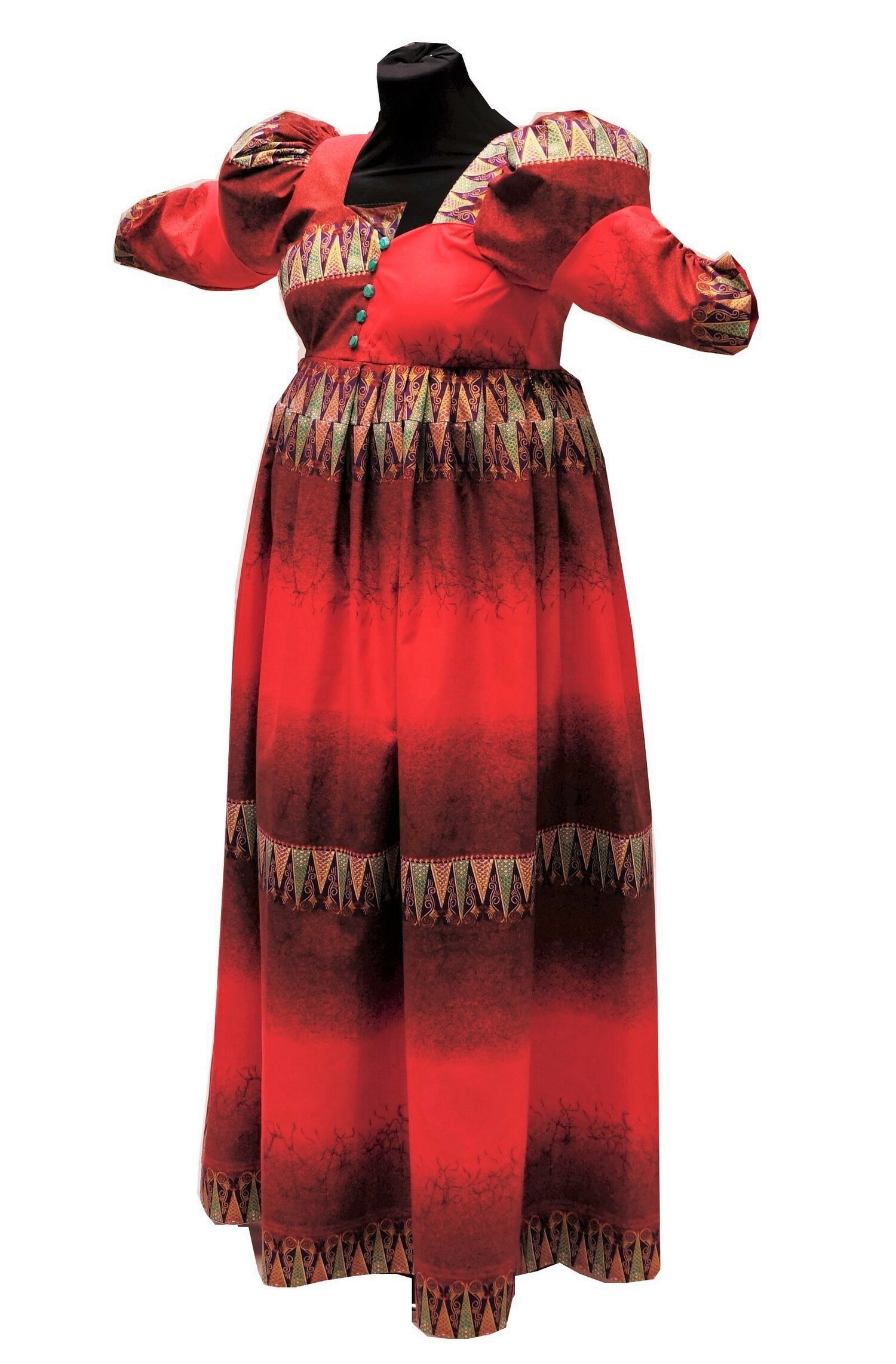
 Dress from Namibia (TRC 2022.3119a).by Ann Cable, 13 December 2022
When I mentioned to Gillian, the director of the TRC in Leiden, that I was returning to Namibia for a visit this year, she commented that the TRC had almost nothing from there, and so I started a fascinating journey into the history of a particular style of Namibian dress.
My husband and I have a very good friend in Namibia, Vincent, who has guided us on all our visits and he and his wife, Jacoline, arranged to have a dress made especially for the TRC. He educated us about the traditions behind it too. In pre-colonial times the various people living in Namibia wore skins, but with the coming of Christian missionaries in the late 19th century, this was frowned upon. It became the practice to adopt the clothing of the missionaries in your particular region.
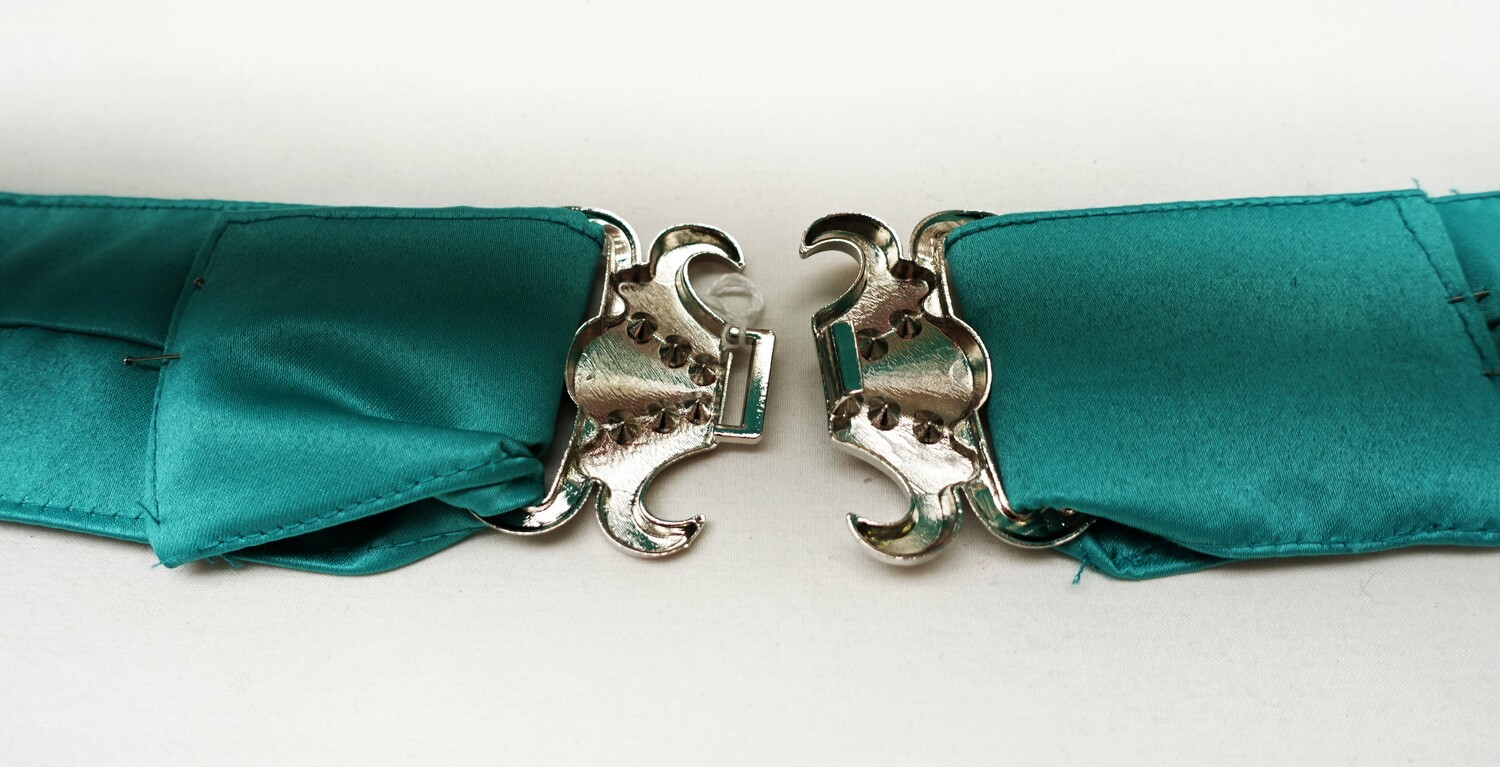 Belt that goes with the dress and cap from Namibia (TRC 2022.3119b).Vincent and his family are Ovaherero people and this group adopted the dress of the German missionaries in their area. (Another group, the Ovango, adopted the more embroidered dress of Finnish missionaries.) To make the dress (called Ohorokova) their own, the Ovaherero also designed a special, matching hat (Otjikaiva) with horns to symbolise the cattle which were, and still are, an extremely important part of their life and economy.
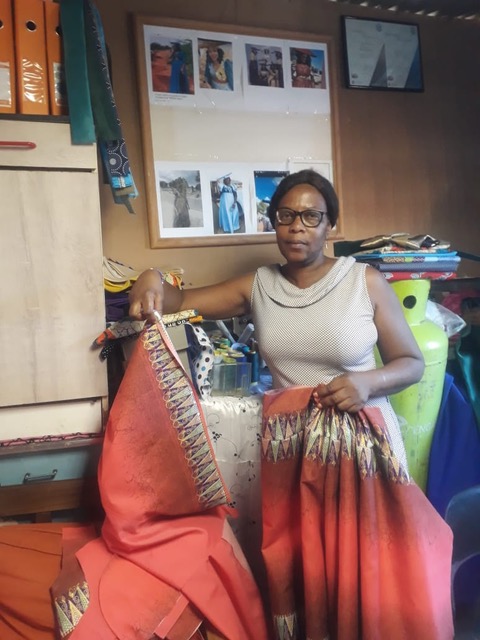 Theolfine Vetumbuavi Mbaha from Namibia making the outfit TRC 2022.3119a-c (2022).The addition of horns was not to the liking of the missionaries with the symbolism of the devil, but the horns remain to this day and are made from rolled-up newspaper. These dresses are not historical pieces, they are still made and worn with pride today by all age groups. Elderly people can be seen wearing them on the street while out shopping, younger people wear them more for special occasions.
The beautiful, vibrant outfit in the TRC (dress, belt and hat: TRC 2022.3119a, TRC 2022.3119b, TRC 2022.3119c) was made by Jacoline’s aunt - Theolfine Vetumbuavi Mbaha and needed about 7 meters of cloth and a week’s work. Namibia does not have its own textile industry and this material came from Ghana.
There are several important traditions associated with the outfit. The hat must be treated with respect, not dropped or allowed to fall. It is worn with the front just above the eyebrows. The dress must not be worn outside without the hat and the hat must be decorated with bling as otherwise you are considered ‘half-naked’. It should be long enough to cover your feet and would be worn with shoes with a small heel to give the wearer the right posture. It needs several petticoats so that the skirt is full. The belt is worn just underneath the bust.
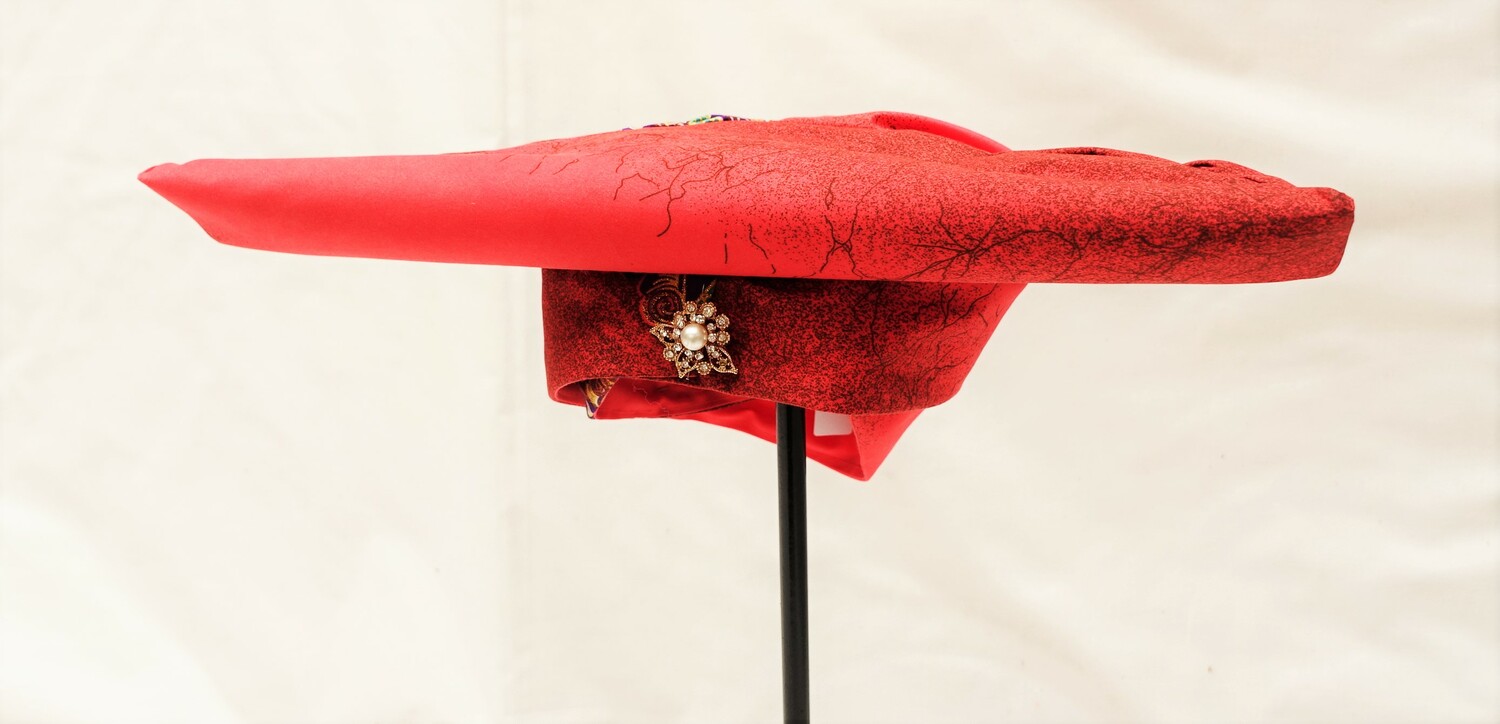 Hat from Namibia that goes with the outfit with dress and belt (TRC 2022.3119c).More recently some designers have attempted to modernise the dress by making the length shorter and the neck lower but this is strongly resisted. A petition was signed by many demanding that respect should be shown for cultural heritage and traditions and such modern changes should not be considered. Jacoline and her aunt are so proud and happy that this beautiful dress and the traditions associated with it will be a part of the TRC collection for a wider audience to enjoy, and I am delighted to have been part of making that happen. It was wonderful to be on holiday with a goal of finding something interesting for the TRC Namibia collection.


