


I have never been more aware of the importance and variety of dress and identity than this week!
The last few weeks were dominated by the death of Queen Elizabeth II, with many accounts of her life, reign, and of course her clothing styles over the decades and the outfits she wore for her coronation and other major events in her life. Following the announcement of her death, it was also noticeable that the royal family (as well as BBC television presenters) were in black for the ten days of official mourning, although members of the public seldom were.
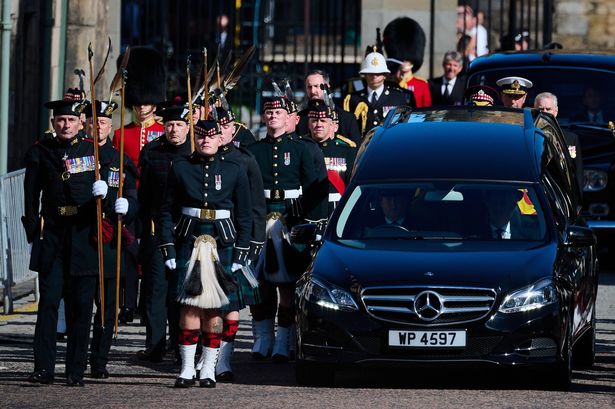 The hearse carrying the Queens coffin emerges from the gates of Holyrood Palace, guarded by the Royal Company of Archers. Copyright: Brian_D_Anderson/REX/Shutterstock
There was also the transportation of the Queen’s coffin from Scotland to London, and all the men and women in the uniforms of the military and other services (police, ambulance, etc), not to mention those in clerical garb and liturgical vestments, and the special clothing of the ‘civilian’ men and women, from a variety of backgrounds and groups, including the Red Cross and Scouts. And did you see the garments of the Royal Company of Archers?
This culminated in the Queen’s funeral on Monday with its wide range of textiles and clothing associated with the military parades and yet more uniforms (including those of the Chelsea pensioners, the Yeomen of the Guard [Beefeaters], sailors pulling a gun carriage, and of those laying flags on the ground), as well as another round of special services and liturgical vestments, sombre clothing and colourful sashes, and the feeling of silence and strangeness. All of which was followed the next day by the television presenters, this time in colourful outfits that helped to signify the end of mourning and the return to ‘normal’ life.
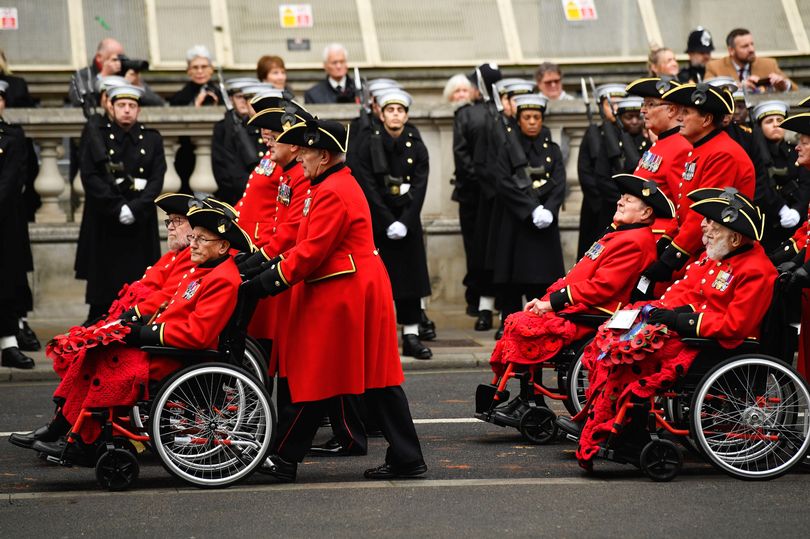 Chelsea Pensioners at the funeral procession of Elizabeth II.Copyright Birmingham Mail.
And immediately the news focussed on the tragic death of a young Iranian woman, Masha Amini, who apparently had been badly beaten after her arrest by the Iranian morality police for not wearing her headscarf in the correct manner. Unrest and demonstrations included the public burning of headscarfs and the cutting off of hair.
It reminded me of a trip to Iran in 2001, when I was with a group of nomadic women who asked me to remove my headscarf. I have fine, short hair and after I had removed my scarf they laughed, then went silent and seriously questioned me about what I had done that was so bad my husband had cut my hair off – a moment of cultural difference.
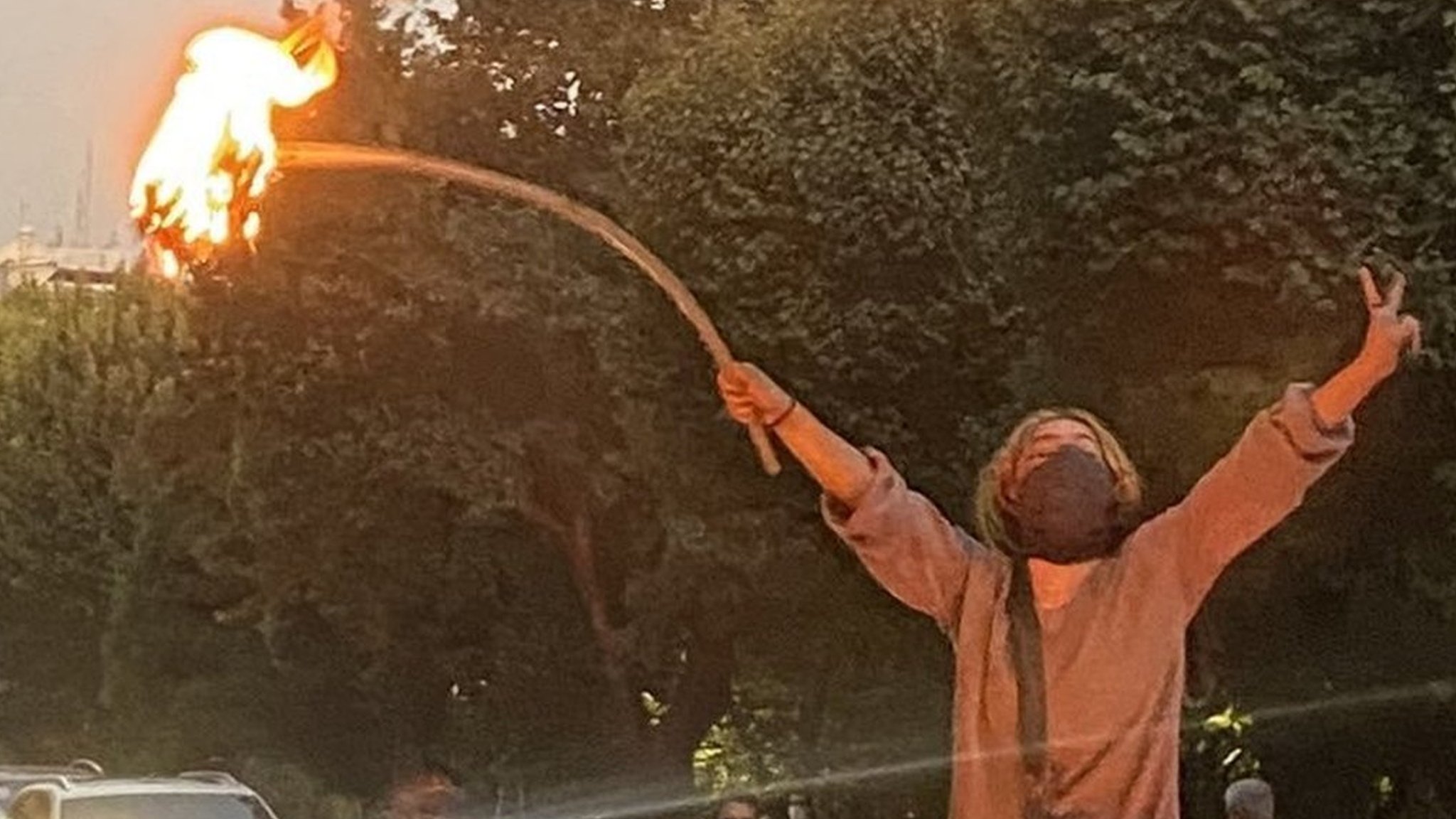 Burning of headscarves in Iran. Copyright: BBC.comDuring other trips to Iran I was also regularly stopped by the morality police because my headscarf was not on properly. It was very strange to be told off in public by an elderly woman dressed totally in black, but because I was a foreigner I was not arrested. How much more frightening it must be to be arrested and in some cases beaten or flogged, all for the sake of a piece of cloth and the symbolic value some people place on women’s hair. We live in a strange world.
And then yesterday evening I went to a graduate seminar here in Leiden on the role of Asian and African textiles, organised by the International Institute for Asian Studies (we made the Asian-African-European textile exhibition as part of this graduate week). One of the points raised was – is it acceptable to include photographs of people in an exhibition as if they were (in this case) curiosities in exotic dress? A difficult question with no single answer. But from the point of view of a maker of textile and dress exhibitions (and visitors to the exhibition) such photographs are important in understanding how clothing is worn, what the possibilities are and what the clothing and the way they are worn mean to the wearers, wherever they come from.
I was wearing a long jacket, blouse and skirt during the final day of the discussions, then went home to change into another, much longer and more formal skirt, blouse and shawl in order to attend the Leiden’s Haring en Corenwijn ('Herring and Jenever') Gala, which forms part of the annual celebration of the lifting of the Spanish siege of Leiden in 1574. The range of women’s clothing was intriguing, from spangled, sparkling and glitter dresses (of varying lengths and colours) to black, slinky dresses, as well as Moroccan kaftans and a West African outfit with an amazingly folded and wrapped head covering. All this puts the struggle of Iranian women in an even more dramatic context.
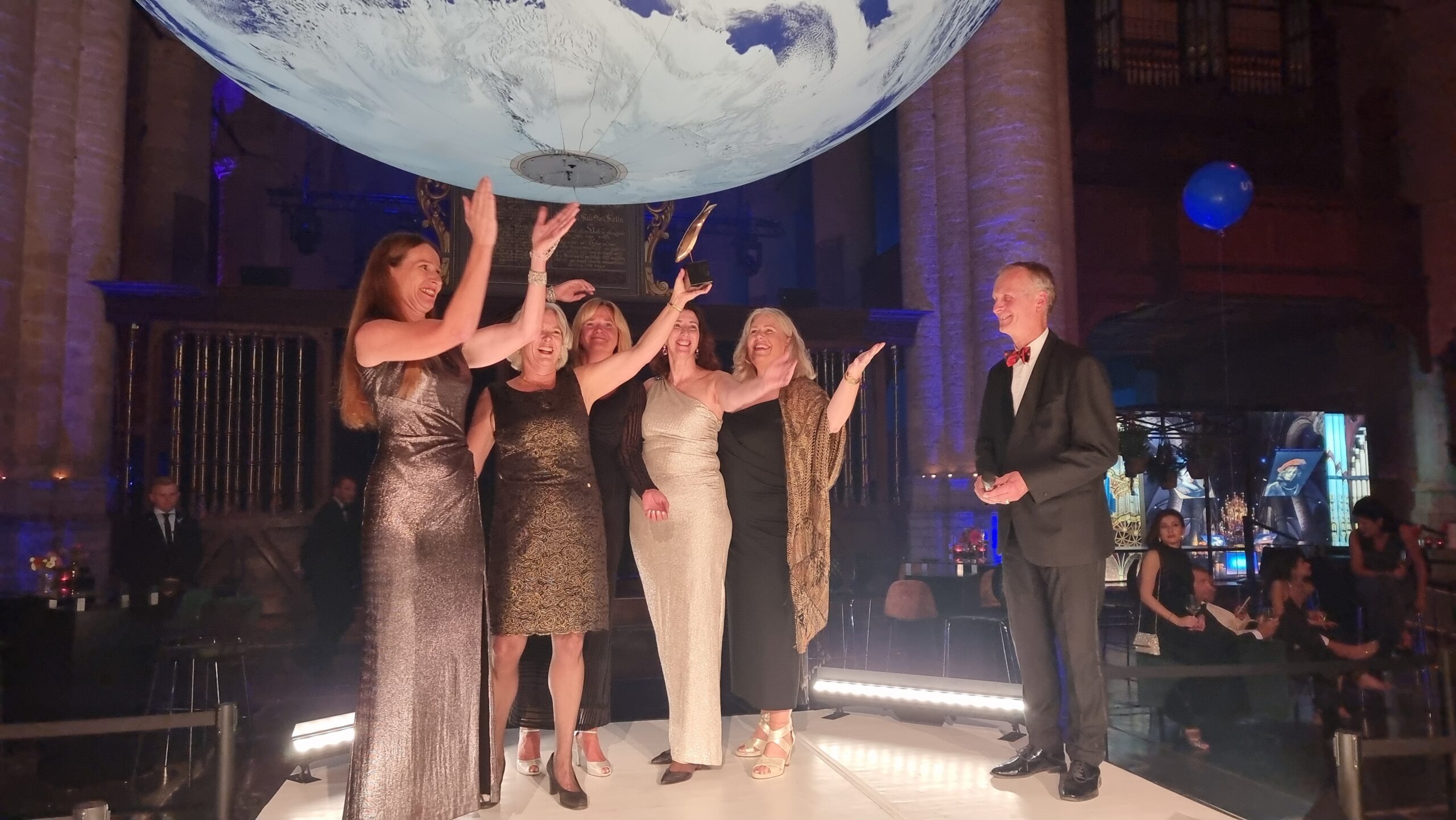 Award presentation at the Haring en Corenwijn Gala, Leiden, 2022. Dress is everything. Copyright: Leidse Glibber.
Oh yes, the invitation said ‘black tie’ indicating a formal suit for men, so Willem (my husband) went in smoking (tuxedo), but with a red bow tie, although the invitation was for ‘black tie’. it was noticeable that some men deliberately wore casual clothing with an open shirt and no tie, as a silent protest to the ‘formal’ nature of the evening (or simply because they did not care). There was also one man in a formal Scottish kilt outfit complete with sporran and dirk (dagger). The mayor of Leiden was in smoking but with the glitter of an impressive official chain of office around his neck. The very personification of a mayor!
One of the features of the Gala was a fashion show, which brought to mind the question of photographs and clothing raised above. Clothing is a three-dimensional subject and works best when on a human body (whether male or female). The garments would not have looked their best hanging from a wall or on shop window mannequins placed on a podium.
I have been to various fashion shows over the years and last night I was very aware of the importance of 'live' models, as long as they are really alive. The models looked very bored. I just wished that they had smiled and interacted with the public, it would have made the garments they were wearing much more interesting, rather than being worn by ‘clothes hangers’ who just wanted to hurry up and go home.
And some people think textiles and dress studies are boring!
Gillian Vogelsang-Eastwood, 26 September 2022


