


Spring has finally arrived in Leiden and it is clear that things are happening and people are on the move again! For some time the TRC has been working towards the stated goal of becoming an international home and expert centre for textiles and dress, for teaching and presenting textile crafts, and indeed making Leiden into a centre for textile studies! This week saw various movements and events relating to these aims. And then I woke up this morning feeling we are nearly there!
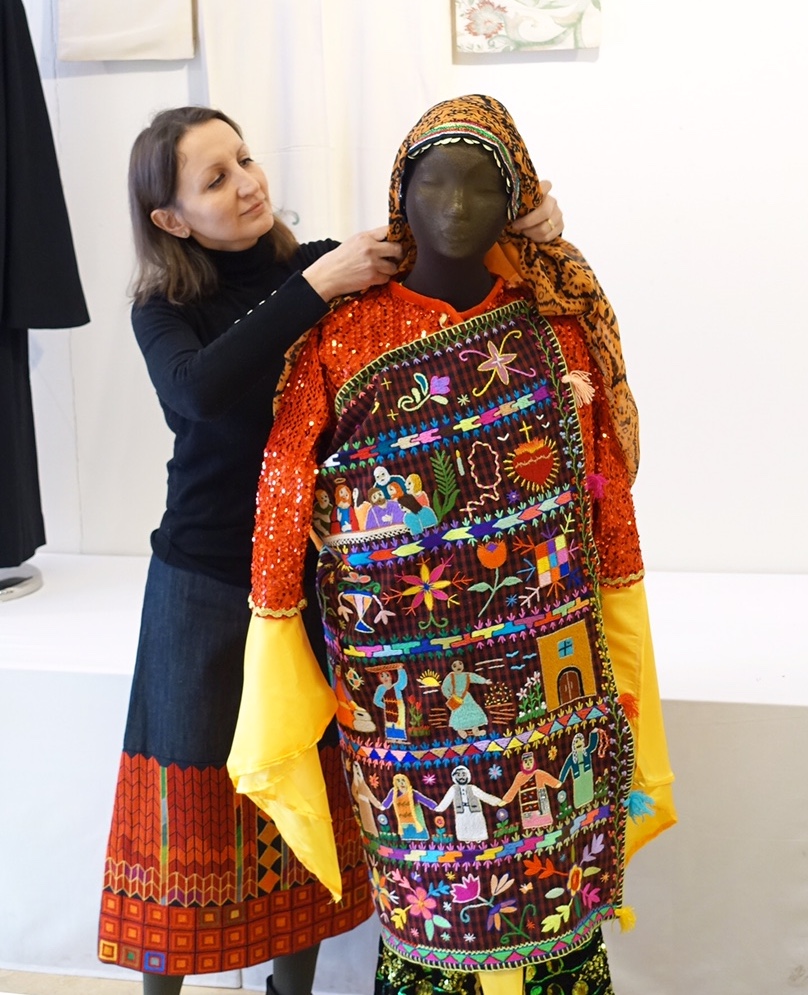 A charuka commissioned by the TRC from a Christian community in northern Iraq. The garment is being processed by Fatima Abbadi, who teaches Jordanian, Palestinian and Syrian embroidery and dress at the TRC.
On Monday morning (14th March), for example, the racks and shelves arrived for housing the two donated collections, namely the Amsel collection from Paris and a large collection given by the Smith family in Arizona. Most of the items in these collections are European in origin and mean that the TRC will house one of the largest (if not the largest) collection of European regional textiles and dress in Europe. An important achievement for Leiden and one that we need to make sure the Leiden municipality and others, even Brussels, is aware of!
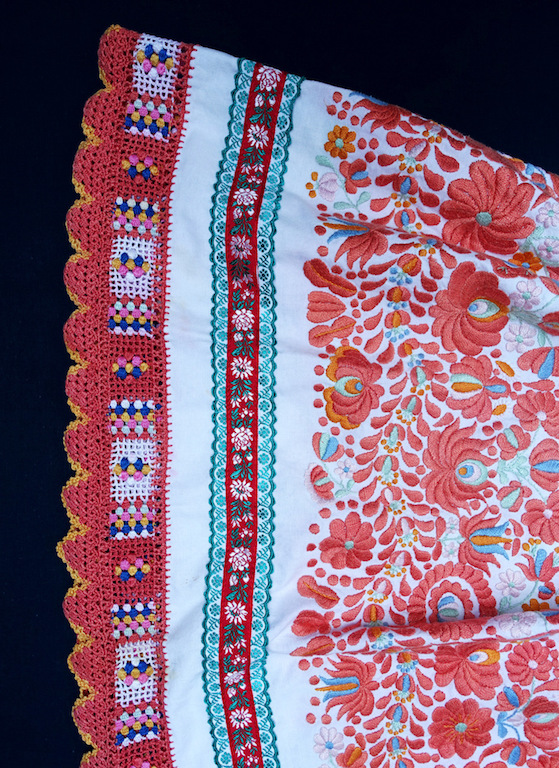 Embroidered fragment of a shirt from Hungary, 20th century (TRC 2022.0198, Amsel Collection).In this respect, thanks to recently being given EU Eramsus+ Adult Education Accreditation - the certificate and a small surprise in the form of a young tree arrived this week – the TRC is working on various Erasmus+ project applications to collaborate with textile institutes elsewhere in Europe to learn more about the Amsel and Smith collections. We are also applying to various national Dutch groups for funding with respect to the growth of the TRC in general rather than specific projects. We will hear the results of these various activities in a few months time.
Back to the TRC itself, several people worked hard over the last few days to put up the racks, making garment boxes and put more and more items, for conservation purposes, into the new freezer (which was bought with our very successful crowdfunding activities in November - December 2021).
In addition to building racks, a dedicated group has been sorting garments, tagging, cataloguing and photographing items from the Amsel collection, and I am pleased to say that everything will be online by the end of the coming week, so within three weeks of the collection coming to the TRC. Not surprisingly, within hours of the racks going up they started to be filled with boxes of Amsel items. We will then be ready to welcome the Smith collection from Arizona!
We also had a visit from a close friend of Mrs. Amsel in Paris, who had given the collection – she was nearly in tears with the reality that this collection she had known since she was a teenager had found a new home here in Leiden, it had been saved in its entirety, and that the stories behind the items could be recorded and shared.
I should add that we are also working with various groups in Hungary and Romania as well as here in the Netherlands to identify and add more details to the Amsel collection. All being well in a few weeks time, for example, we will be hosting a local Romanian group at the TRC to discuss the backgrounds and origins of many of these pieces. Once again Citizen Culture is actively at work here in Leiden.
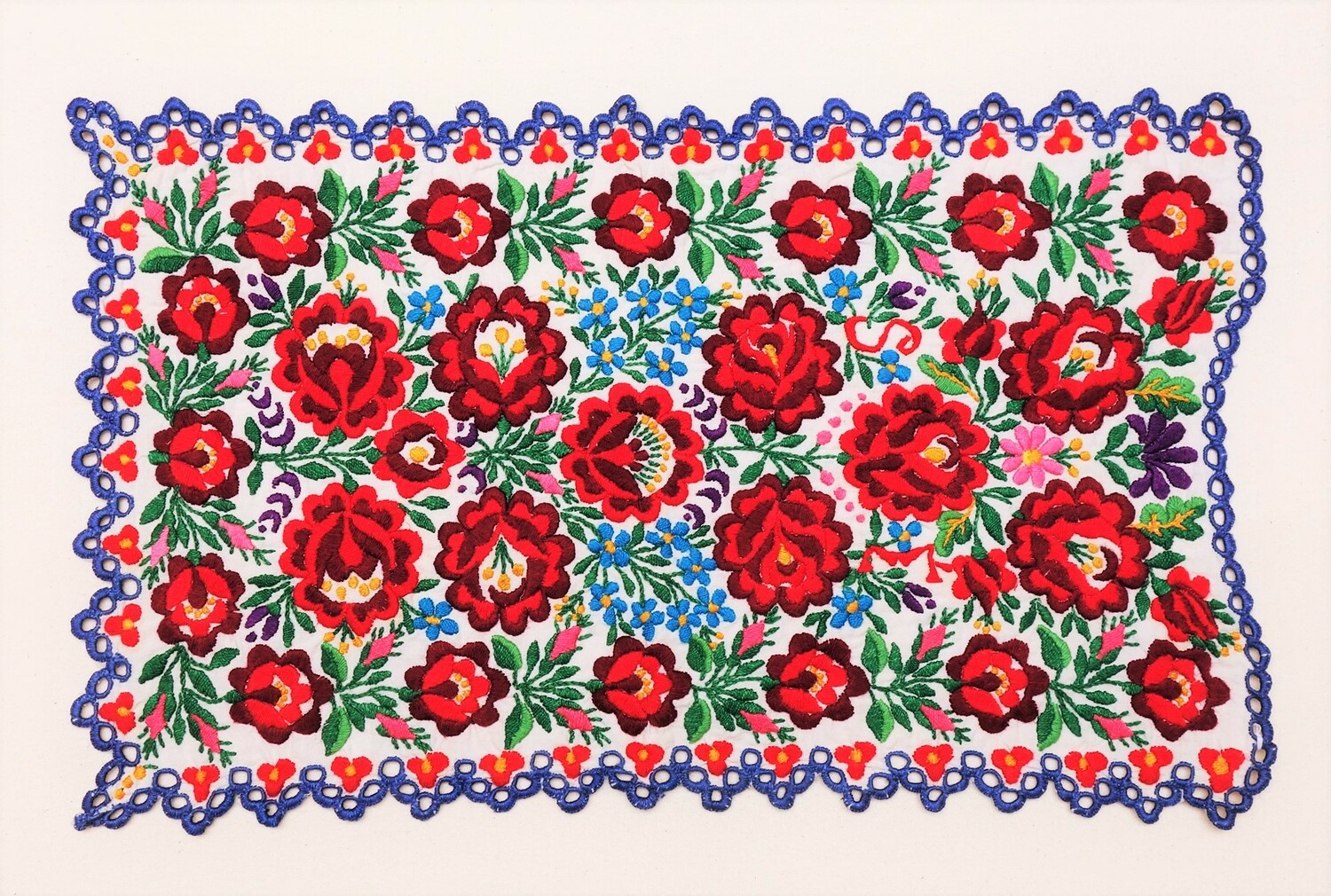 Embroidered panel from Hungary, 20th century (TRC 2022.0722, Amsel Collection).
The Amsel Collection has also given everyone here practical experience in the handling and movement of a large number of items. For our students and interns an extremely worthwhile experience. The processing of the Amsel collection was also useful as part of the preparations for the arrival of the much larger Arizona collection. These items (about 1100 pieces, plus books) are now in a bonded warehouse in Rotterdam. Depending on the Dutch customs, these pieces could come to the TRC within the next two to six weeks. We are ready!
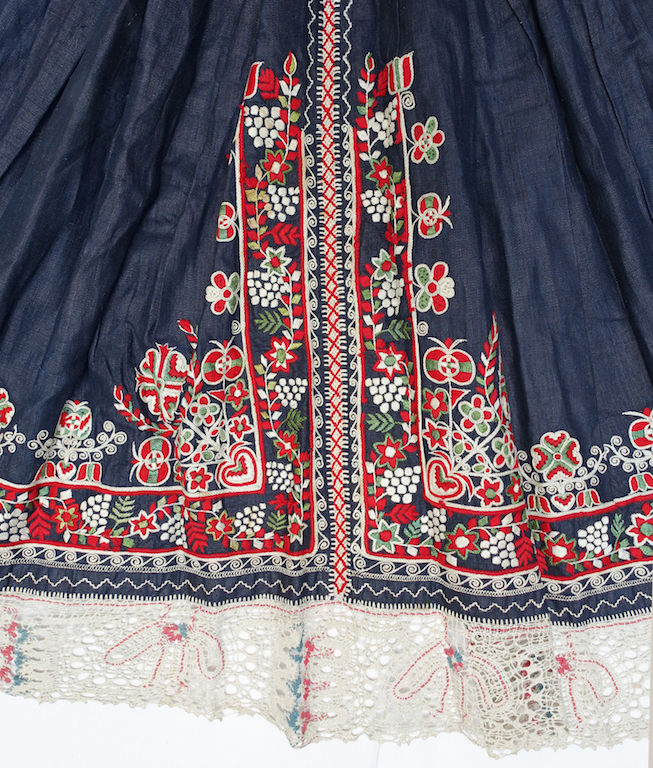 Detail of an embroidered apron from Romaina, 20th century (TRC 2022.0470, Amsel Collection).In addition to these two large donations, a few weeks ago we were given a collection of about sixty Indonesian ikats by the Zant family in Amsterdam. The Zants had travelled over a period of thirty years to the various islands in Indonesia that produce ikats and had bought several pieces per island or ikat group.
This collection reflects the various different forms from the various islands and we want to use these as a reference collection to identify other ikats from Indonesia in the TRC Collection and elsewhere. They will be online within a couple of weeks and then will come the hard work of research background details and putting these items into context, etc. Some of the pieces will certainly be included in the TRC’s forthcoming exhibition about ikat from around the world.
On Tuesday evening (15th March) Willem and I went to a reception in Leiden to celebrate the opening of the Turks Archief by the Stichting Guney. The opening was carried out by Jaap Smit, the Commissaris van de Koning in Zuid-Holland, in the presence of Henri Lenferink, the Mayor of Leiden. The Archief is recording the history of the Turkish community here in Leiden and the region.
The TRC is involved in the Turks Archief and is making a collection of Turkish textiles and dress with the help of Stichting Guney, as well as writing blogs for them about Turkish items in the TRC Collection. The group also helps the TRC with certain teaching activities (Turkish oya).
Wednesday there was a zoom meeting called 'Leiden meets Circulair – How do we close the circle?', that was organised by Caroline Gerritsma (Beleidsadviseur Circulaire Economie), Leiden Council. The meeting was about Leiden, the recycling of textiles and how to make the use of new and second-hand textiles and garments more sustainable. The TRC is not directly involved in this, but we are an active centre for knowledge about textiles, and it was clear during the discussions that there is a need to learn more about the basics of textiles, and indeed more depth in general. We can directly help with this!
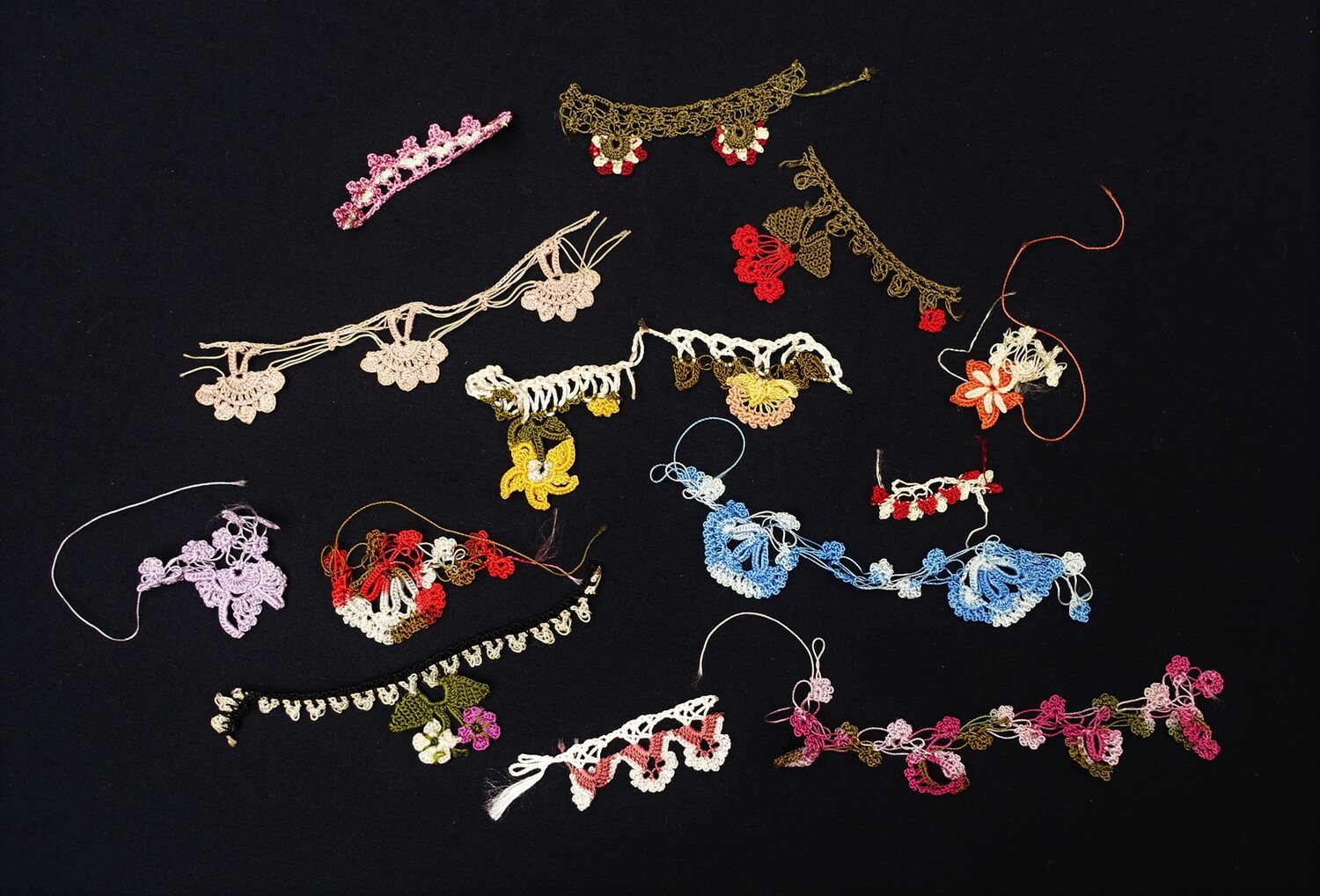 Board with Oya samples from Turkey, c. 2009 (TRC 2009.0291).
There was another meeting with a member of Leiden municipality management on Friday, namely with Chanella Zandvliet-Mackay, a senior project manager for the centre of Leiden. She has recently been appointed to this position and is getting to know the various, and diverse, groups here in the inner city.
She had heard that the TRC is ‘gezellig’ (a Dutch word that has many connotations, from cosy to enjoyable), but I think the range of local, national and international activities the TRC is actually involved in was a bit of a surprise. The TRC is so much more than a gezellig neighbourhood group! As visitors will know, tea and biscuits are important, but our ambitions and indeed the reality of what we are doing far transcend the image of a cosy neighbourhood cafe.
Friday was also a busy day that saw a workshop on Jordanian embroidery and the arrival of a very special outfit from Iraq. The workshop was given by Fatima Abbadi, who also presents meetings about Palestinian and Syrian embroidery at the TRC.
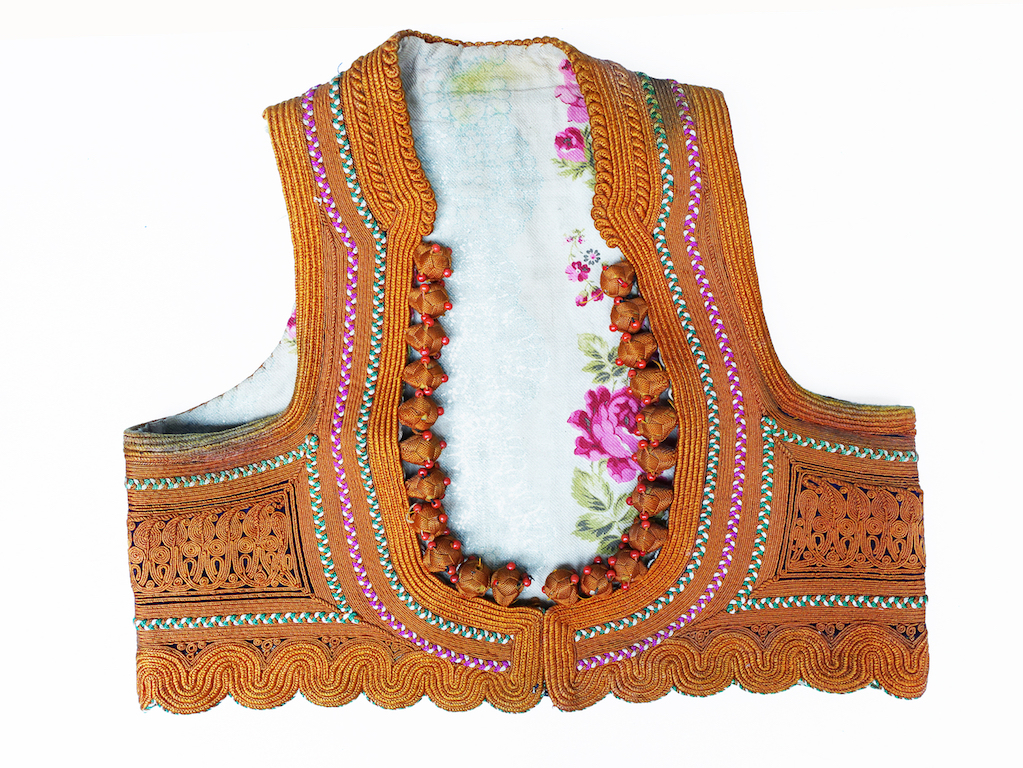 Turkish embroidered waistcoat, 20th century (TRC 2022.0525, Amsel Collection).She has been helping with a long-term project, namely the commissioning of an embroidered charuga associated with a minority Christian group in Iraq that has long been persecuted by the IS Movement. In order to help an embroiderer called Suzan Sukari and her family, the TRC ordered a complete, festive outfit together with a charuga two years ago.
The continuing conflicts in the region, corona and other issues have meant that the charuga outfit has been traveling for many months before finally arriving In Leiden. Fatima will be writing a longer blog about this amazing piece and the story behind it. We would like to support Suzan and other embroiderers in the region, so if you would like to seriously help and support her by commissioning pieces of embroidery, please let us know.
There was also a meeting with Tamara van Kessel, on Friday (19th March), who is from the Department of Arts and Culture, Amsterdam University and more specifically working with MA Heritage Studies students. Tamara came with one of her students who wants to have a five-month internship at the TRC on the theme of learning how to run a small ‘museum’, as well as to build up her knowledge and confidence with working with textiles. Once a contract has been signed, the student will be helping with the Arizona collection as well as working on various parts of the TRC Collection.
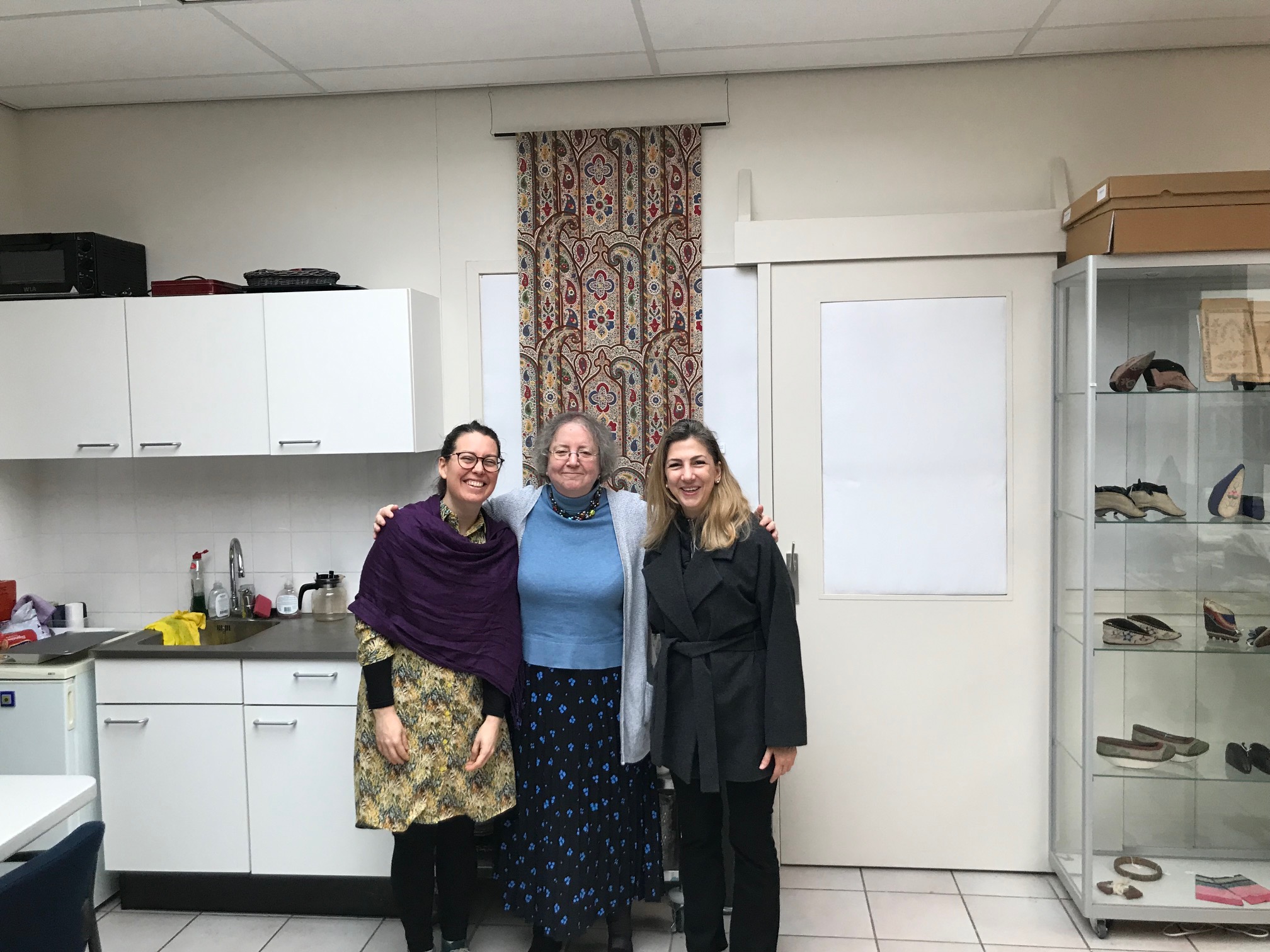 Meeting at the TRC with Jasmine Nashabe Taan (Lebanon, left) and Haizea Barcenilla Garcia (Spain, right). Gillian Vogelsang is standing in the centre.Then on Saturday morning (20th March) we met Jasmine Nashabe Taan from Lebanon, and Haizea Barcenilla Garcia from Spain. They participated in a conference at Leiden University on the role of women and collections. The conference was organised by Holly O’Farrell, Centre for the Arts in Society, Leiden University.
All too often in the past women made collections, but they were often accessioned in the name of their husbands to give them ‘gravitas’. The role of women in preserving and researching cultural heritage is being re-examined! Something we at the TRC know about, as the subject of textiles has for far too long been deemed of minor importance because it appeals to women, what nonsense, as so many men in the past and indeed present are involved in this vast and diverse subject!
There was a long discussion with Jasmine and Haizea at the TRC about the function of a practical knowledge centre, as a half-way house between a university, a library and a museum, which focusses on specific subjects, and in our case textiles. This was a new idea for them, one that may be established in their home country or region. I am very curious if and what will happen in their respective departments in Lebanon, Turkey and Spain.
Next week I am having a meeting at the University Library, here in Leiden, about a group of textiles and how the Library and the TRC can work together in getting these items more well-known in the form of co-produced exhibitions. More details in due course.
As I said at the beginning of this blog, spring has come and things are moving and coming together. I like the spring and its possibilities of growth!
Gillian Vogelsang, Director TRC, 20 March 2022


