


For five full working days, an international team of participants with a particular interest and need for a deeper understanding of textiles, were gathered around Dr Vogelsang-Eastwood at the Textile Research Centre in Leiden, the Netherlands. The world-renowned expert in the analysis and history of all kinds of textiles meticulously introduced us to the characteristics of global textiles and textile making.
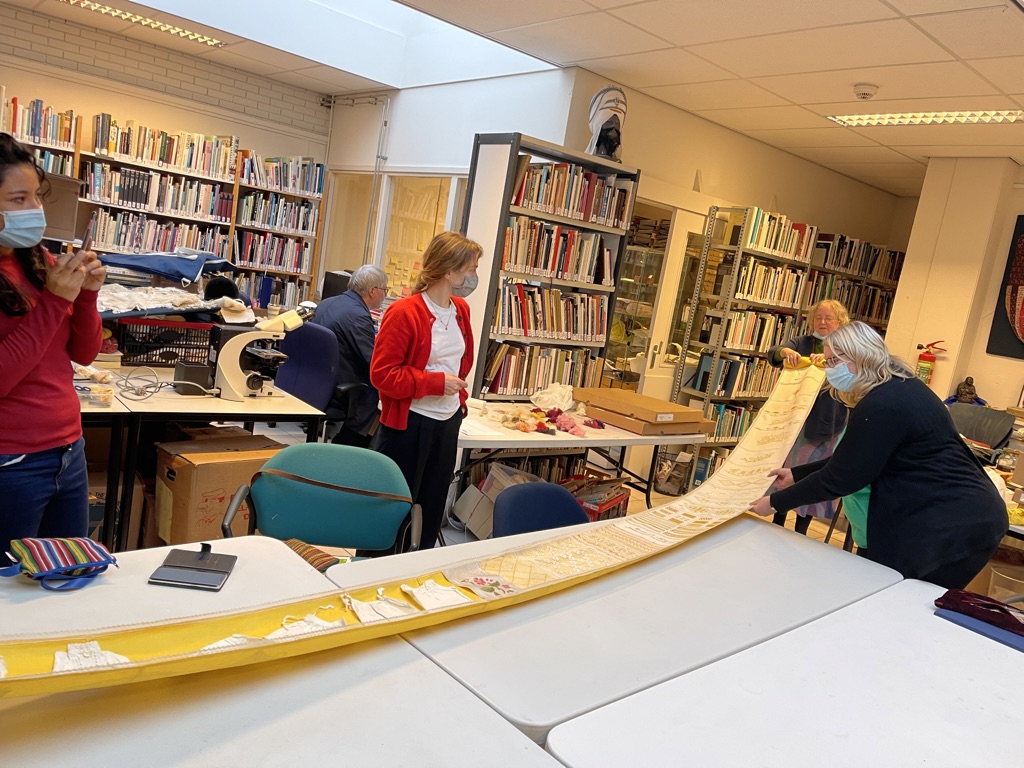 Finishing the course with a very special textile from the TRC collection (TRC 2014.0938): A 9-m long 'pronkrol' (long sampler) from the Netherlands, made in 1909 by Cato de Keijzer, aged 15.
The course started with explaining the characteristics of fibres, thread types and their construction, explaining basic weaves and weaving - with a particular focus on velvets - followed by weave analysis, a discussion of natural dyes and dyeing, an introduction to tie and dye, ikat and wax printing, concluding with printing and embroidering. The lecturer is universally recognised for her knowledge of embroidery.
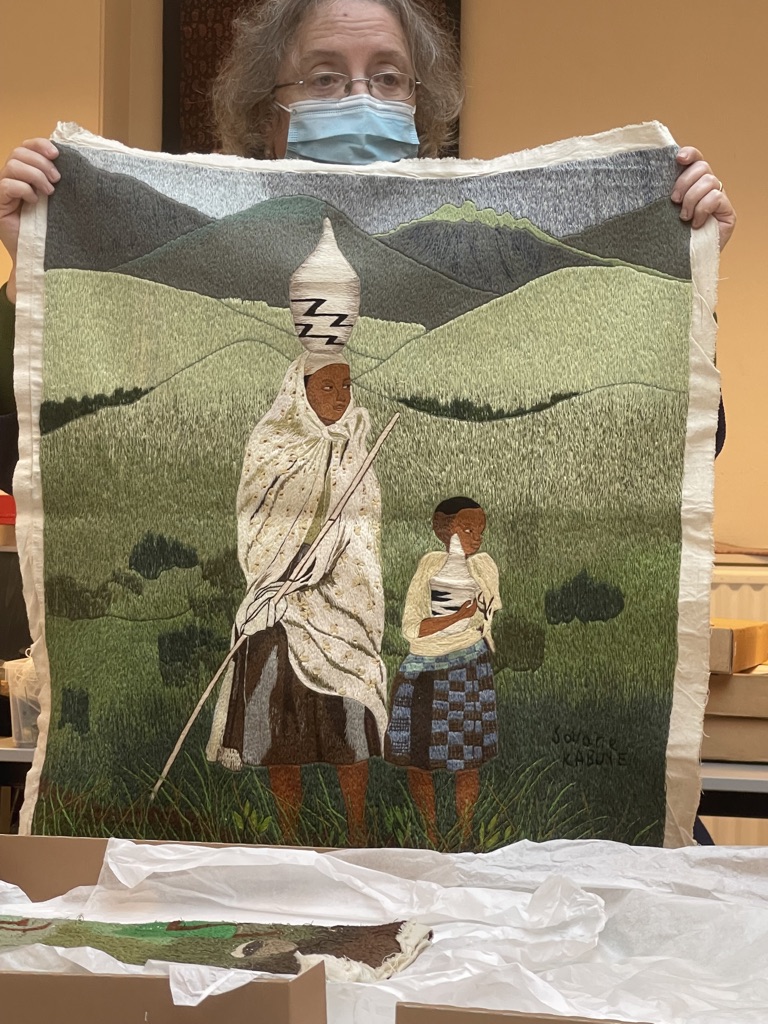 Gillian Vogelsang showing a modern embroidery from Rwanda, produced by the Savane Kabuye workshop (TRC 2021.2052).All these subjects were firstly introduced in practice followed by the relevant theory, so as the inspirer and founder of TRC Dr. Vogelsang-Eastwood explains the subject “become empirically understood”. The outcome of the course was for each participant a folder full of examples created by themselves and numerous textile samples provided, with detailed explanations, from the TRC educational supplies.
The generosity of Dr. Vogelsang-Eastwood was amply shown during the course, as well as her always being willing to respond to the personal needs of each participant. In five days, exquisite textile examples of all historical periods collected from Europe, the Balkans, Africa, Asia, India, China, the South Asian countries, the Far East and South America were placed in front of the participants. As a result, in a simple and communicative way a wide range of information passed to the participants, in the manner that only those experts who are deeply aware of their subject are able to narrate in simple words.
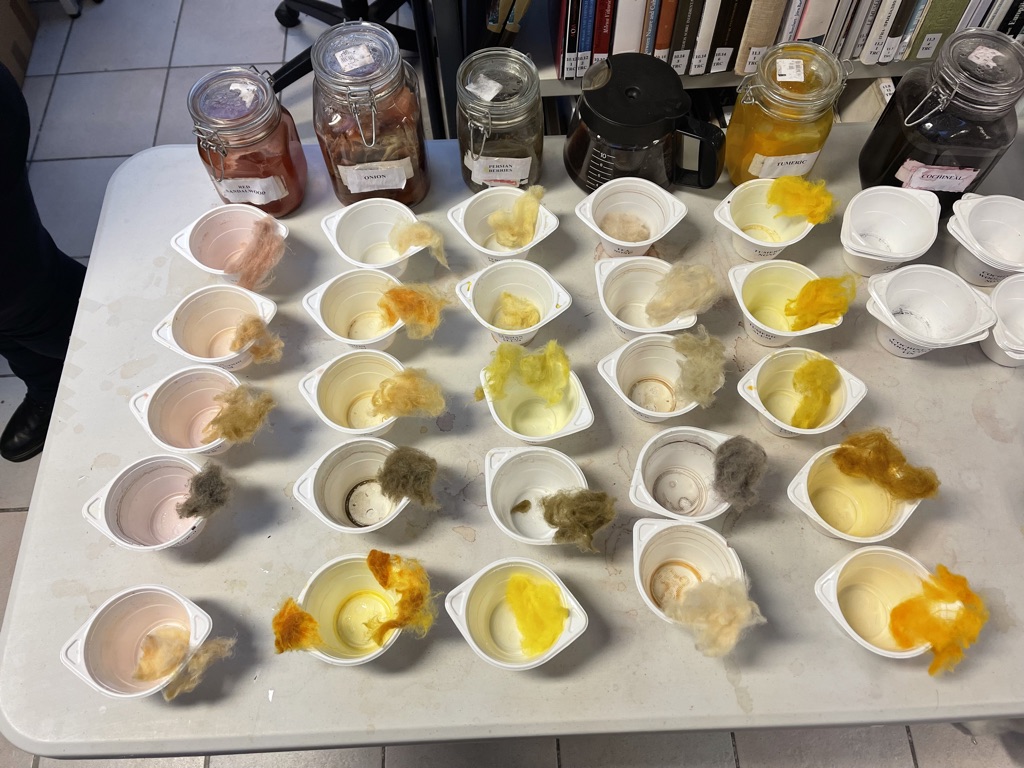 Bowls with a selection of colours made using natural dyes, as part of the TRC Intensive Textile Course, Nov. 2021.The outcome was to demystify years of accumulated questions, misinterpretations, and erroneous assumptions. All this range of knowledge gained during the intense textile course was based upon the particularly extensive - and important by any criterion - TRC collection. Through decades of collecting effort, as well as generous donations that continue to flow in, the TRC has amassed a huge number of important and interesting textiles and textile-making tools.
Many of these textiles are by themselves historically and biographically significant, but the collection was built up as an educational tool, and represents all possible techniques, materials and tools for making and decorating textiles and garments, which are nowadays still used and available, but some of which may soon become extinct.
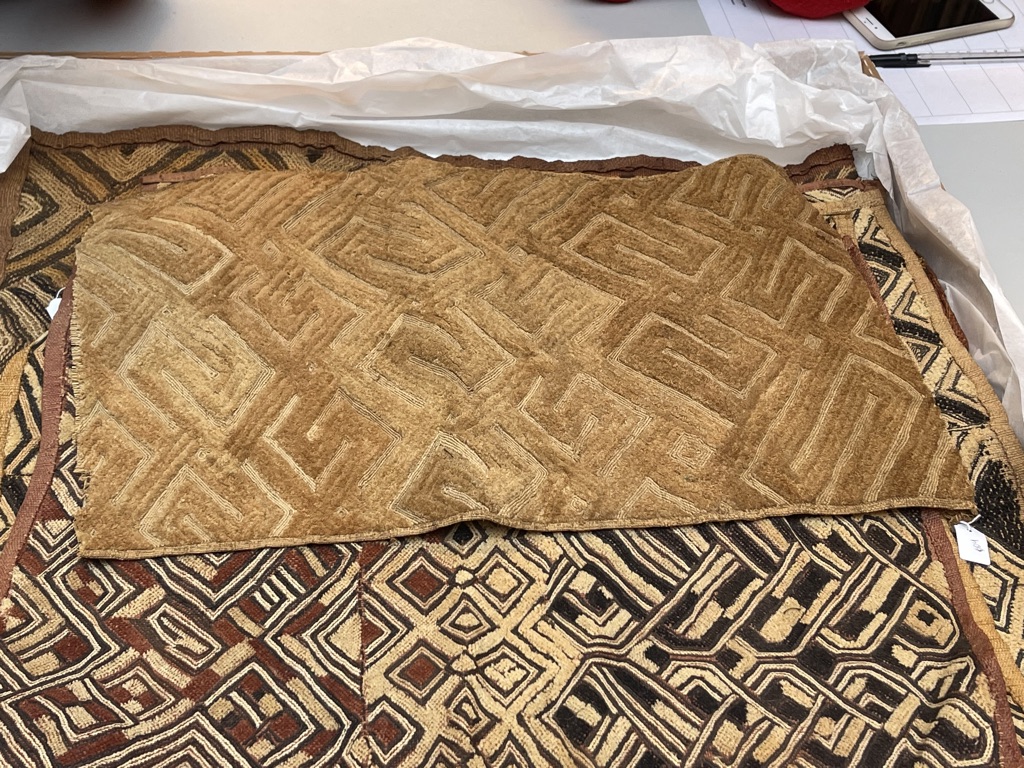 Selection of embroidered raffia cloths in the TRC collection, from the Democratic Republic of the Congo.Through the analysis of the textiles, participants were able to appreciate the effort of humans to solve basic living needs and to portray the lives of artisans and their ancestors.
As Dr. Vogelsang-Eastwood pointed out, TRC is a ‘citizen culture’ institute welcoming applications from specialists across the world to examine and analyze their collection, thereby adding to existing knowledge. In relation to that, TRC is a self-sustained, non-profit institution that needs to preserve its collections and programmes through the financial support of everyone who loves textiles and textile techniques.
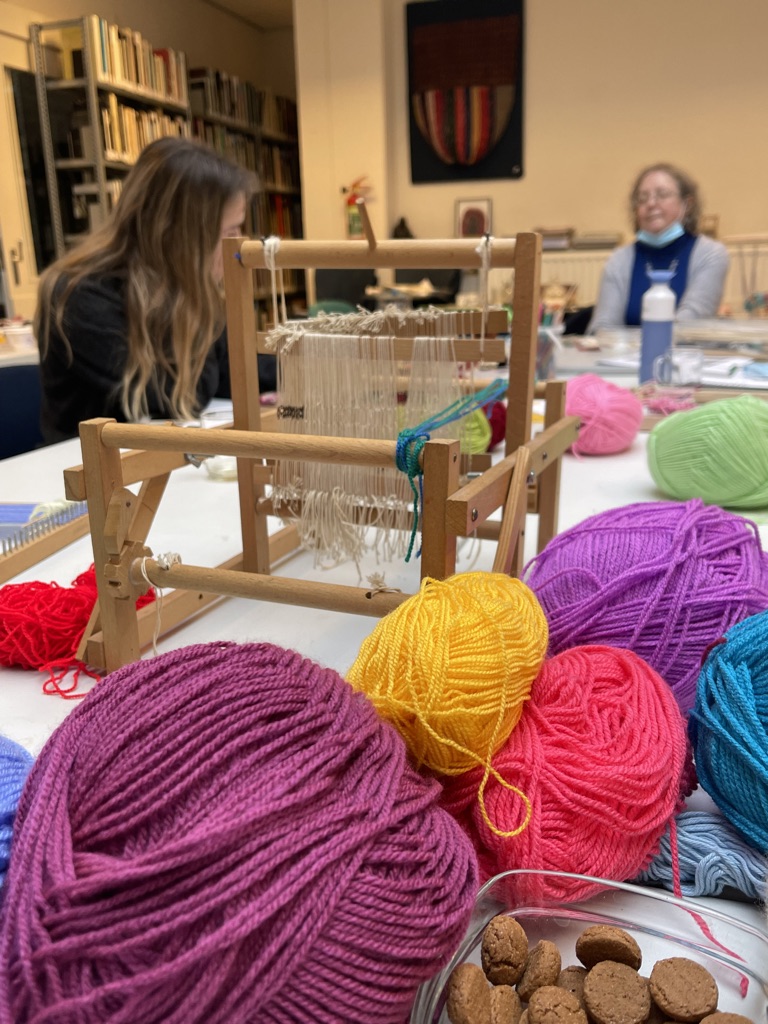 The 'weaving day' during the TRC Intensive Textile Course, November 2021.One could say so much more about the intensive textile course at TRC. What happened in five days at TRC was a deconstruction of textile knowledge and how they are made, practiced in a liberating and beyond-boundaries approach. If there is one thing I may suggest to the reader, it is that anyone who wants or plans to be involved with textiles, professionally or not, should first start with this five-day course prior to sourcing long-term specialized courses that reflect the lands and oceans of textile materials, techniques and designs within human history.
23 November 2021, by Konstantinos Chatziantoniou, Head of Collections & Conservation at the King Abdulaziz Centre for World Culture, Saudi Aramco, Kingdom of Saudi Arabia. He was one of the participants of the TRC Intensive Textile Course in November 2021.


