


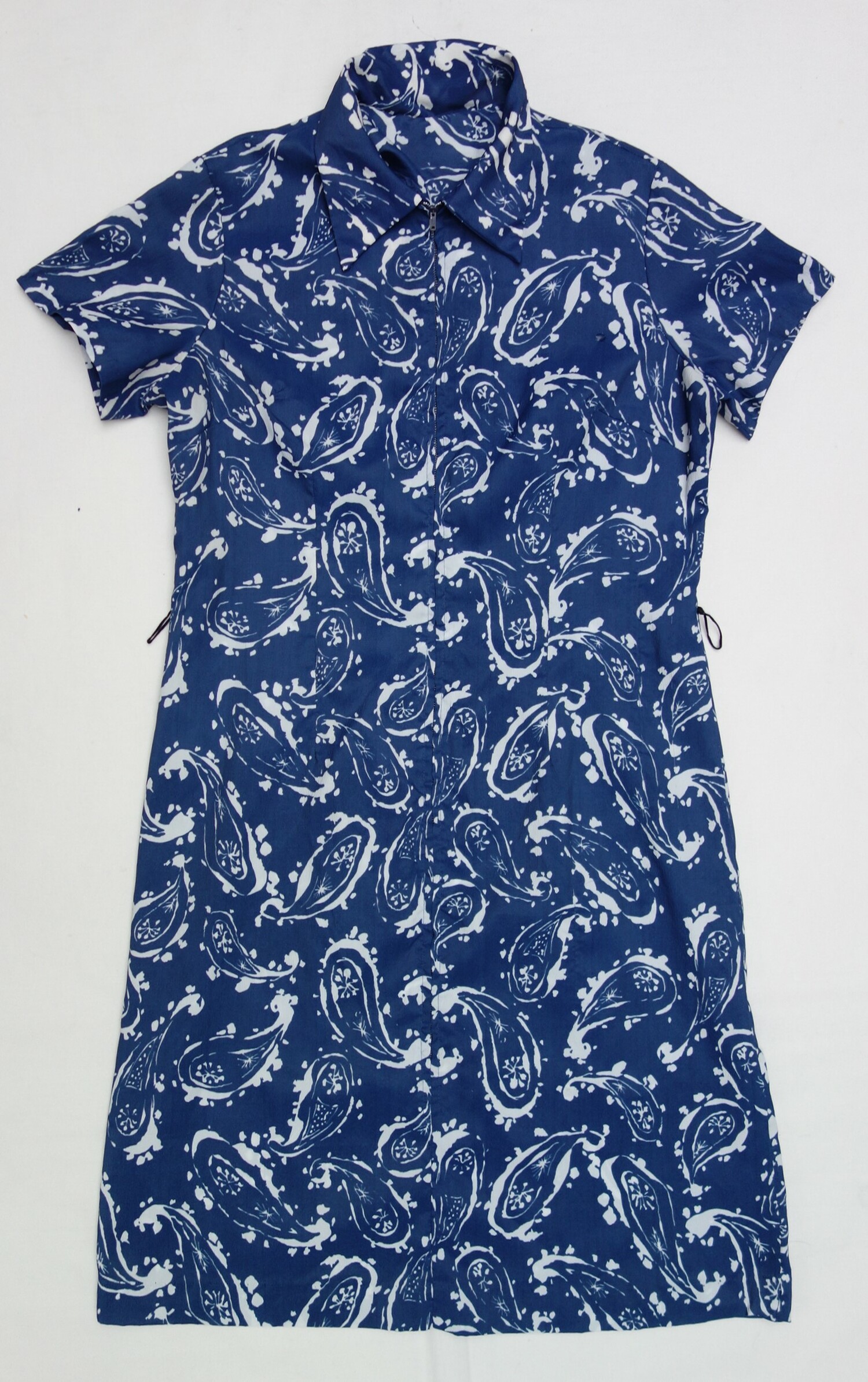
 Dress with paisley motifs that enclose an 'atomic' design. USA, 1960's (TRC 2021.0355). See detail below.In a previous TRC Blog we mentioned a dress from the 1960’s that is decorated with ‘atomic’ paisley. We have had several enquiries concerning what exactly is atomic paisley?
During the 1950’s and 1960’s many people were excited about the concept of atomic power and space travel. Artists and designers started to produce designs representing the new age of atomic power that was both exciting (the space age) and frightening (the atomic bomb).
In many of their works the connecting theme was exploding atomic particles. Numerous ‘atomic’ designs appeared, for example, in the 1951 Festival of Britain that was held in London. But perhaps one of the most iconic representations of the atomic art is the Brussels Atomium that was constructed to symbolise the Brussels World Fair in 1958. This movement helped to bring science into the lives of many ‘ordinary’ people.
Scientific designs included crystalline structures (such as that of mica), x-ray crystallography, as well as schematic drawings showing the appearance of organic substances, including hemoglobin and insulin.
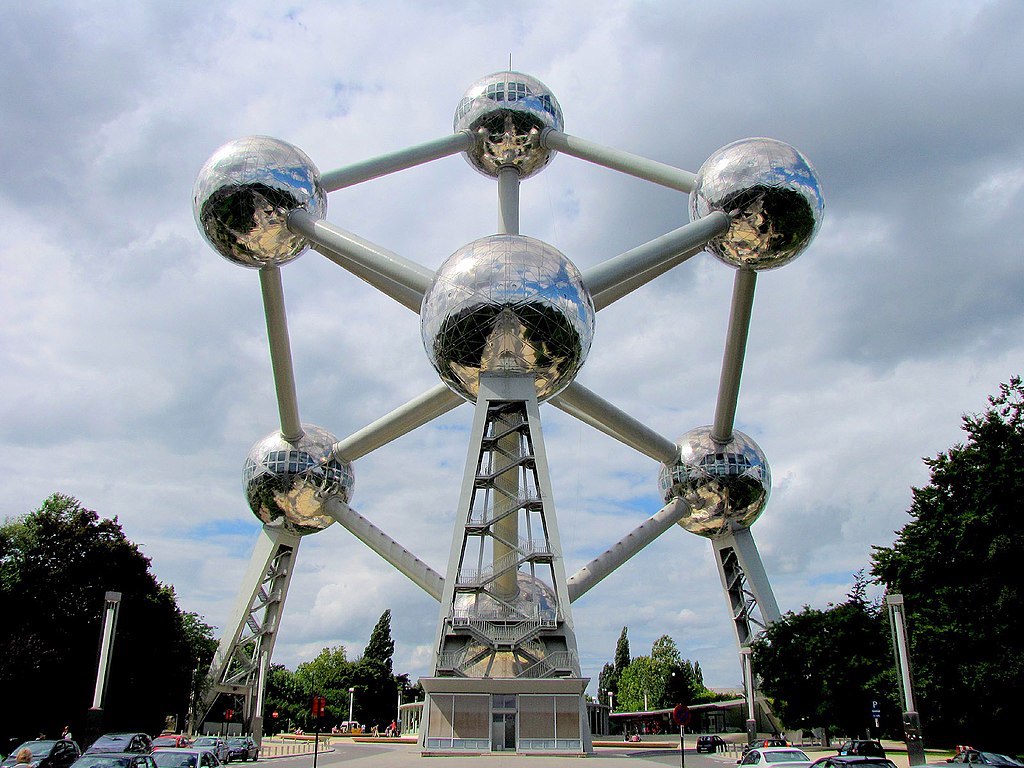 The Atomium in Brussels, 1958.The resulting ‘Atomic’ Age designs were produced for a wide range of functions and situations, including architectural forms, industrial designs, graphic arts (including books, wall papers and posters), glassware, pottery, as well as for a variety of different types of textiles that were used for garments, curtains, furnishings, table clothes and tea towels.
Which brings us back to the atomic paisley dress In the TRC’s forthcoming exhibition, From Buteh to Paisley: the story of a global icon. The dress (TRC 2021.0355) dates from the 1960’s and is made from a blue cloth (the sky) decorated with abstract, broken paisley motifs in white. Within each paisley motif there is an exploding atom. But you have to look for the exploding atom and not think it is just a abstract form. Once spotted it is obvious. It may now seem a strange combination of motifs, paisley and atomic, traditional and very modern (for its time), yet it works!
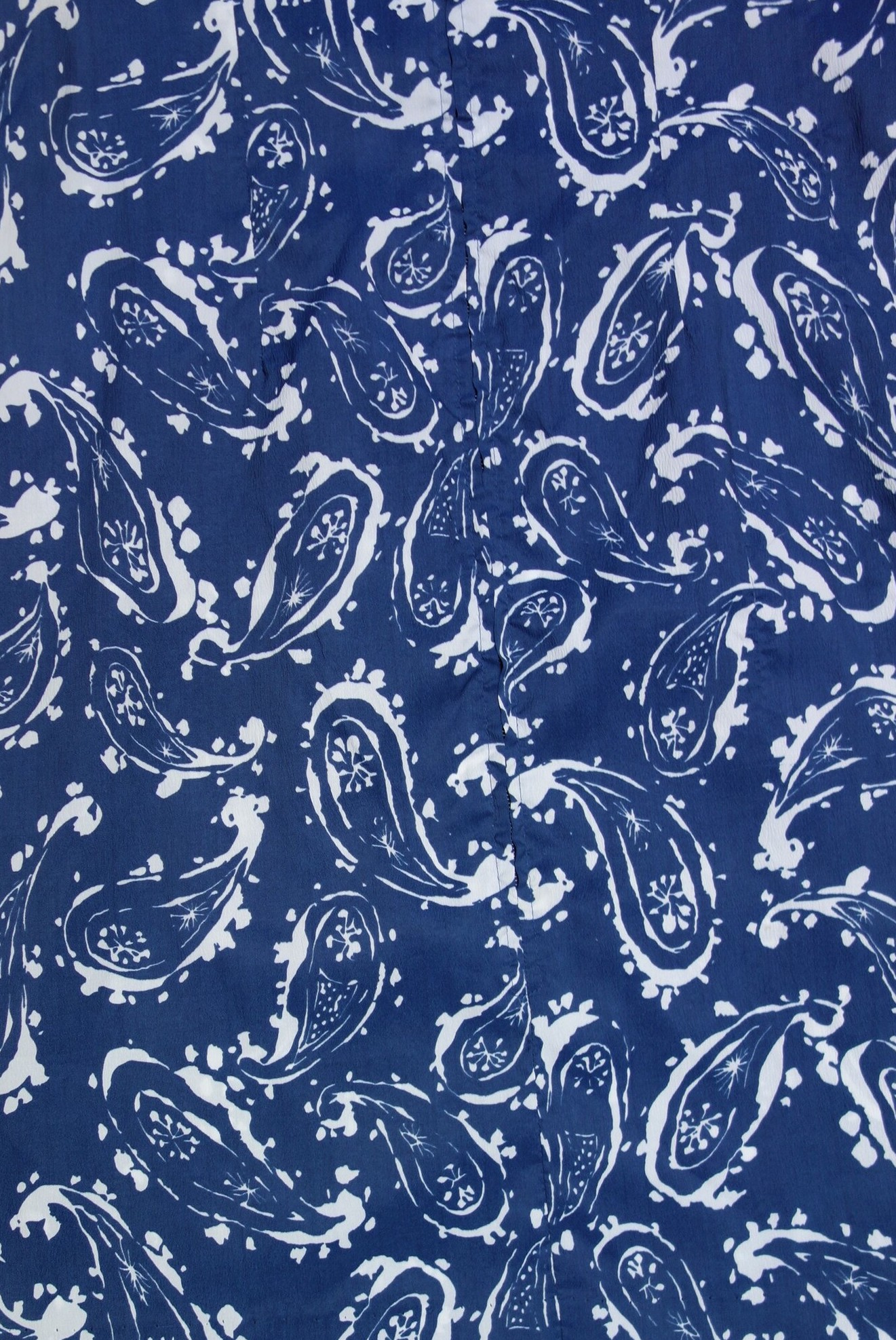 Detail of a dress with paisley motifs that enclose an 'atomic' design. USA, 1960's (TRC 2021.0355).
Another thought that is raised by the objects on display in the exhibition, concerns the idea that, since there are so many forms of paisley, it is questionable as to whether there is now one ‘authentic’ paisley/buteh form. It is so adaptable and has been adopted by so many different cultures, it now belongs to everyone and everywhere and each designer has added their own touch to the motif's rich and global history. A true global icon.
Gillian Vogelsang, 21 February 2021


