


On Thursday, 28th May, 2020, Gillian Vogelsang wrote:
As part of the further building up of the TRC’s velvet collection for teaching purposes, used for both the TRC's 5-day intensive course and the 1-day course on identitifying velvets, I recently bought online, from a respectable Dutch firm, six pieces of velvet.
Of the six "velvet" pieces ordered and received, two were not velvets – one was a cotton, twill weave with a raised surface (giving a suede effect), while the other was a printed satin! Admittedly, both materials feel soft and strokeable, but velvet: no.
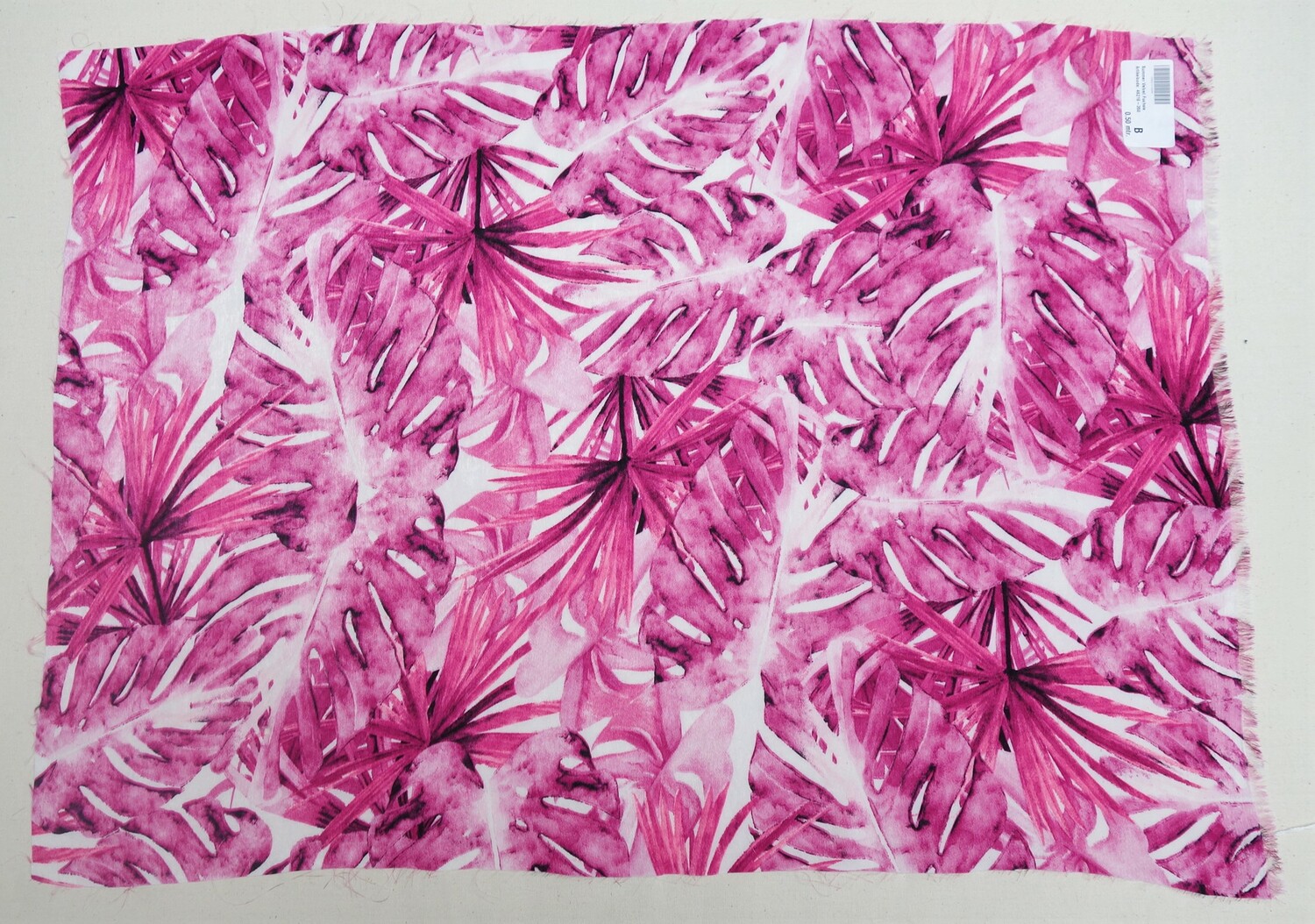 Piece of satin with a printed design of stylised flowers, sold online by a Dutch firm as velvet (TRC 2020.2506).
I emailed to the shop (Textielstad, Tilburg) on the 12th May about the situation and this morning (28th May). I received a reply (in English) that has left me perplexed to say the least. Apparently the term velvet in the descriptions of the various types of cloth on sale was not a technical description, and here I quote: “The name can be more of a selling point than actually an indicator.”
I am not writing this blog to complain about the firm, but I want to draw attention to a wider problem. What is the function of a term like velvet? Anyone who has been working on historical and modern textiles knows the frustration of having a documented term and the pertinent piece of contemporary cloth, but not being able to put the two together.
Words and their meanings change over time, what one generation called an XXX may well be called a YYY by another. Let alone all the problems that arise from English English versus American English, and the chaos that can occur when adding other languages and their terms and definitions into the melting pot. The gingham type of cloth may be a good example.
We are working at the TRC to make an in-house reference collection of yarns, textiles, garments, tools, and so forth, and to link these to standardised terms, to help us become more consistent in the wording for the TRC Collection Database and, in passing, helping other people who are cataloguing textiles in both private and public collections.
One thing I have learnt is that many words have multiple meanings, but something technical such as the term ‘velvet’ is not just a vague selling point, it has a precise meaning with respect to the world of textiles. When one is buying textiles online, especially as it is now difficult due to the corona virus situation to go physically shopping, you have to be able to trust the descriptions given! Or is that just me?


