• F2
  • F4
  • F1
  • F3

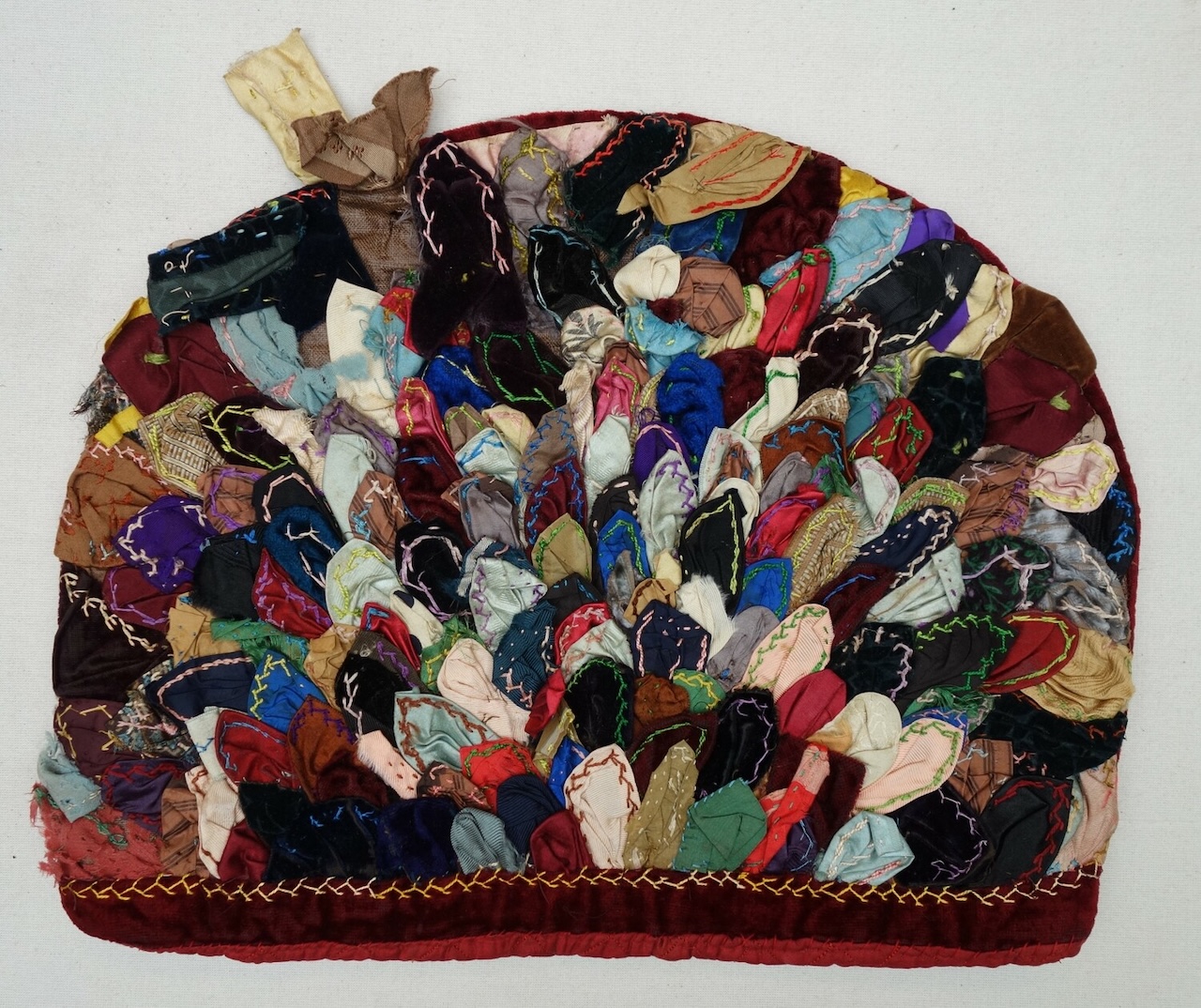
Australian tea cosy from the 1890s, made from scraps of cloth (TRC 2023.1882).Australian tea cosy from the 1890s, made from scraps of cloth (TRC 2023.1882).There have been various interesting developments at the TRC. Surprisingly, tea cosies played a major role.  A small exhibition of these mundane objects proves to be a great success with both staff and visitors. It brings a smile to people’s faces. It is amazing how a ‘simple’ object can bring forth so many emotions and stories of an ‘ordinary’ domestic nature.

I must admit I had not realised they were only used from about the 1860’s to the 1990’s, and that their role was usurped by tea bags and tea lights. We had numerous tea cosies at home when I was growing up in Yorkshire, but how many people now use them? It has been fun to hear other people’s cosy stories.

The other day there was an internal group meeting of staff, students and volunteers, who each brought a tea pot and materials to make tea cosies! Something that can be repeated again in the future. It also highlighted the fact that we have very few modern sewing machines at the TRC (more about this shortly) and more importantly, what sort of sewing machines would be required if the TRC was to organise a series of workshops based around machine sewing? Basic level sewing, repairs, quilting and patchwork have been suggested. Other suggestions would be welcome as we are currently expanding the 2027 workshop series!
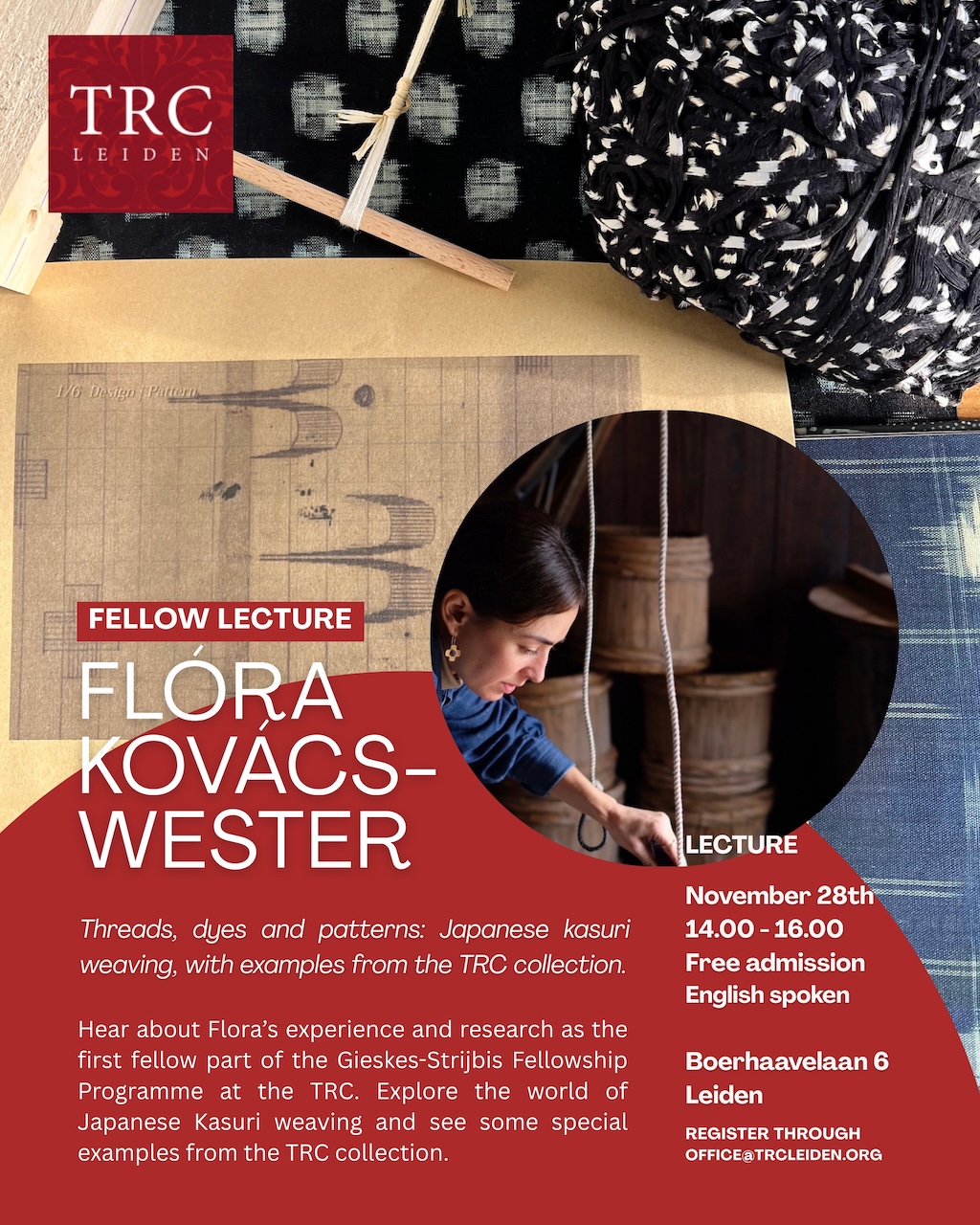
On Saturday 28 November, from 14.00-16.00 hours, Flóra Kovács-Wester, fellow at the TRC, will be giving a talk about "Threads, dyes and patterns: Japanese kasuri weaving, with examples from the TRC collection." Entrance is free, and coffee and tea will be provided.
Flora is the first of the fellows sponsored by the Gieskes-Strijbis Fonds. She started work at the TRC in April, and in this lecture she will talk about her research and the results of her work.

Two more fellows of the fellowship programme have been appointed, and an announcement for two more fellows was published this week. The TRC hopes to welcome our new fellows by the spring of next year.

Flora wrote about her first two months at the TRC in a blog that was published on 23 May, and she organised a workshop on Kasuri weaving on 30 October. She also wrote about recent acquisitions of kasuri weaving for the TRC collection (12 October).

Can you let us know whether we can welcome you? Please write to: Dit e-mailadres wordt beveiligd tegen spambots. JavaScript dient ingeschakeld te zijn om het te bekijken.


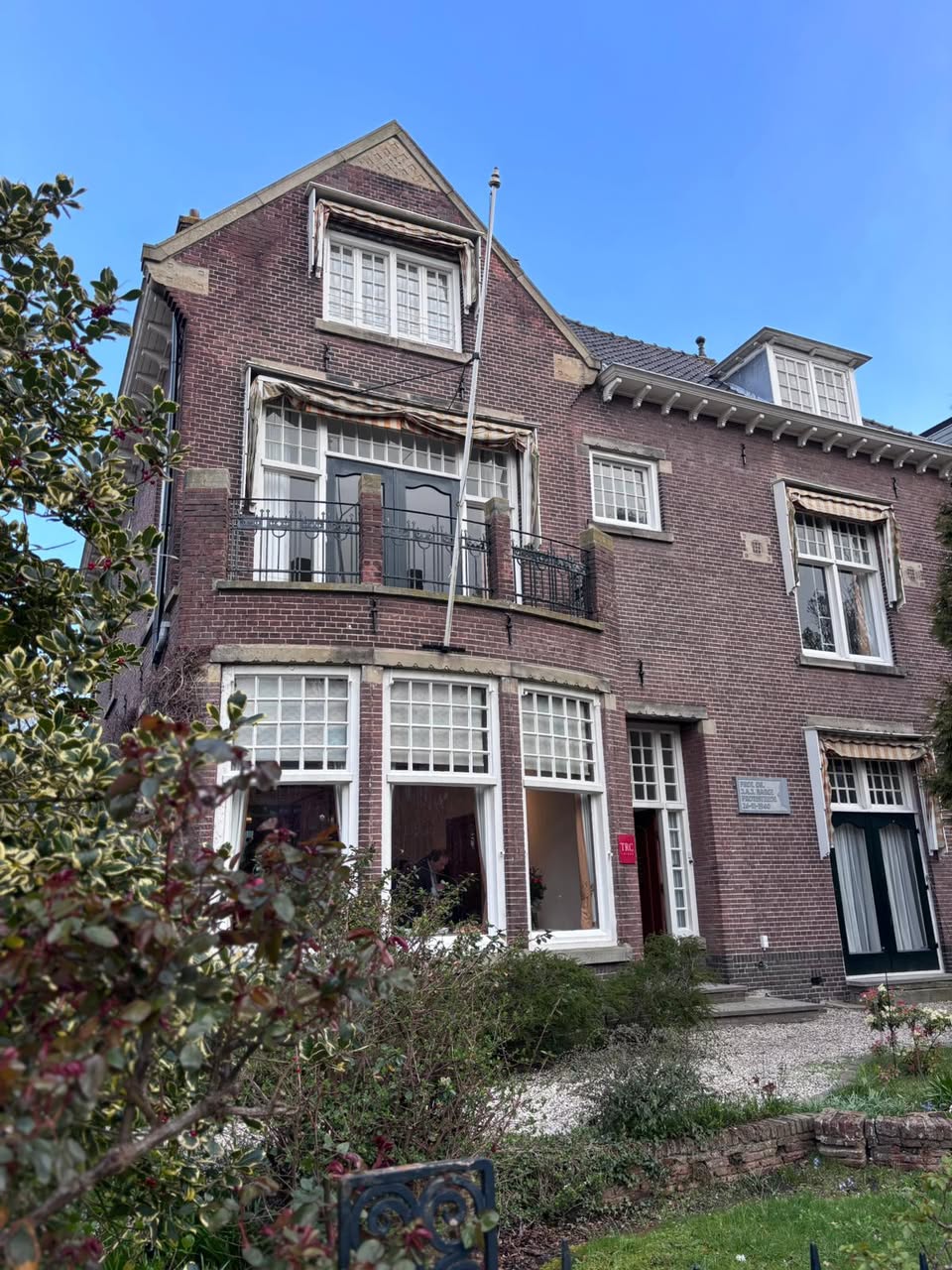
The Textile Research Centre at Boerhaavelaan 6, Leiden.The Textile Research Centre at Boerhaavelaan 6, Leiden.For three years, starting mid-2026, the Textile Research Centre, Leiden, the Netherlands, is offering a total of seven junior and four senior fellowships for up to six months each. Three fellows have already started working in Leiden (compare an interim report by Flora Kovacs-Wester), and in this call we hope to attract more candidates for a fascinating stay next year at the TRC in the historic textile city of Leiden.

The fellowships are being sponsored by the Gieskes-Strijbis Foundation, Amsterdam. Fellows are invited to carry out research based on the TRC’s extensive textiles and dress collection of more than 56,000 items (click here for the online catalogue), most of which directly accessible inside the TRC building. The junior fellows are supervised and assisted by TRC staff; senior fellows carry out independent research.

For this round, two positions are offered, one junior and one senior fellowship, starting in the spring of  2027, for a duration of up to 6 months.

Application deadline is Wednesday 16 December 2026. The selection process will be completed by mid-January and applicants will be informed by 1 February. Fellowships may start from April/May, or later, depending on personal circumstances.

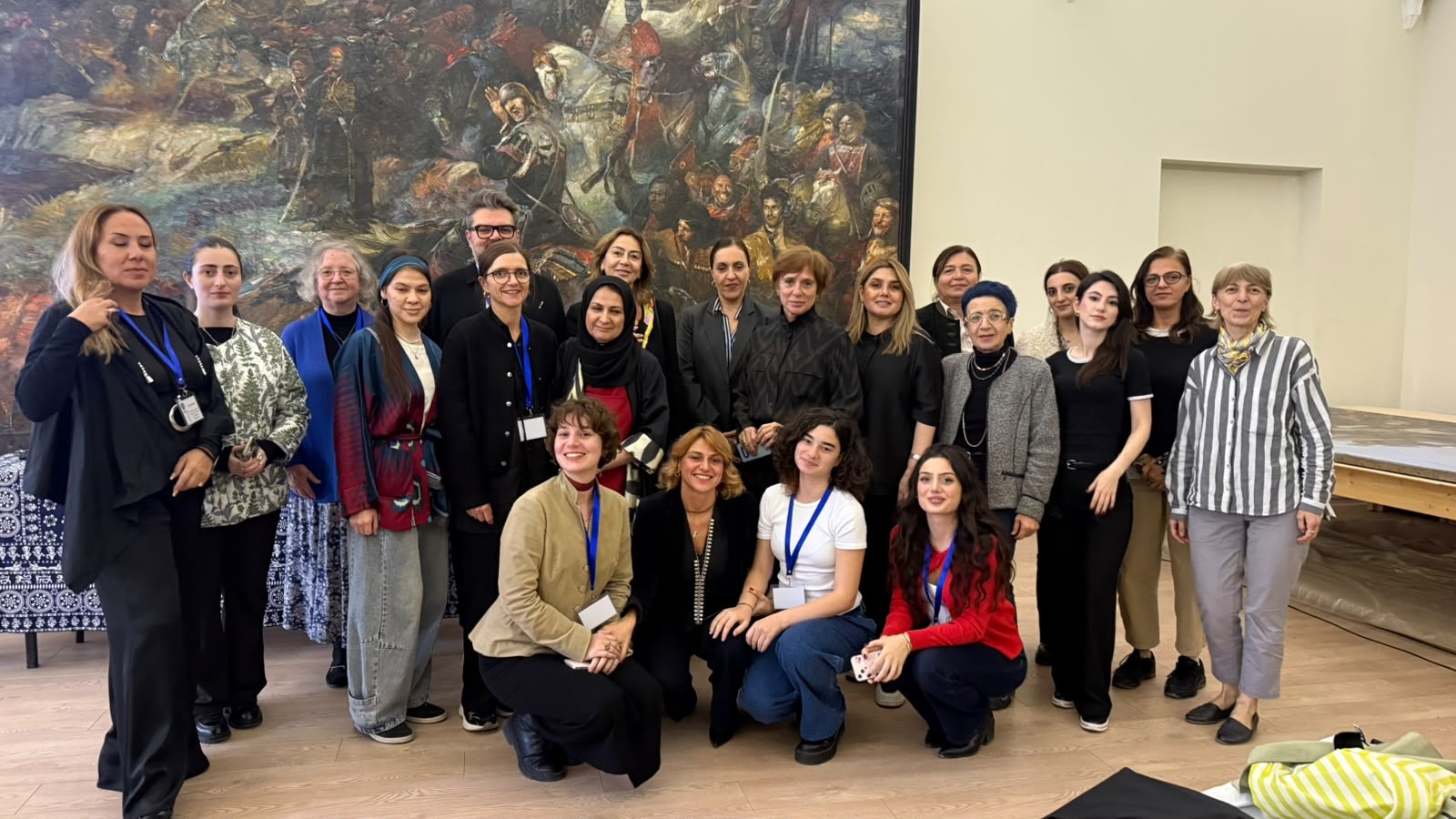
(Gillian Vogelsang-Eastwood, 3 November 2026) It has been a busy, international ‘networking’ period for the TRC. In September, for example, my colleague, Augusta de Gunzbourg, was invited to Uzbekistan for a conference on Uzbek ikat heritage. In October, I travelled to Tbilisi, Georgia, for a 3-day conference entitled Living Heritage (22-24 October 2026), which was set up to discuss Georgian textile heritage, crafts and their future. It was organised by the Ministry of Culture, the Tbilisi State Academy of Art, and Erasmus (EU).

Participants of the Tbilisi conference, October 2026.Participants of the Tbilisi conference, October 2026.

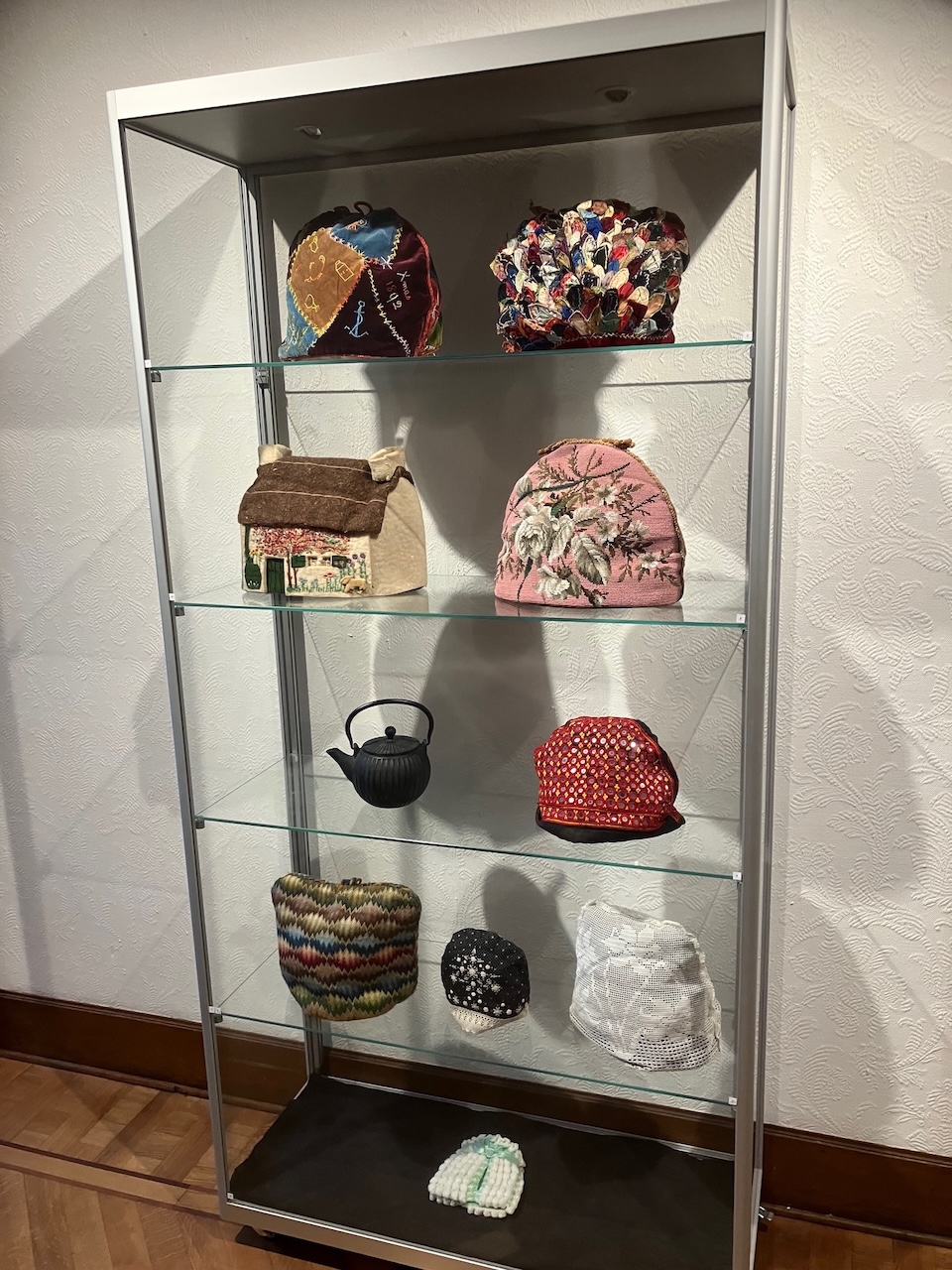
Showcase with a selection of tea cosies; Temporary mini exhibition at the TRC.Showcase with a selection of tea cosies; Temporary mini exhibition at the TRC.(1 November 2026) The TRC has a small collection of 25 tea cosies, once to be found in any European household. Recently one of the TRC student/volunteers, Tina Morthier, made a small exhibition of these items, in the context of the TRC training and educational programme. The display can be seen until the end of November in a special showcase on the ground floor of the TRC building.

Tea cosies became popular in Western Europe in the mid-nineteenth century (the first occurrence of the word seems to date from that period) and they were used to keep the tea pot warm and at the same time to show off needlework and knitting skills. Their use died out in the late 20th century with the wide-spread introduction of tea bags.

The display includes, among others, a crazy patchwork cosy from Australia, from 1892 (TRC 2023.1883), a cosy in the shape of a country cottage from Great Britain, from the early 20th century (TRC 2025.0429), a beaded tea cosy from 19th century Europe (TRC 2024.3105), and a knitted cosy from the 1960s, Australia (TRC 2023.1884).

And what about a small, black and hand embroidered cosy from early 20th century Netherlands (TRC 2019.2825)?

Subcategorieën

Zoek in TRC website

Contact

Boerhaavelaan 6
2334 EN Leiden.
Tel. +31 (0)71 5134144 (kantooruren)  
office@trcleiden.org

Het TRC is geopend maandag t/m vrijdag tussen 10.00 en 15.00 uur.

facebook 2015 logo detail


instagram vernieuwt uiterlijk en logo


Bankrekening

NL39 INGB 0002 9823 59, t.a.v. Stichting Textile Research Centre.

Financiële giften

Het TRC is afhankelijk van project-financiering en privé-donaties. Al ons werk wordt verricht door vrijwilligers. Ter ondersteuning van de vele activiteiten van het TRC vragen wij U daarom om financiële steun:

Giften kunt U overmaken op bankrekeningnummer (IBAN) NL39 INGB 000 298 2359, t.n.v. Stichting Textile Research Centre. BIC code is: INGBNL2A

U kunt ook, heel simpel, indien u een iDEAL app heeft, de iDEAL-knop hieronder gebruiken en door een bepaald bedrag in te vullen: 


Omdat het TRC officieel is erkend als een Algemeen Nut Beogende Instelling (ANBI), en daarbij ook nog als een Culturele Instelling, zijn particuliere giften voor 125% aftrekbaar van de belasting, en voor bedrijven zelfs voor 150%. Voor meer informatie, klik hier.