• F2
  • F1
  • F3
  • F4

Een klein pluspunt van de huidige corona-virus epidemie is dat veel mensen nu meer tijd hebben om boeken te lezen! De diversiteit van de textiel- en kledingboeken die onlangs door de TRC-bibliotheek zijn verworven, wordt weerspiegeld in een nieuwe geannoteerde boekenlijst voor maart 2020.

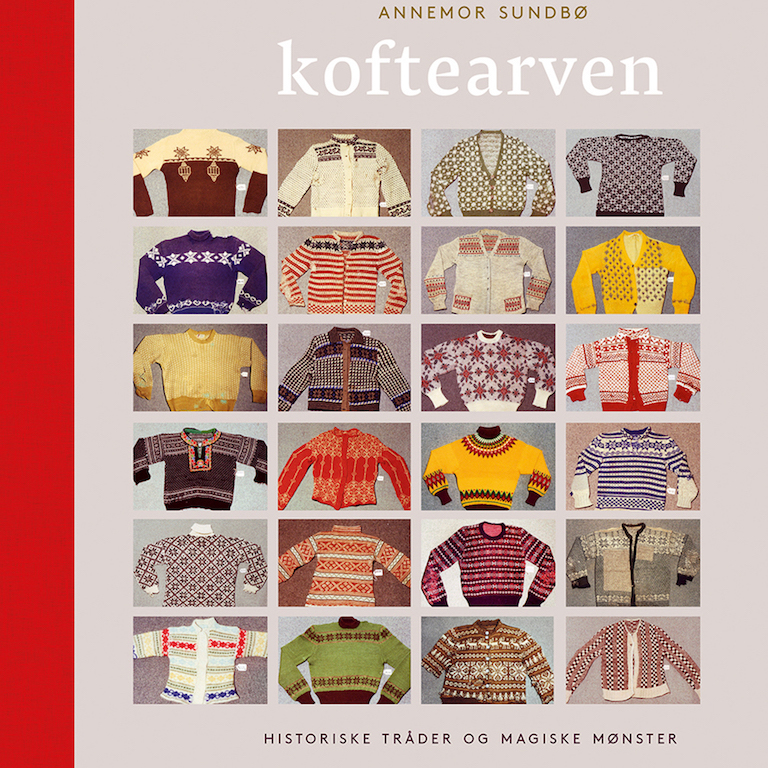
For more information, click on the illustration.For more information, click on the illustration.SUNDBØ, Annemor (2019). Koftearven: Historiske trader og magiske mønster (‘Cardigans: Historical trades and magical patterns’), Oslo: Gyldendal Norsk Forlag. ISBN: 978-82-05-52211-4, hardback, 400 pp., end notes, bibliography. Price: Nor. Kroner 449.

Annemor Sundbø is one of the grand dames of the hand knitting world, and she has done much to preserve the social, economic and technical history of knitting in Scandinavia and the rest of northern Europe. Her wide ranging knowledge is reflected in the historical elements of this book, which has been fully illustrated with items from the Sundbø collection (currently housed in the Ose Ullvare knitting workshop, in Setesdal, Norway).

This is a beautifully illustrated book, which looks at many cardigans that come from various parts of Norway. There are discussions about technical, historical and design aspects. The design section is the ‘magical’ element.

When discussing Scandinavian forms, Sundbø is on ‘safe ground’. However, in her discussion of the supposed link between ancient Egyptian motifs with 19th and early 20th century Norwegian designs, some care needs to be taken.

Recommendation: This book is recommended for anyone seriously interested in the history of hand knitting in Norway. Some of the links made between ancient Egyptian and later designs, reflect a personal opinion, personal, rather than being historical.

Gillian Vogelsang-Eastwood, March 2020.

For more information, click on the illustration.For more information, click on the illustration.PIRES, Ana (2009). Fios: Formas e Memórias dos tecidos, rendas e bordados. Lisbon: Instituto do Empreggo e Formação Profissional. ISBN 9896380333 and 9789896380335. Softback, fully illustrated in colour and b/w, 367 pp., bibliography at the end of each chapter.

A beautifully illustrated book about Portuguese woven forms, bobbin lace, as well as embroidered textiles. The book was produced as part of the International Handicraft Fair that took place in the summer of 2009. The book looks at handmade Portuguese textiles. Full of interesting textiles, close-ups, etc., in high resolution colour illustrations. There are chapters on the main types of embroidery, such as guimarães, Souse and Viana do Castelo, as well as items such as the embroidered carpets known as arraiolos. All of the textiles are illustrated, often with close-up photographs. There are also brief accounts of some of the modern artisans making contemporary woven textiles, laces and embroideries.

Recommendation: It should be noted that the book contains little information about woven and lace examples, in contrast to the embroidered forms. The book, however, is a must for anyone interested in Portuguese, Iberian Peninsular and European embroidery in general. It is a book to dip into, as well as to acquire inspiration for design ideas and colour combinations. It’s worth having just to look at.

Gillian Vogelsang-Eastwood, March 2020.

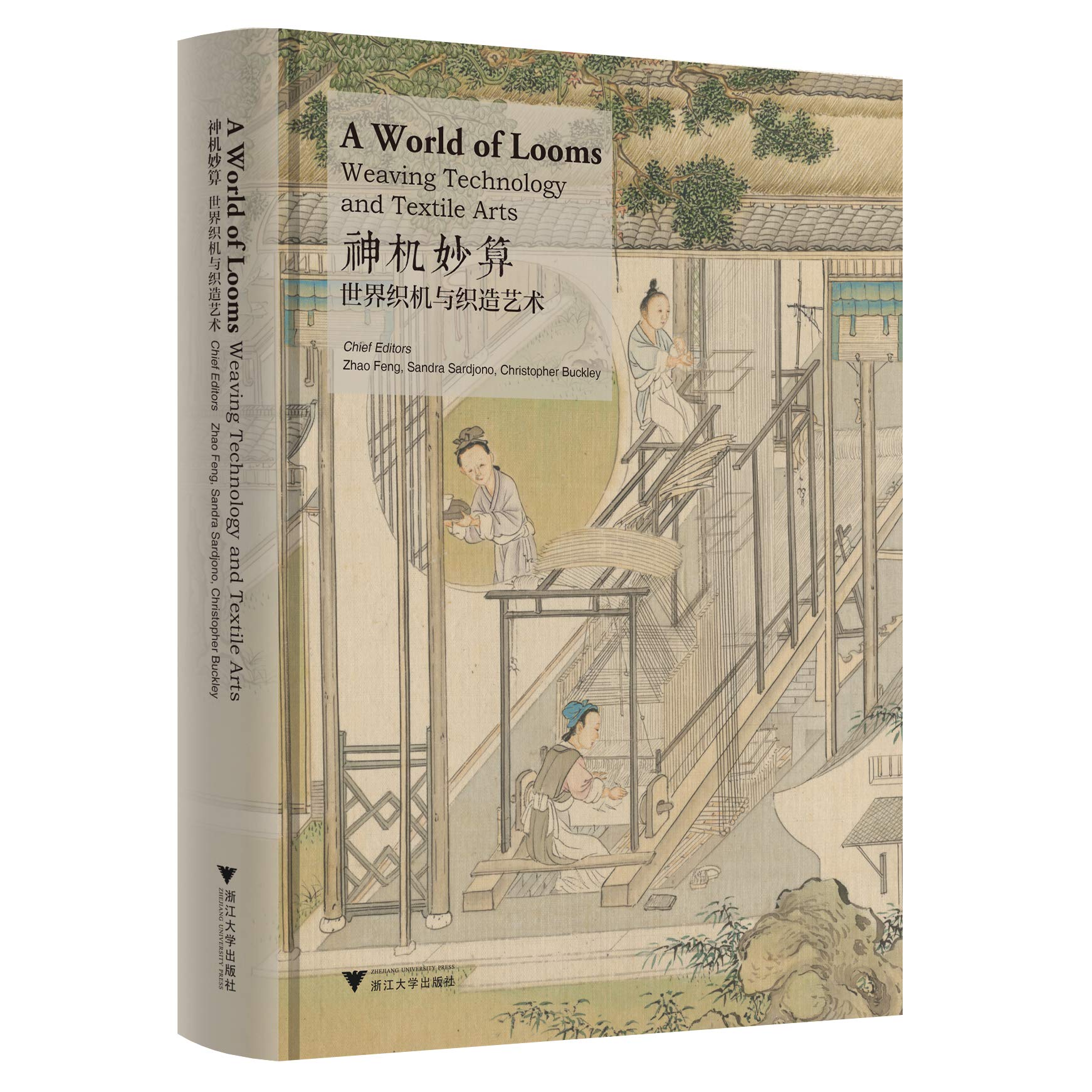
For more information, click on the illustration.For more information, click on the illustration.FENG, Zhao, Sandra Sardjono and Christopher Buckley (2019). A World of Looms: Weaving Technology and Textile Arts, Zhejiang (China): Zhejiang University Press. ISBN 978-7-308-19182-1. Hardback, 297 pp., full colour illustrations, with numerous charts, diagrams and photographs; bibliography, glossary, no index. Price: US$ 73.

There are many books on textiles, especially woven examples, but few books are published about the history and classification of loom types. This publication helps to redress this imbalance. The publication is based on a series of lectures given at a three-day conference in the National Silk Museum, Zhejiang in China. The conference, with the same name, took place in 2018. So there has been a rapid turn-around from conference to conference publication. There are 24 papers in the book, which look at looms from prehistory to the present day, literally from ancient Egypt, via the warp-weighted loom found in Scandinavia to the different types of backstrap looms identified in Peru and Indonesia. The work by Christopher Buckley on how to classify looms is particularly impressive (and useful).

Recommendation: This book is a must for any serious library about the history of woven textiles, weaving technology and for those who are interested in the history of technology in general.

Gillian Vogelsang-Eastwood, March 2020.

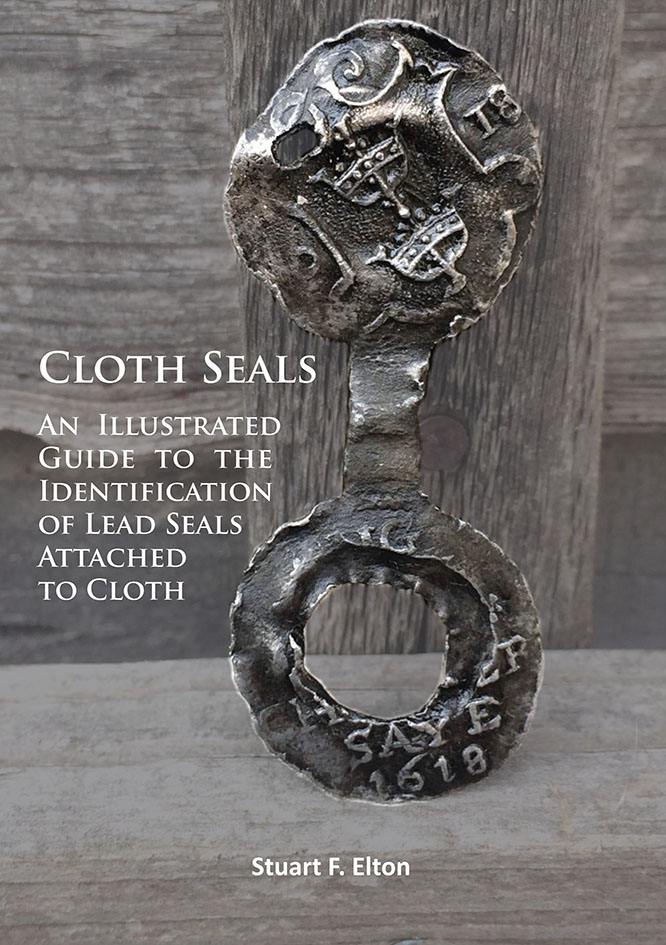
For more information, click on the illustration.For more information, click on the illustration.ELTON, Stuart F. (2017). Cloth Seals: An Illustrated Guide to the Identification of Lead Seals Attached to Cloth, ISBN 9781784915483. E-publication ISBN 9781784915490; soft back, 410 pp., fully illustrated in colour and b/w images, bibliography. Price: GB ₤65; e-publication ₤16.

The TRC has a small collection of lead seals and it has always been a bit of a puzzle as to whether a seal was for a piece of cloth or for something else (we have one seal that turned out to be for sacks of guano). Another major source of contention is the origin of particular seals. Just because it may have been found in, for example, Leiden, it does not mean it originated there! British seals, for example, have been found in Hungary, and British, German and French seals were excavated in The Netherlands. These seals give an indication of the importance and scale of the European cloth industry in late medieval and later periods.

I was very glad to read Elton’s book on cloth seals and how to identify the various types of British seals. There are numerous clear diagrams, line drawings and photographs with details concerning the iconography and texts on the seals and indications how the various types can be identified. The emphasis is on post medieval and early modern industrial forms. The majority of seals are British and those found in Britain as well as British seals found in various parts of Europe. It would be very useful in the future to have a similar guide to European seals in general!

Recommendation: This is a specialist book that will be of use to museum and university colleagues, as well as archaeologists working in the field of medieval and later industrial heritage.

Gillian Vogelsang-Eastwood, March 2020.

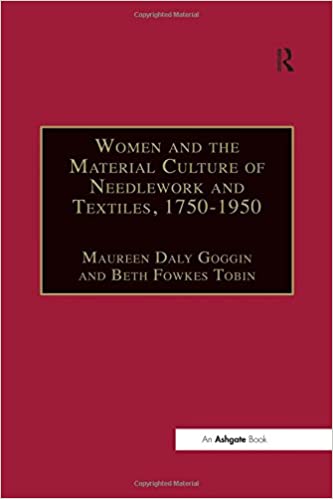
For more information, click on the illustration.For more information, click on the illustration.GOGGIN, Maureen Daly and Beth Fowkes Tobin (2016). Women and the Material Culture of Needlework and Textiles, 1750-1950, London and New York: Routledge Taylor & Francis Group. ISBN 978-0-7546-6538-0, paperback, 296 pp., some black and white illustrations, endnotes to each chapter, bibliography, index. Price: GB 43.

"Has the pen or pencil dipped so deep in the blood of the human race as the needle?" (Olive Schreiner)

The authors of this volume have answered this question with a resounding NO! The book is divided into three main sections, namely, “Identity, embroidery, and sewing”, “Cultural identity, piecing, quilting, and lacemaking”, and “Politics and design in yarn and thread”. Within each section there are various articles by art historians, design historians, museum curators, as well as practicing textile crafts people. The emphasis is on American subjects and forms.

This is a paperback version of a book that first appeared in 2009. It is also a print-on-demand form and as a result the black and white illustrations are not of a high quality.

Recommendation: This is a specialist book for those specifically interested in textiles and needlework from the mid-18th to the mid-20th century in the USA. It is also a book aimed at those studying the role of material culture in social, economic and political history in general, and women’s history in particular. It is, however, a book that will make you wonder about what happened in, for example, Europe during the same period.

Gillian Vogelsang-Eastwood, March 2020.

Zoek in TRC website

Contact

Boerhaavelaan 6
2334 EN Leiden.
Tel. +31 (0)6 28830428  
office@trcleiden.org

facebook 2015 logo detail


instagram vernieuwt uiterlijk en logo


Bankrekening

NL39 INGB 0002 9823 59, t.a.v. Stichting Textile Research Centre.

Openingstijden

Het TRC is gesloten tot maandag 4 mei vanwege de verhuizing naar de Boerhaavelaan. We blijven bereikbaar via email (office@trcleiden.org) of telefoon: 06-28830428.

Financiële giften

Het TRC is afhankelijk van project-financiering en privé-donaties. Al ons werk wordt verricht door vrijwilligers. Ter ondersteuning van de vele activiteiten van het TRC vragen wij U daarom om financiële steun:

Giften kunt U overmaken op bankrekeningnummer (IBAN) NL39 INGB 000 298 2359, t.n.v. Stichting Textile Research Centre. BIC code is: INGBNL2A

U kunt ook, heel simpel, indien u een iDEAL app heeft, de iDEAL-knop hieronder gebruiken en door een bepaald bedrag in te vullen: 


Omdat het TRC officieel is erkend als een Algemeen Nut Beogende Instelling (ANBI), en daarbij ook nog als een Culturele Instelling, zijn particuliere giften voor 125% aftrekbaar van de belasting, en voor bedrijven zelfs voor 150%. Voor meer informatie, klik hier