Hirsch & Cie, and war-time textiles at the TRC Leiden
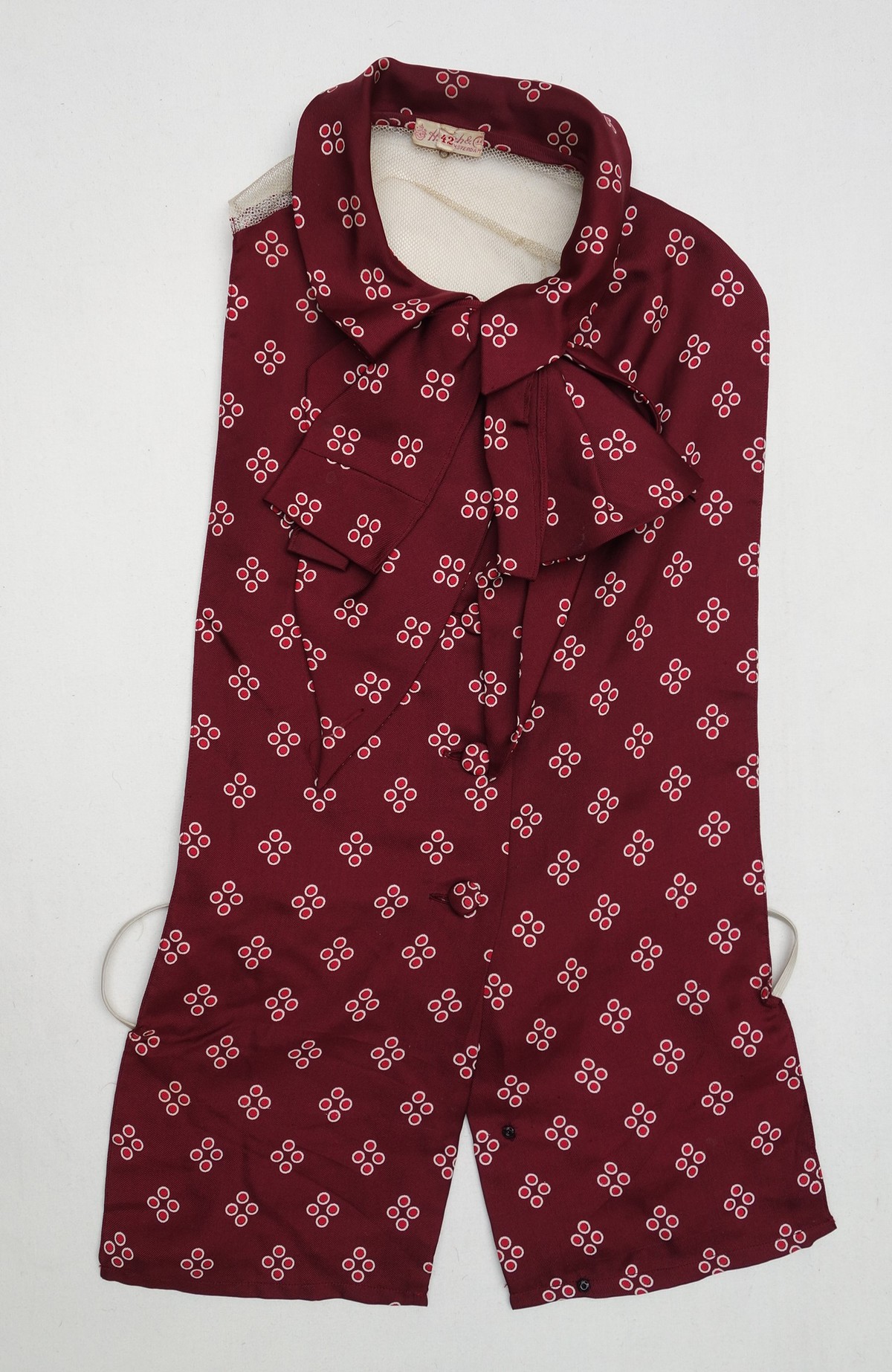 War-time blouse sold by the firm of Hirsch & Cie, Amsterdam (TRC 2007.0885). The back of the garment, normally not visible, is made of a cheap material (net). The label with the name of the Jewish firm of Hirsch & Cie. was made illegible.In 2020 we will celebrate the 75th anniversary of the end of World War 2 (1939-1945). As part of the research for a new exhibition about textiles and clothing made and worn during the war, the TRC has been looking into the fascinating history of the Dutch company of Hirsch & Cie, Amsterdam.
This line of research was suggested by the identification of two Hirsch & Cie garments in the TRC’s collection. The first is a blue silk dress with a hand embroidered collar (TRC 2007.0718), while the second is a blouse (TRC 2007.0885). Both garments date to the early 1940’s and were donated to the TRC by the family of Westerman Holstijn, who used to live in Leiden.
The item of particular interest is the blouse, because at first glance it looks normal – but it only has a front, the back is a piece of net. It dates to a period when textiles were scarce and many garments were still made of good cloth, but only at those places where the cloth was visible (such as the front of a blouse), but made of another material (in this case net) at places hidden by other garments.
But who was the company of Hirsch & Cie and what story can they tell about life during the war? The fashion house was named after its original founder, the Jewish entrepreneur, Leo Hirsch (1842-1906). The first establishment was in Brussels, followed by subsidiaries in Amsterdam, Cologne, Dresden and Hamburg. The company of Hirsch & Cie Amsterdam was founded in 1882 by Sylvain Kahn and his colleague Albert (Sally) Berg, who previously had worked together in the main subsidiary in Brussels.